Loyalty Program

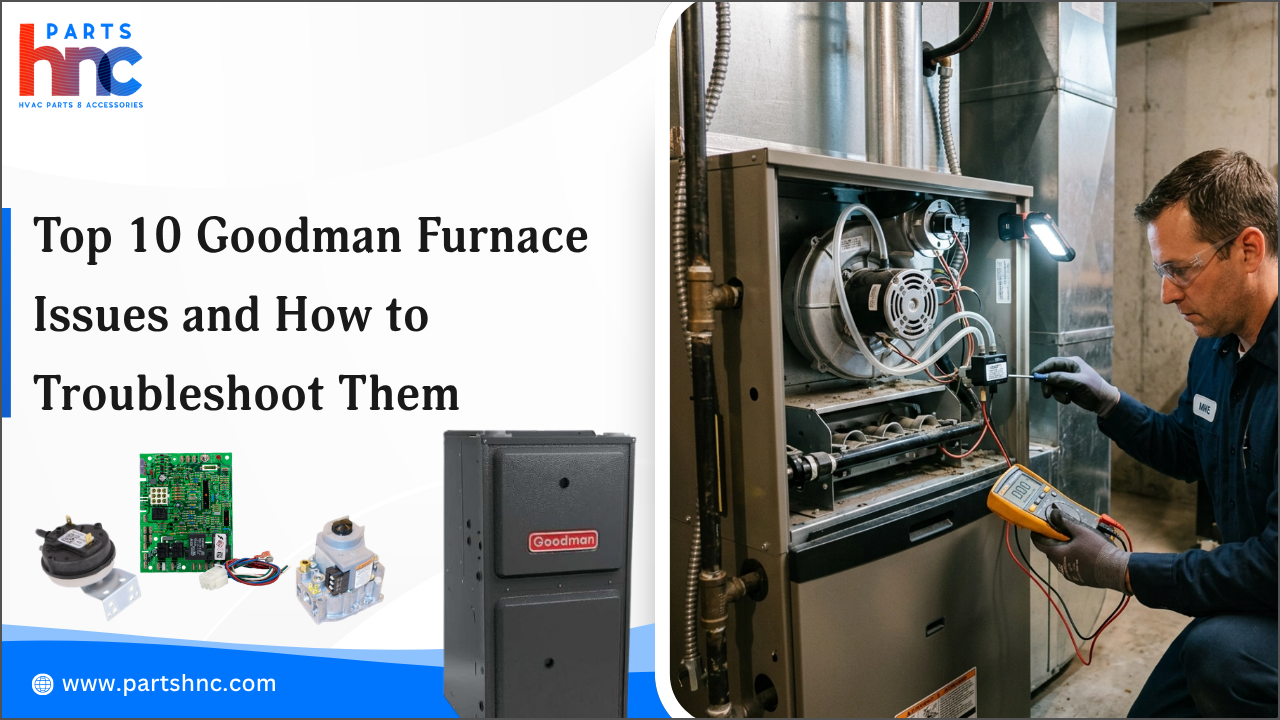
Top 10 Goodman Furnace Issues and How to Troubleshoot Them
A Goodman furnace is a heating system that warms homes during cold weather by circulating heated air through the living space. Like any heating equipment, it can develop problems over time, including ignition failures, airflow issues, unusual noises, thermostat errors, and frequent shutdowns. Identifying these signs early can help improve performance and avoid costly damage.
In this guide, we’ll explain furnace error codes and troubleshooting solutions to help identify furnace problems quickly. Learn the causes behind these issues and how proper Goodman furnace care can reduce heating failures, unexpected breakdowns, and repair expenses.
Why Goodman Furnaces Develop Common Performance Problems
Goodman furnaces can develop issues due to improper installation, poor maintenance, airflow restrictions, and component wear. Like any heating system, operating conditions can impact efficiency and overall operation.
Common factors that contribute to Goodman furnace problems include:
-
Dust buildup reducing internal system efficiency
-
Incorrect thermostat signals affecting heating cycles
-
Aging ignition components causing startup issues
-
Restricted intake or exhaust airflow
-
Blower motor wear reducing air circulation
-
Weak flame sensor performance
-
Loose or damaged electrical connections
-
Irregular seasonal maintenance routines
-
Deteriorating internal furnace components
-
Condensation buildup affecting system operation
Recognizing these causes early can help prevent minor furnace issues from developing into expensive repairs or unexpected breakdowns.
Looking for Goodman furnace parts for quick repairs? Shop HVAC parts and supplies from PartsHnC. We offer Goodman furnace replacement parts, such as thermostats, control boards, igniters, flame sensors, pressure switches, blower motors, inducer motors, gas valves, limit switches, filters, and other essential parts, with fast delivery straight to your door to help keep your home warm.
Top 10 Goodman Furnace Issues and Their Troubleshooting Solutions
Goodman furnaces can experience various issues during their service life. Some are simple fixes, while others require replacement parts or professional help. Common problems homeowners encounter include:
|
Issue |
Possible Causes |
Troubleshooting Solutions |
|
Furnace Not Turning On |
Tripped breaker, power switch is OFF, thermostat issue, blown fuse, or loose wiring |
Set the thermostat to “Heat”, check and reset the circuit breaker, turn the furnace power switch ON, replace thermostat batteries if needed, inspect the control board fuse, ensure the access panel is properly secured |
|
Furnace Blowing Cold Air |
Incorrect thermostat setting, dirty flame sensor, gas supply issue, ignition failure, or overheating shutdown |
Set the fan to “Auto” mode, clean the flame sensor carefully, verify that the gas valve is open, check the ignition sequence, replace a clogged air filter |
|
Furnace Short Cycling |
Restricted airflow, oversized furnace, dirty filter, blocked vents, or a faulty limit switch |
Replace the air filter, open all supply and return vents, remove any airflow obstructions, inspect the limit switch, and ensure proper thermostat placement |
|
Dirty or Clogged Air Filter |
Excess dust buildup is restricting airflow |
Turn off the furnace, remove the air filter, inspect the level of dirt buildup, replace it with the correct size and MERV rating, and record the replacement schedule |
|
Faulty Thermostat Problems |
Dead batteries, wiring issues, calibration errors, incorrect programming, or sensor failure |
Replace thermostat batteries, verify heating settings, inspect wiring connections, reprogram the schedule if required, test the temperature response |
|
Goodman Furnace Ignition Failure |
Dirty or cracked igniter, gas valve malfunction, flame sensor contamination, or control board issues |
Turn off the power supply, inspect the igniter for cracks or damage, clean the flame sensor properly, check all wiring connections, and replace the igniter if it is defective |
|
Goodman Furnace not Heating Properly |
Dirty filter, blower motor issues, duct leaks, low gas pressure, or thermostat errors |
Replace the air filter, ensure all vents are fully open, inspect ductwork for leaks, verify thermostat calibration, and check the blower assembly |
|
Blower Motor Not Working Properly |
Motor wear, capacitor failure, debris buildup, wiring issues, or overheating |
Turn off the power, clean the blower wheel, check the capacitor condition, inspect all wiring connections, and listen for unusual motor noise |
|
Unusual Furnace Noises |
Delayed ignition, loose panels, worn bearings, duct expansion, or relay issues |
Tighten all furnace panels, inspect the blower assembly, check duct connections, observe startup noise patterns, and schedule professional service if the noise continues |
|
Error Codes on Goodman Furnace Control Board |
Ignition lockout, pressure switch failure, limit switch issue, flame detection problem, or communication error |
Read the LED flash code, match it with the manual, inspect the related component, correct the underlying fault, and verify proper furnace operation. |
Goodman Furnace Error Codes
Flash codes vary by Goodman furnace model, but these are the most common diagnostic indicators:
-
"E" Codes (Double Digits): Goodman furnace double-digit E codes appear on the control board to identify specific system faults. Codes include E0, E1, E2, E3, E4, E5, E6, E7, E8, E9, EA, Eb, and Ec.
-
LED Flash Codes (Single Digits): Goodman furnace single-digit flash codes appear through the LED light pattern to indicate basic diagnostic issues. Codes include 1 flash, 2 flashes, 3 flashes, 4 flashes, 5 flashes, 6 flashes, 7 flashes, 8 flashes, and 9 flashes.
Watch to learn how to replace a furnace inducer motor safely and restore proper airflow and ignition system operation.
How to Diagnose Goodman Furnace Problems
Quickly diagnosing Goodman furnace problems requires checking the system in order, from basic settings to major components. Follow these steps to identify and resolve common issues:
Step 1: Identify the Furnace Problem
First, determine what the furnace is doing. Understanding the symptom helps narrow down the possible causes:
-
Furnace does not turn on
-
Furnace runs but does not produce heat
-
Furnace starts and stops frequently
-
Unusual noises or poor airflow
Step 2: Check Thermostat and Settings
Verify that the thermostat is set to heat mode, has the correct temperature setting, and is communicating properly with the furnace.
Step 3: Check Power and Safety Controls
Inspect the power supply, circuit breaker, furnace switch, and safety switches to ensure the system is receiving power.
Step 4: Check Airflow Issues
Examine the air filter, vents, and blower motor for blockages or failures that may reduce heating performance.
Step 5: Check Ignition and Flame Problems
Inspect the igniter, burners, and flame sensor if the furnace is running but not producing heat or shutting down quickly.
Step 6: Read Error Codes
Use the control board’s LED indicator to identify possible component failures.
-
Check the flashing light pattern
-
Match the code with the furnace manual
-
Identify issues with parts like the pressure switch or limit switch
Step 7: Test Furnace Components
Inspect major parts such as the blower motor, pressure switch, limit switch, and other internal components to locate the fault.
Safety Caution: Goodman furnaces involve gas, electricity, and high-temperature parts. Avoid handling gas or electrical components, and contact a qualified HVAC technician if you notice gas odors, damaged wiring, or serious faults.
Explore furnace thermocouple troubleshooting: how to inspect, replace, and test a thermocouple.
Preventive Maintenance Tips to Avoid Common Goodman Furnace Issues
Proper Goodman furnace maintenance helps improve efficiency, reduce repair costs, and extend the life of your heating system. Follow these seasonal maintenance steps
Fall Checklist: Pre-Season Furnace Preparation
-
Run the furnace for about 10–15 minutes to verify the ignition sequence and heating cycle.
-
Inspect the intake and exhaust vent pipes for leaves, nests, or other blockages.
-
Check the condensate drain on high-efficiency models for proper drainage.
-
Confirm that each supply register delivers consistent airflow.
Winter Checklist: Peak-Season Furnace Performance
-
Observe the burner flame regularly. A steady blue flame indicates proper combustion.
-
Monitor the furnace for short cycling or longer-than-normal heating cycles.
-
Inspect the cabinet and duct connections for vibration or air leaks.
-
Watch for recurring LED error codes on the control board and address them promptly.
Spring Checklist: Post-Season Furnace Care
-
Clean dust from the blower compartment and furnace cabinet.
-
Inspect accessible wiring and electrical connections for visible wear.
-
Record any unusual noises, heating issues, or error codes experienced during winter.
-
Schedule off-season repairs or part replacements so the furnace is ready before the next heating season.
Seasonal maintenance improves efficiency, extends furnace life, and helps prevent unexpected breakdowns.
Summary: Keep Your Goodman Furnace Running Efficiently Year-Round
Effective Goodman furnace troubleshooting goes beyond fixing individual problems. Recognizing performance trends, interpreting error codes correctly, and responding to early warning signs can help prevent major failures. A proactive approach to diagnosis and seasonal maintenance supports better heating efficiency, lower repair costs, and longer equipment life.
Key Takeaways
-
Monitor changes in heating cycle patterns to identify developing airflow or safety control issues.
-
Interpret LED error codes alongside furnace behavior for more accurate troubleshooting.
-
Uneven room temperatures often indicate airflow restrictions rather than insufficient heating capacity.
-
Observe burner flame quality regularly to detect combustion issues before they affect system performance.
-
Track recurring furnace symptoms over multiple seasons to identify components nearing the end of their service life.
FAQs
Why is my Goodman furnace not heating my home?
A Goodman furnace may not heat due to a dirty air filter, thermostat issue, ignition failure, or gas supply problem. Inspect these components first to identify and resolve the issue.
How do I reset a Goodman furnace?
To perform a Goodman furnace reset, turn off the thermostat and disconnect power for 30 seconds. Restore power, restart the system, and use the reset button if your model includes one.
What does a blinking red light mean on a Goodman furnace?
A blinking red light indicates a diagnostic error code from the control board. Count the flash pattern and refer to your Goodman furnace manual to determine the specific fault.
Why does my Goodman furnace keep shutting off after a few minutes?
Frequent shutdowns usually indicate short cycling caused by restricted airflow, overheating, or a faulty limit switch. Check the air filter, vents, and thermostat before further troubleshooting.
How can I troubleshoot a Goodman furnace that blows cold air?
Check the thermostat settings, inspect the air filter, verify the gas supply, and clean the flame sensor. Review any active Goodman furnace error codes to help identify the underlying problem.
|
Disclaimer: This guide is intended for general educational purposes only. Troubleshooting steps and maintenance recommendations may not apply to all Goodman furnace models or installation configurations. |