 Loyalty Program

HVAC capacitors store and release electrical energy to start and run motors in heating and cooling systems. These components ensure smooth motor startup, stable operation, and energy efficiency in residential and commercial HVAC equipment.
 -23%
-23% -23%
-23%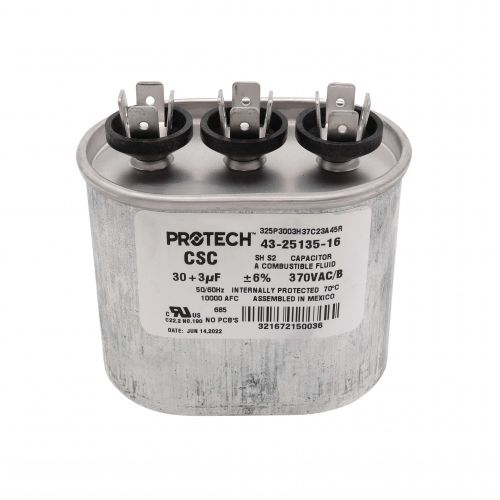 -23%Rheem-Ruud 43-25135-16 Dual Oval Capacitor 1.890" x 2.900" x 3.940" 30/3 MFD 370 VACSpecial Price $16.89 Regular Price $21.96
 -23%
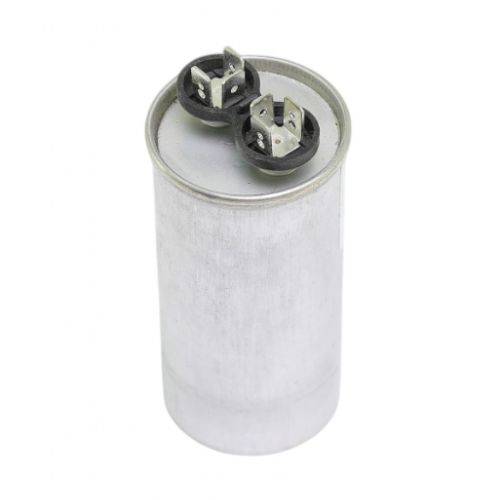
-23% -23%Trane CPT2061 Round Run Capacitor 30 MFD 450VSpecial Price $26.35 Regular Price $34.25Out of stock
- -23%Amana-Goodman CAP030250500CS Capacitor 3-25 MFDs 500VSpecial Price $17.47 Regular Price $22.71Out of stock
- -23%Amana-Goodman CAP030300450CS Dual Round Capacitor 3-30 MFD 450VSpecial Price $20.05 Regular Price $26.06Out of stock
- -13%

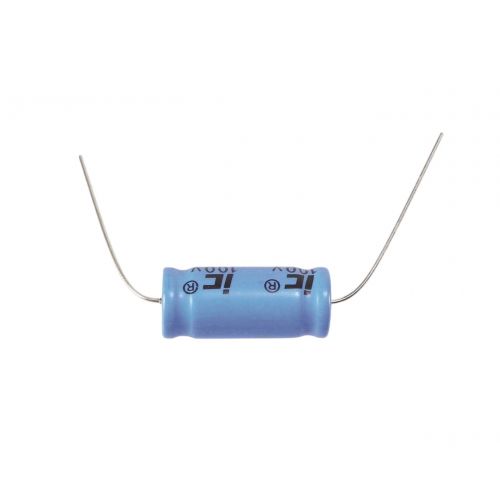
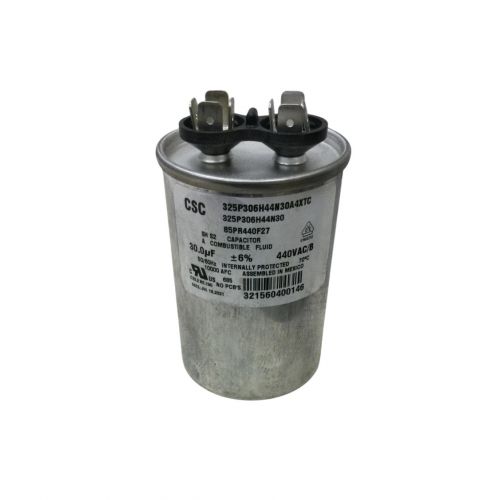
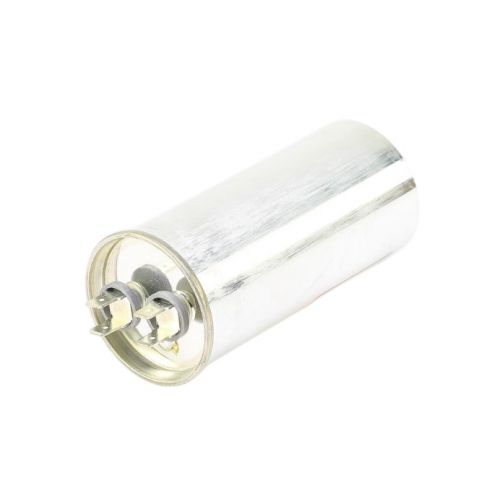
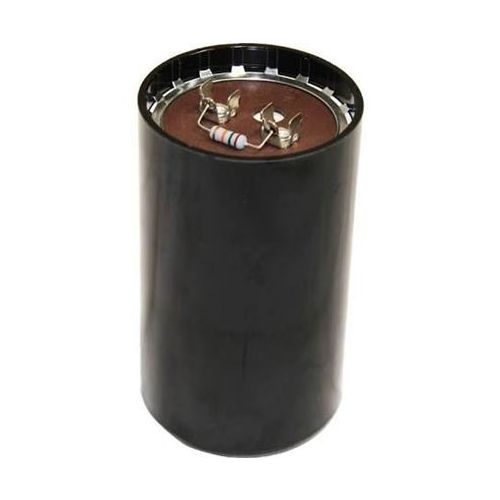
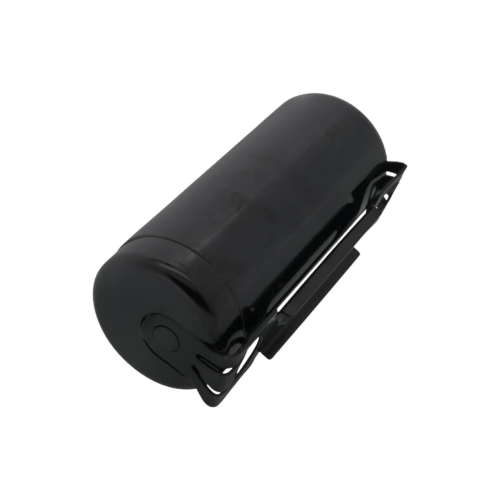
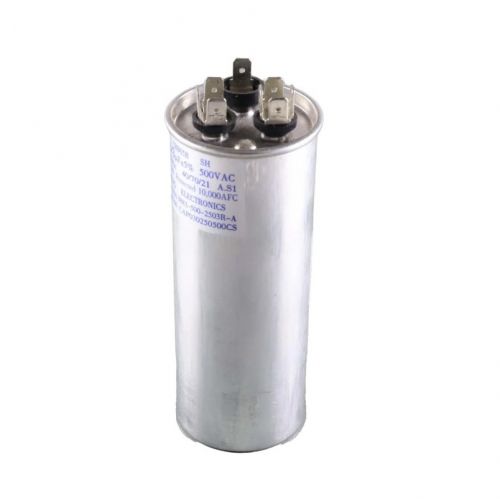
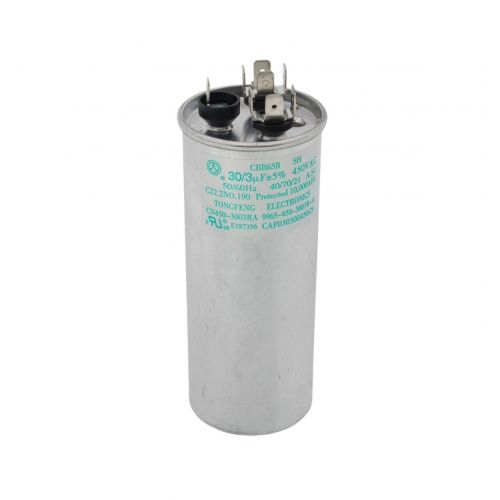
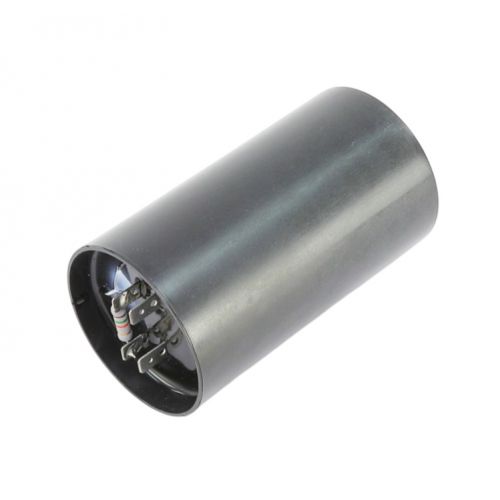
HVAC Capacitors Replacement Parts for Electrical Systems
HVAC capacitors are electrical components that store and discharge energy to start and maintain motor operation in air conditioners, heat pumps, furnaces, and air handlers. These devices are critical for compressor motors, condenser fan motors, and blower assemblies.
In HVAC systems, a capacitor provides the initial torque required for startup and stabilizes voltage during operation. Run capacitors maintain consistent motor speed, while start capacitors deliver short bursts of high energy. When performance declines, HVAC capacitor replacement becomes necessary to prevent motor strain and electrical imbalance.
Common wear signs include hard starting, humming sounds, intermittent cooling, tripped breakers, or visible bulging and leaking. A weak or failed capacitor increases amperage draw, overheats motors, and can lead to compressor failure. Key replacement parts include single and dual run capacitors, start capacitors, capacitor mounting straps, hard-start kits, and terminal connectors to restore safe, efficient system performance.
At PartsHnC, we supply round and oval capacitors, dual-run models, hard-start kits, and capacitor accessories from trusted manufacturers such as Titan Pro, AmRad, Supco, Mars, and Carrier, rated for precise microfarad ranges, voltage tolerance, and thermal protection.
FAQs
What happens when an HVAC capacitor goes bad?
A failed capacitor can prevent the motor from starting, cause intermittent operation, increase energy consumption, or lead to compressor and fan motor damage.
How do I know if I need an HVAC capacitor replacement?
Signs include warm air from vents, delayed startup, clicking or humming noises, and visible swelling or oil leakage from the capacitor casing.
Can a bad capacitor trip the circuit breaker?
Yes, a weak or shortened capacitor can cause excessive current draw, leading to breaker trips or blown fuses.
Why is my AC compressor not starting, but the fan runs?
A faulty start or run capacitor may prevent the compressor from receiving the required starting torque while the fan motor continues operating.
How long do HVAC capacitors typically last?
Most HVAC capacitors last 5–10 years, depending on temperature exposure, electrical load, and maintenance conditions.