Loyalty Program

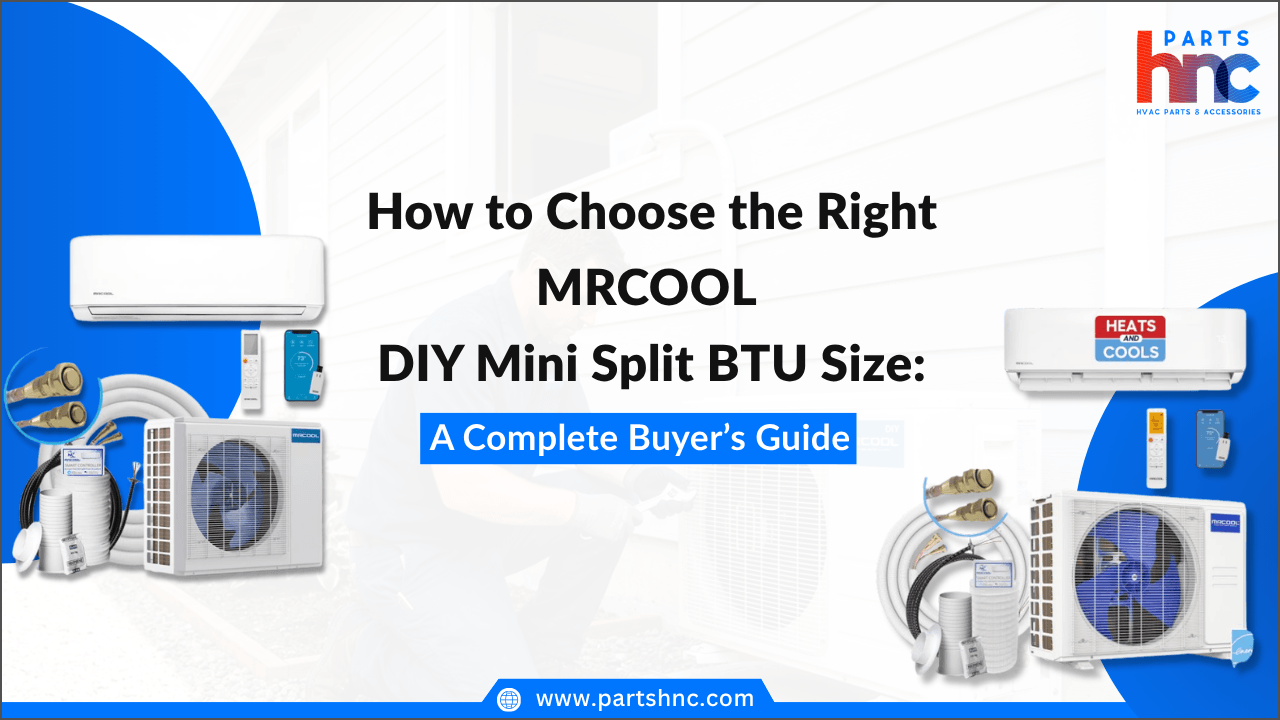
How to Choose the Right MRCOOL DIY Mini Split BTU Size: A Complete Buyer’s Guide
MRCOOL DIY mini splits deliver efficient heating and cooling, but choosing the correct BTU size is essential for comfort, performance, and energy savings. The right capacity helps maintain consistent temperatures while reducing system strain and operating costs.
The MRCOOL DIY mini split sizing guide explains how selecting the ideal BTU size depends on room dimensions, insulation, climate, and usage needs. Properly sized MRCOOL DIY mini splits prevent energy waste, improve efficiency, and ensure reliable comfort. This guide covers key factors to help you choose the best capacity for your home.
Why Proper BTU Sizing Is Essential for an Efficient MRCOOL DIY Mini Split
Selecting the right BTU capacity goes beyond square footage. A properly sized mini split ensures consistent comfort, efficient operation, lower energy use, and reduced system strain.
What Does BTU Mean in a Mini Split System?
BTU (British Thermal Unit) measures how much heat a cooling system can remove from a space in one hour.
For mini split systems:
-
Higher BTU rating: Provides greater cooling capacity for larger spaces.
-
Lower BTU rating: Provides less cooling capacity for smaller areas.
What Happens If the BTU Size Is Too Small?
An undersized system must run continuously to meet heating or cooling demands, which can cause:
-
Higher energy consumption from extended operation
-
Uneven temperature control
-
Reduced comfort during extreme weather
-
Increased compressor wear
-
Shorter system lifespan
MRCOOL DIY mini splits use DC inverter compressors to adjust output automatically, but variable-speed technology cannot fully compensate for a severely undersized unit.
What Happens If the BTU Size Is Too Large?
An oversized unit reaches the thermostat setting too quickly and shuts off, causing short cycling. This can lead to:
-
Poor humidity control
-
Temperature fluctuations
-
Increased energy use
-
Reduced comfort
-
Extra stress on system components
Choosing the correct BTU size ensures efficient performance, reliable comfort, lower operating costs, and longer system life.
Ready to upgrade your heating and cooling system? Explore MRCOOL mini-split systems, including complete units, indoor and outdoor components, installation accessories, and HVAC replacement parts at PartsHnC. Enjoy fast shipping delivered directly to your doorstep.
How to Calculate the Right MRCOOL DIY Mini Split BTU Size for Your Space
To ensure proper mini split BTU sizing, follow these steps to select the correct BTU capacity for your home:
Step 1: Determine the Room Size and Calculate BTU Requirements
Measure the room's length and width in feet. Then calculate the room area using the following formula:
Square Footage = Length × Width
Use the calculated room area and the BTU per square foot chart to determine the recommended BTU capacity.
Calculate BTU Requirements for Each Room
For accurate mini split sizing, calculate the BTU requirement for each room or area separately.
-
Measure the Room: Determine the square footage of each room or area.
-
Use the BTU Guideline: Typically, you’ll need around 20 BTUs per square foot to estimate the required capacity.
Examples:
-
A 500 sq. ft. room requires approximately 10,000 BTUs
-
A 1,000 sq. ft. room requires approximately 20,000 BTUs
Summing Up the BTUs of All Rooms
For multi-room mini split systems, add the BTU requirements of each room to determine the total system capacity needed.
Example:
-
Room 1: 9,000 BTUs
-
Room 2: 12,000 BTUs
-
Room 3: 18,000 BTUs
-
Total BTU Load: 39,000 BTUs
Step 2: Adjust for Ceiling Height
If your ceiling is higher than 8 feet, increase the base BTU requirement using the following formula:
Adjusted Square Footage = Square Footage × (Ceiling Height ÷ 8)
Step 3: Account for Installation Conditions
Increase the BTU requirement when the room has additional heating or cooling loads.
-
Poor insulation: Add 15–20%.
-
Large windows: Add 10%
-
Kitchen installation: Add 4,000 BTUs.
-
Extreme climates: Add 10%.
Note: These adjustments compensate for additional heat gain or heat loss, ensuring accurate BTU sizing and efficient system performance.
Step 4: Confirm Your Selection
Use the MRCOOL DIY mini-split BTU calculator or Manual J Lite for a more accurate recommendation. If your calculated requirement falls between two available system sizes, always choose the next larger model.
Comparing MRCOOL DIY Mini Split Models by Room Size and BTU Capacity
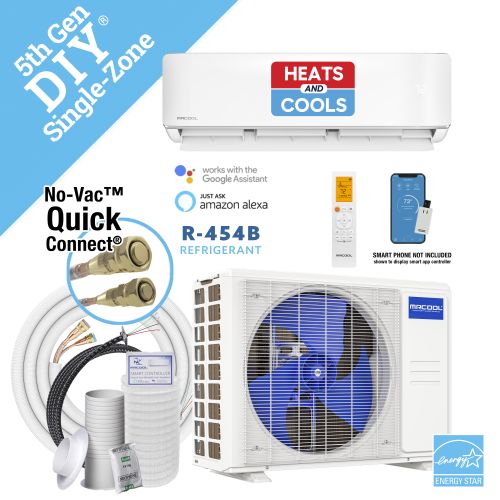
MRCOOL offers several single-zone DIY mini split systems to suit different room sizes. Understanding how each capacity performs helps homeowners choose the best model for their needs:
-
Up to 375 sq. ft: Use a 9,000 BTU unit (ideal for small bedrooms, offices, or sun-controlled spaces).
-
350 to 500 sq. ft: Use a 12,000 BTU unit (perfect for standard master bedrooms, living rooms, or small garages).
-
500 to 750 sq. ft: Use an 18,000 BTU unit (best for larger master bedrooms, living areas, or converted spaces).
-
750 to 1,000 sq. ft: Use a 24,000 BTU unit (great for large open-concept basements, large living rooms, or open apartments).
-
1,000 to 1,500 sq. ft.: Use a 36,000 BTU unit (designed for studio apartments, large workshops, or multi-room applications).
Discover MRCOOL DIY 4th Gen vs 5th Gen Mini Splits: What’s New and Which One Should You Choose?
Common Mistakes When Choosing a MRCOOL DIY Mini Split BTU Size
Choosing the wrong BTU size can reduce efficiency and comfort. Common sizing mistakes that affect MRCOOL DIY mini split performance involve:
-
Relying Only on Square Footage: Room size is a starting point, but factors like ceiling height, insulation, window placement, and sun exposure also influence the required BTU capacity.
-
Choosing an Oversized System: A larger unit may cool or heat the room too quickly, leading to short cycling, poor humidity control, uneven temperatures, and increased wear on the compressor.
-
Selecting an Undersized Unit: A mini split with insufficient BTU capacity will run longer to reach the desired temperature, increasing energy consumption and reducing overall comfort.
-
Ignoring Climate Conditions: Homes in hotter regions or rooms with direct sunlight often require higher BTU capacity than similar-sized spaces in cooler climates.
-
Overlooking Future Needs: Consider future room changes, additional occupants, or heat-generating appliances that may increase your heating and cooling requirements over time.
-
Not Comparing System Features: Along with BTU size, evaluate features such as DC inverter technology, SEER2 efficiency ratings, SmartHVAC app compatibility, and DIYPRO® installation technology available in the latest MRCOOL DIY systems
Summary: Finding the Right MRCOOL DIY Mini Split BTU Size for Your Home
Choosing the right MRCOOL DIY mini split BTU size ensures efficient heating, cooling, and lasting comfort. Considering room size, insulation, ceiling height, climate, and installation conditions helps maximize performance. Proper DIY mini split installation further improves airflow, efficiency, and long-term system reliability.
Key Takeaways
-
Choose the BTU size based on room size and environmental factors, not square footage alone.
-
Avoid oversized or undersized units to improve comfort and efficiency.
-
Account for insulation, ceiling height, sun exposure, and local climate when sizing.
-
MRCOOL DIY mini splits are available from 9,000 BTU to 36,000 BTU for various room sizes.
-
Look for features like DC inverter technology, SEER2 ratings, SmartHVAC app, and DIYPRO® installation.
-
If your BTU requirement falls between two sizes, select the next larger model for dependable performance.
FAQs
Is a bigger BTU mini split always better?
No, an oversized mini split can waste energy and reduce humidity control. The best choice is a unit that matches your space’s actual heating and cooling needs.
What size MRCOOL DIY mini split do I need for a bedroom?
Most bedrooms require between 6,000 and 12,000 BTUs, depending on their size and conditions. Smaller bedrooms usually need lower BTU units, while larger bedrooms may require more capacity.
Can an MRCOOL DIY mini split heat and cool?
Yes, many MRCOOL DIY mini split systems provide both heating and cooling through heat pump technology, offering year-round comfort for different weather conditions.
Are MRCOOL DIY Mini Splits energy efficient?
Yes, MRCOOL DIY mini splits use inverter technology to adjust performance and reduce unnecessary energy consumption. Proper sizing helps maximize energy savings.
|
Disclaimer: MRCOOL DIY mini-split sizing recommendations in this article are for general informational purposes only. Actual requirements may vary based on climate, insulation, room size, layout, windows, occupancy, and installation conditions |