Loyalty Program

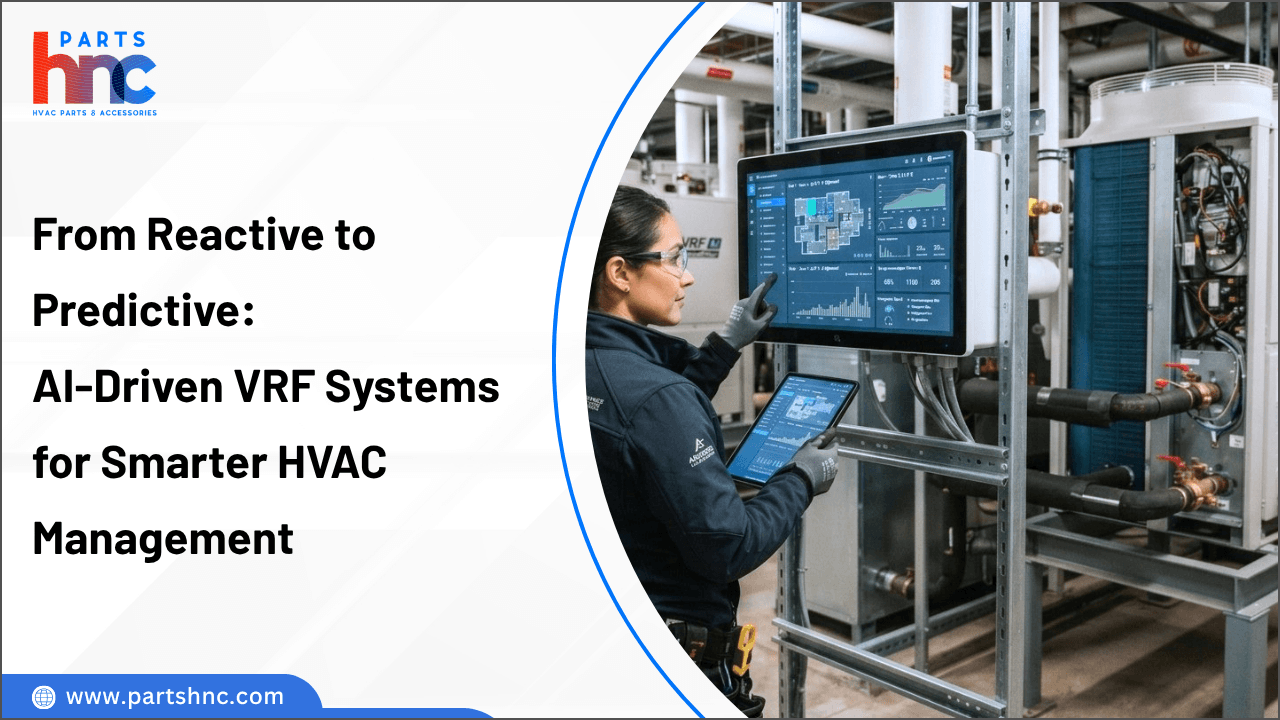
From Reactive to Predictive: AI-Driven VRF Systems for Smarter HVAC Management
HVAC management is shifting from reactive maintenance to predictive performance with AI-driven VRF systems. By combining artificial intelligence, machine learning, real-time monitoring, and smart controls, VRF systems can analyze operating conditions, detect changes, and identify potential issues before they affect performance or indoor comfort.
For commercial buildings, AI-powered VRF technology supports predictive maintenance, energy optimization, automated diagnostics, and adaptive temperature control. These capabilities help facility teams reduce downtime, improve efficiency, extend equipment performance, and maintain comfortable indoor environments.
What Are AI-Driven VRF Systems and How Are They Transforming HVAC Management?
AI-driven Variable Refrigerant Flow (VRF) systems combine AI, machine learning, IoT sensors, and real-time monitoring to optimize HVAC performance. Unlike traditional systems, they continuously analyze operating data, predict potential issues, and automatically adjust heating and cooling based on changing conditions.
AI-driven capabilities are:
-
Predictive maintenance to detect issues before failures occur.
-
Automated fault detection and diagnostics for faster troubleshooting.
-
Real-time energy optimization based on occupancy and demand.
-
Adaptive temperature control for consistent indoor comfort.
-
Remote monitoring and smart system management.
By shifting from reactive maintenance to predictive HVAC management, AI-powered VRF systems help commercial buildings improve energy efficiency, reduce downtime, extend equipment lifespan, and enhance occupant comfort.
Find out how heat recovery VRF systems became a popular HVAC choice for energy efficiency.
How AI Optimizes VRF System Performance Through Intelligent Data Analysis
AI analyzes operational data to optimize VRF performance, improve efficiency, and adapt to changing building demands. The key methods are:
-
Multi-Variable Decision Engine: Processes occupancy, humidity, weather, equipment status, and thermal loads to select the most efficient operating mode.
-
Zone Interaction Analysis: Evaluates neighboring zones to reduce unnecessary refrigerant redistribution.
-
Heat Recovery Optimization: Redirects excess heat between cooling and heating zones to improve energy utilization.
-
Operational Drift Detection: Detects gradual performance deviations before they affect system efficiency.
-
Control Sequence Refinement: Optimizes compressor staging, expansion valves, and fan speeds for stable operation.
-
Peak Demand Anticipation: Predicts occupancy and weather-driven load changes before demand increases.
-
Performance Baseline Validation: Compares live data with optimal benchmarks to identify hidden efficiency losses.
Data Insight: AI analyzes thousands of daily sensor readings to optimize refrigerant flow, reduce unnecessary system cycling, and maintain consistent zone-level temperature control.
Core AI Technologies Powering Modern VRF Systems
Modern VRF technology uses advanced AI capabilities to enable smarter, adaptive, and autonomous HVAC controls. The core technologies are:
|
AI Technology |
What It Does |
VRF Application |
|
Reinforcement Learning |
Learns from system responses to improve control strategies. |
Optimizes VRF compressors, indoor units, outdoor units, and refrigerant flow as loads change. |
|
Digital Twin Technology |
Creates virtual VRF models for performance simulation. |
Simulates outdoor units, indoor units, refrigerant circuits, and control sequences before adjustments. |
|
Generative AI Assistants |
Converts complex HVAC data into actionable insights. |
Analyzes VRF alerts and helps technicians troubleshoot compressors, sensors, and indoor units. |
|
Computer Vision |
Analyzes visual occupancy patterns for responsive conditioning. |
Adjusts VRF indoor unit operation based on real-time occupancy across individual zones. |
|
Federated Learning |
Improves AI models while keeping building data local. |
Optimizes VRF systems across multiple commercial buildings without sharing raw equipment data. |
|
Explainable AI |
Clarifies automated recommendations and system alerts. |
Explains VRF compressor, refrigerant flow, and zone-control adjustments to facility teams. |
These AI technologies can be applied to VRF systems offered by major HVAC manufacturers across commercial applications.
For example, Daikin, LG, Carrier, and Trane offer VRF systems that can integrate with advanced controls, sensors, and building management platforms. These integrations provide the data and system connectivity needed for AI-based monitoring and optimization.
Explore HVAC-R-focused VFD solutions as the smart upgrade for energy savings & better control.
Strategies to Improve Commercial VRF Performance With AI
AI can improve commercial VRF performance through advanced strategies tailored to different building requirements. These strategies can help optimize:
1. Refrigerant Circuit Fingerprinting: AI identifies normal refrigerant signatures and detects subtle pressure, temperature, or flow deviations.
Best for: Office buildings and hotels with multiple VRF circuits operating across numerous zones.
2. Compressor Wear Modeling: AI evaluates compressor history, load cycles, and temperature trends to identify gradual performance degradation.
Best for: Retail stores and shopping centers with heavily used VRF outdoor units.
3. Control Sequence Optimization: AI evaluates control sequences to maintain stable VRF operation with fewer unnecessary adjustments.
Best for: Hospitals and educational facilities with varying daily HVAC requirements.
4. Cross-Zone Thermal Mapping: AI analyzes temperature relationships between connected zones to improve indoor-unit coordination.
Best for: Restaurants and corporate offices with different occupancy levels across adjoining spaces.
5. Defrost Cycle Intelligence: AI analyzes outdoor conditions and coil behavior to optimize defrost timing in heat-pump VRF systems.
Best for: Hotels and mixed-use buildings requiring consistent heating during colder conditions.
6. Equipment Interaction Modeling: AI evaluates interactions between compressors, expansion valves, fans, and indoor units.
Best for: Large commercial buildings and multi-story offices with complex VRF installations.
Summary: How Intelligent Automation Is Changing the Future of VRF Systems
Intelligent automation is making VRF systems more autonomous by enabling adaptive controls, real-time decision-making, and coordinated equipment operation. As AI advances, commercial VRF systems can become more context-aware, self-adjusting, and easier to manage while reducing dependence on manual HVAC intervention.
Key Takeaways
-
AI can help VRF systems learn operating patterns rather than depend entirely on fixed control sequences.
-
Digital twins can allow teams to test VRF changes virtually before modifying live equipment.
-
Explainable AI can make automated VRF decisions easier for technicians to understand.
-
AI can coordinate interactions between compressors, valves, fans, and indoor units.
-
Advanced automation can support different control strategies across complex commercial spaces.
-
Future VRF platforms may increasingly shift from operator-directed control toward autonomous system management.
Why pay for a full HVAC overhaul when one part may solve the issue? Get it working instantly with affordable HVAC parts and supplies from PartsHnC. Buy premium components for heat pumps, furnaces, air conditioners, and more from leading brands like Carrier, Trane, Lennox, and Daikin. Enjoy competitive prices, great savings, and fast delivery right to your doorstep.
References:
https://www.gsa.gov/governmentwide-initiatives/federal-highperformance-buildings/highperformance-building-clearinghouse/emerging-technology-evaluations/hvac-technology/variable-refrigerant-flow
https://www.energy.gov/cmei/buildings/variable-refrigerant-flow-air-conditioners-and-heat-pumps
https://be-exchange.org/primer/variable-refrigerant-flow-vrf-systems
FAQs
Can AI be integrated into existing commercial VRF systems?
Yes. Compatible VRF systems can use AI through smart sensors, controllers, gateways, and building management platforms.
How does AI identify unusual VRF system behavior?
AI compares real-time equipment data with normal operating patterns to detect unusual temperature, pressure, or performance changes.
Can AI coordinate multiple VRF indoor and outdoor units?
Yes. AI can coordinate connected indoor and outdoor units based on zone demand, equipment conditions, and system requirements.
Does AI replace technicians in commercial VRF management?
No. AI supports monitoring and decision-making, while qualified technicians handle diagnosis, repairs, commissioning, and safety.
How can digital twins improve VRF system management?
Digital twins allow facility teams to simulate VRF performance and test control strategies before making changes to live systems.
What should facility managers consider before adopting AI for VRF systems?
They should consider system compatibility, data quality, cybersecurity, integration needs, and technician expertise.
|
Disclaimer: AI-driven VRF capabilities can vary by system, equipment, controls, and manufacturer. This article covers general AI applications and technologies used in VRF systems. |