Loyalty Program

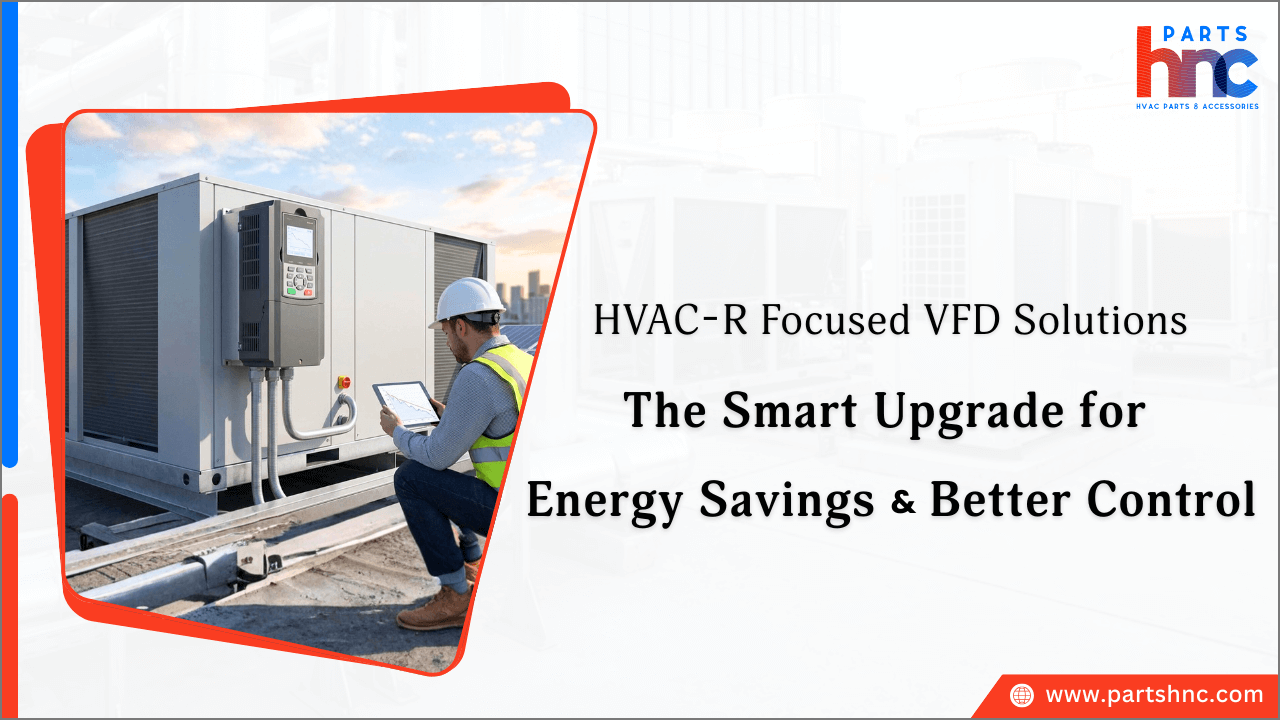
HVAC-R Focused VFD Solutions: The Smart Upgrade for Energy Savings & Better Control
HVAC-R systems can achieve remarkable efficiency gains when upgraded with focused Variable Frequency Drive (VFD) solutions. By controlling motor speeds and fan operations precisely, VFDs reduce energy consumption, lower operating costs, and optimize system performance.
These smart upgrades don’t just save energy; they improve overall system control and reliability. Facilities benefit from better temperature and airflow management, extended equipment lifespan, and smoother operations. With HVAC-R VFD solutions, modern buildings can achieve sustainable, cost-effective performance while maintaining comfort and operational excellence.
Understanding HVAC-R VFD Solutions and Their Role in HVAC Systems
Modern HVAC-R systems face rapidly changing load conditions due to variable occupancy, process-driven cooling demands, and stricter energy regulations. VFD solutions address these challenges by enabling dynamic motor behavior that adapts not just to temperature, but to system intelligence, control logic, and operational priorities.
For engineers, facility managers, and industrial operators, advanced HVAC-R VFD implementation goes beyond basic speed control—unlocking deeper system optimization, diagnostics, and lifecycle performance improvements.
Key Roles of HVAC-R VFDs Include:
-
System Curve Optimization: Continuously aligns motor operation with actual fan and pump curves, eliminating inefficiencies caused by oversized or conservatively selected equipment.
-
Pressure-Independent Control: Stabilizes airflow and hydronic balance across zones, even as dampers and valves dynamically modulate.
-
Thermal Inertia Management: Uses controlled ramping to account for coil mass and refrigerant response delays, improving temperature accuracy.
-
Power Quality Conditioning: Reduces voltage dips, harmonic stress, and nuisance breaker trips in electrically sensitive facilities.
-
Predictive Fault Detection: Analyzes torque, slip, and current signatures to identify bearing wear, cavitation, or refrigerant-side issues before failure.
-
Seasonal Operating Logic: Enables automatic transitions between heating, cooling, economizer, and part-load refrigeration modes.
-
Compressor Unloading Alternative: Delivers capacity modulation without mechanical unloaders, reducing moving parts and maintenance risk.
-
Resilience During Grid Instability: Maintains controlled operation during brownouts and generator transfer events.
-
Data-Driven Optimization: Supplies high-resolution operational data for continuous commissioning, analytics, and energy modeling.
These advanced VFD capabilities transform HVAC-R systems into adaptive, self-optimizing assets delivering measurable efficiency, reliability, and control advantages in complex commercial and industrial environments.
Find out a new era in heating and cooling: side discharge heat pumps delivering high efficiency, compact design, and precise temperature control.
Why HVAC-R Professionals Are Adopting VFD Technology for Better Efficiency and Control
Variable Frequency Drives (VFDs optimize HVAC-R performance by adjusting motor speed to real-time demand, improving efficiency, comfort, and reliability. They also enable smarter control, predictive maintenance, and long-term cost savings for professionals.
How VFDs Improve Efficiency, Comfort, and Reliability:

Implementation Tips: Calibrate HVAC-R VFDs to system dynamics and motor characteristics for precise energy control. Ensure smart programming and BMS integration to anticipate system demands and reduce inefficiencies. Monitor performance, fine-tune operations, and train operators to maintain comfort, reliability, and equipment life.
Energy Efficiency, Cost Reduction, and Improved Operational Reliability in Commercial Buildings
Commercial buildings face rising energy costs and stricter efficiency regulations, making optimized HVAC-R systems critical for both operational performance and budget management. By implementing advanced control strategies and technologies such as VFDs, building managers and engineers can achieve significant energy savings while maintaining reliable system operation.
Key Strategies for Energy Efficiency and Operational Reliability:
Demand-Based Motor Control: This strategy optimizes motor and fan speeds according to real-time demand, reducing unnecessary energy use and mechanical stress.
Example: In a bustling office tower, fan speeds automatically adjust as floors empty in the evening, cutting energy use and easing wear on motors, keeping systems running longer.
Zone-Specific Optimization: Heating, cooling, and ventilation are tailored to match occupancy patterns in different areas, preventing energy waste and maintaining comfort.
Example: In a shopping mall, zone-specific air conditioning adjusts to crowded areas, cutting energy use by 15% while maintaining comfort for visitors.
Predictive Maintenance Analytics: Using system data, predictive maintenance identifies potential inefficiencies before they cause failures, preventing costly emergency repairs and reducing downtime.
Example: In a hospital, sensors track HVAC performance and alert staff to early signs of equipment wear, avoiding sudden failures and ensuring patient areas remain safe and comfortable.
Integrated Building Management Systems (BMS): Centralized control through an integrated BMS allows for streamlined management of all building systems, reducing manual intervention and improving responsiveness.
Example: At a university campus, a central dashboard manages multiple classrooms and labs, automatically adjusting temperature and ventilation to reduce energy costs and improve operational efficiency.
Lifecycle Cost Reduction: Reducing mechanical and electrical stress on components extends service intervals and equipment lifespan, lowering overall costs.
Example: In a corporate headquarters, motors and pumps operate smoothly with VFDs, extending equipment life and cutting maintenance expenses over the long term.
Data-Driven Performance Insights: Continuous monitoring and analytics provide actionable insights to further optimize energy efficiency, reduce costs, and improve operational control.
Example: In a data center, analytics continuously monitor cooling zones and make small adjustments, lowering energy consumption while keeping critical servers within safe temperatures.
VFD Applications and Selection for Commercial and Industrial HVAC-R Systems
Variable Frequency Drives (VFDs) have become critical in commercial and industrial HVAC-R systems. They provide precise motor control, adapt to changing load demands, and improve energy efficiency and reliability. Choosing the right VFD ensures optimal performance, lower operational costs, and easier maintenance for complex facilities.
VFD Applications Across HVAC-R Systems:
|
HVAC-R System / Function |
Application |
Industry / Commercial Example |
Benefits |
|
Chillers and Compressors |
Modulates motor speed to match cooling demand |
Large office building: VFD-controlled chillers adjust compressor speed during part-load conditions |
Reduces electricity consumption up to 30%, improves comfort, reduces wear |
|
Pumps and Hydronic Systems |
Enables variable water flow in heating and chilled water loops |
Hospital: VFD-driven pumps maintain precise water flow for different wings |
Saves energy, reduces pump wear, ensures precise temperature control |
|
Fans and Air Handling Units (AHUs) |
Adjusts airflow based on occupancy or environmental conditions |
Data center: VFDs on AHUs regulate cooling airflow per server room load |
Cuts fan energy use, maintains airflow as needed, improves comfort |
|
Refrigeration Systems |
Controls compressor capacity and suction pressure for temperature stability |
Cold storage warehouse: VFDs on refrigeration compressors maintain consistent temperatures |
Smooth temperature control, reduces power spikes, improves product safety |
VFD Selection Tips
-
Select based on motor type, load profile, and required starting torque.
-
Ensure compatibility with system controls, environmental conditions, and communication protocols.
-
Optimize for energy efficiency, part-load performance, and maintenance requirements.
Explore revolutionizing HVAC: liquid-cooled chillers and towers optimizing efficiency, reducing wear, and enhancing building comfort.
Summary: Achieving Sustainable Efficiency and Operational Excellence with VFDs
HVAC-R VFDs unlock a deeper level of system intelligence, enabling adaptive control, predictive insights, and dynamic response to real-world building conditions. By integrating precise motor modulation with advanced analytics and operational strategies, VFDs not only save energy but also enhance resilience, occupant comfort, and equipment longevity in ways traditional systems cannot. Buildings equipped with VFD solutions become self-optimizing, cost-efficient, and future-ready, supporting both operational excellence and sustainability goals.
Key Takeaways:
-
Adaptive Inertia Compensation: Smooths temperature swings in fluctuating loads. Prevents wasted energy during transient conditions.
-
Micro-Load Optimization: Adjusts for small changes like open doors or local equipment loads. Avoids energy waste overlooked by conventional controls.
-
Electrical Stress Minimization: Reduces harmonics, voltage sags, and improves power factor. Extends motor and electrical system lifespan.
-
Dynamic Comfort Zoning: Continuously adapts airflow and temperature based on occupancy and sunlight. Maintains comfort while avoiding over-conditioning.
-
Integrated Fault Pattern Recognition: Detects unusual torque, vibration, or current trends early. Minimizes downtime and costly emergency repairs.
-
Part-Load Performance Intelligence: Maintains efficiency and control during low-load or transitional periods. Prevents energy waste without compromising comfort.
-
Resilience During Grid & Environmental Variability: Adapts operation during brownouts, generator transfers, or extreme weather. Keeps critical HVAC-R systems stable and operational.
Looking to upgrade your HVAC system for better comfort and efficiency? Shop HVAC equipment replacement parts with complete system components from PartsHnC. We offer furnaces, air conditioners, heat pumps, thermostats, and controls from top brands like Carrier, Goodman, Rheem, Lennox, and York, with fast delivery straight to your door. Keep your building running efficiently and comfortably!
References:
https://www.frontiersin.org/journals/energy-research/articles/10.3389/fenrg.2022.1017785/full
https://www.intechopen.com/chapters/49511
https://www.aceee.org/sites/default/files/proceedings/ssb24/pdfs/20240722160827031_accff97f-2ef6-46d4-88eb-d20d976c9689.pdf
FAQs
Why are VFD upgrades considered cost-effective despite initial installation costs?
Energy savings, extended equipment life, and reduced maintenance usually offset installation expenses within 2–4 years.
How complex is it to install a VFD in an existing HVAC-R system?
Installation depends on system size and motor configuration, but standard commercial setups typically take only a few days with professional installation.
Why is proper programming important for VFD performance?
Correct setup of motor curves, control logic, and BMS communication ensures optimal efficiency, comfort, and reliability.