Loyalty Program

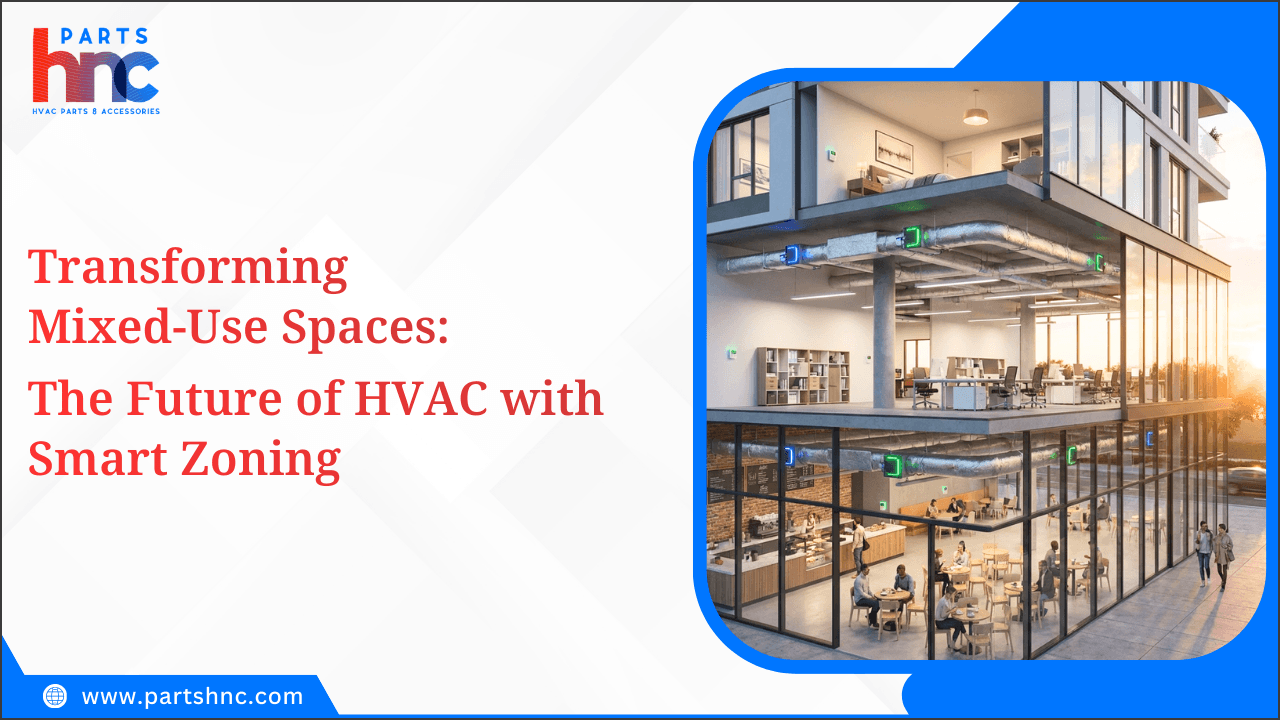
Transforming Mixed-Use Spaces: The Future of HVAC with Smart Zoning
TransfModern urban buildings are evolving rapidly, with mixed-use developments combining residential, commercial, and retail spaces under one roof. These environments create unique challenges for HVAC systems, which often struggle to maintain comfort, efficiency, and cost-effectiveness. Smart zoning HVAC systems offer a transformative solution, allowing precise control of temperature and air quality in each zone while optimizing energy use.
This article explores how smart zoning is shaping the future of HVAC in mixed-use spaces. By enhancing comfort, reducing costs, and supporting sustainability, this technology is essential for building owners, facility managers, and urban planners designing adaptive, intelligent spaces.
Understanding Smart Zoning HVAC in Mixed-Use Spaces: How It Works
Smart zoning HVAC is evolving beyond simple temperature control to create intelligent, adaptive individual zones. Modern systems analyze building-wide data—like sunlight, equipment heat, and human activity—to dynamically manage each zone’s climate, delivering comfort while optimizing energy use. These systems respond to real-time behavioral patterns and environmental variables, rather than relying on fixed schedules.
What Are Mixed-Use Spaces?
Mixed-use spaces are buildings or complexes that combine different types of functions under the same roof. Instead of a single-purpose building (like just an office or just a residential apartment), these spaces include a mix of:
-
Residential areas: Apartments, condos, or student housing.
-
Commercial spaces: Offices, shops, restaurants, or co-working areas.
-
Public or communal areas: Lobbies, gyms, corridors, or shared facilities.
Example: A 10-story building where the ground floor is retail stores, floors 2–4 are offices, and floors 5–10 are residential apartments.
Key components driving this next-gen zoning include:
-
Smart Thermostats: Learn occupancy patterns, as thermostats automatically adjust temperatures and offer convenient remote access through apps
-
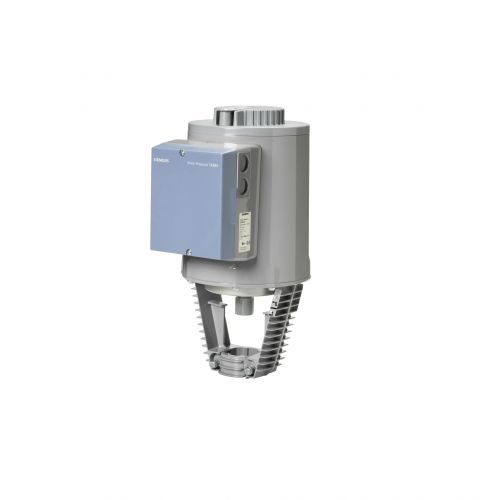
Motorized Dampers: Direct airflow precisely to each zone, preventing overcooling or overheating.
-
Occupancy Sensors: Detect presence in real time, fine-tuning HVAC output for efficiency and comfort.
-
AI & Predictive Analytics: Forecast energy demands using historical data, weather forecasts, and occupancy trends to proactively adjust performance.
-
Dynamic Thermal Mapping: Measures heat distribution, solar gain, and equipment-generated warmth to optimize zone comfort.
-
Behavioral Pattern Recognition: Understands when spaces are used for different activities, adjusting ventilation and temperature accordingly.
-
Climate Sensors: Monitor humidity, CO₂, and airflow to create personalized comfort profiles for each zone.
-
Integrated Energy Orchestration: Coordinates HVAC, lighting, and shading to reduce peak loads and energy waste.
By combining traditional smart HVAC tools with advanced adaptive technologies, buildings achieve maximum comfort, energy efficiency, and intelligent climate management.
Key Benefits of Smart HVAC Zoning in Mixed-Use Spaces
Smart HVAC zoning is no longer just about comfort or energy savings; it’s about intelligent, context-aware building management. In mixed-use developments, where spaces serve multiple purposes, these systems unlock hidden efficiencies and operational advantages that traditional HVAC often misses. Here are the hidden benefits of smart zoning HVAC:
Activity-Aware Climate Control: Automatically adapts to the type of activity in each zone, optimizing airflow and temperature based on usage patterns.
Ideal for: Co-working offices, boutique retail stores, clinics, training institutes
Localized Environmental Balance: Prevents hotspots caused by sunlight, equipment, or crowd density, ensuring each zone maintains equilibrium without manual intervention.
Ideal for: Residential floors, co-working offices, community or cultural halls
Cross-System Coordination: Integrates HVAC with lighting, blinds, and other building systems to optimize energy performance across all zones.
Ideal for: Corporate office floors, boutique retail areas, residential floors
Behavioral Energy Insights: Tracks occupant behavior trends over time, refining schedules and zoning layouts for maximum efficiency.
Ideal for: Co-working offices, clinics, boutique retail areas, small event spaces
Occupant-Centric Adaptation: Learns individual preferences in multi-tenant environments and fine-tunes zones to meet diverse comfort needs without conflicts.
Ideal for: Residential floors, co-working offices, boutique retail areas
Resilience & Flexibility: Quickly adapts to temporary changes such as pop-up retail, seasonal events, or office reconfigurations, maintaining optimal performance.
Ideal for: Boutique retail stores, community halls, co-working offices, event venues
Smart zoning HVAC thus transforms mixed-use buildings into adaptive, self-optimizing ecosystems, unlocking benefits that go far beyond energy and cost savings.
Maximizing Efficiency, Comfort, and Air Quality in Mixed-Use Spaces
Mixed-use spaces combine residential, commercial, and retail areas, each with unique demands. Smart zoning HVAC optimizes comfort, efficiency, and air quality across all these diverse zones.
Sustainability and Environmental Impact of Smart HVAC:
|
Capability |
Advantage |
Impact |
|
Adaptive Scheduling |
Automatically adjusts HVAC operation based on actual occupancy patterns |
Reduces wasted energy by avoiding conditioning empty spaces |
|
Noise Reduction |
HVAC components modulate output per zone, lowering fan or compressor noise |
Improves occupant comfort in offices, residences, and retail areas |
|
Thermal Zoning Flexibility |
Each zone can maintain different temperatures simultaneously |
Supports diverse space requirements without affecting other areas |
|
Predictive Maintenance Alerts |
System monitors performance trends and signals potential equipment issues |
Prevents unexpected failures, extends equipment life, and lowers maintenance costs |
|
Seasonal Load Adjustment |
HVAC operation adjusts for seasonal solar gain, humidity, or cold snaps |
Maintains comfort year-round while optimizing energy efficiency |
|
Enhanced IAQ Monitoring |
Monitors CO₂, VOCs, and particulate matter in each zone |
Keeps indoor air safe, healthy, and compliant with regulations |
With these capabilities, smart zoning transforms mixed-use spaces into proactive, self-optimizing environments that deliver efficiency, comfort, and longevity in ways traditional HVAC systems cannot.
Explore redefining efficiency: how zoned HVAC is changing climate management, optimizing comfort and energy use for every room and activity.
How to Implement Smart Zoning in Mixed-Use Spaces
Implementing smart zoning in mixed-use spaces requires a strategic approach that balances comfort, efficiency, and sustainability across residential, commercial, and retail areas.
6 Steps to Deploy Smart Zoning:
-
Assess Zones and Usage: Map all areas, noting occupancy patterns, space functions, and environmental needs.
-
Select Smart HVAC Components: Choose adaptive thermostats, motorized dampers, and advanced sensors tailored for multi-zone control.
-
Integrate Building Systems: Connect HVAC with lighting, shading, and management systems for coordinated efficiency.
-
Leverage Predictive Analytics: Use AI and historical data to anticipate peak loads, precondition spaces, and avoid energy spikes.
-
Customize Occupant Comfort: Enable tenants and users to set individual preferences without compromising overall system efficiency.
-
Monitor, Adjust, and Scale: Continuously track performance, air quality, and energy usage, adapting as occupancy or layouts change.
Following these steps ensures mixed-use spaces operate as intelligent, adaptive environments, optimizing comfort, energy efficiency, and sustainability simultaneously.
Summary: Future Trends in Smart Zoning HVAC for Long-Term Efficiency
Smart zoning HVAC is no longer just a convenience; it is becoming a proactive system that anticipates building needs before they arise. By combining occupancy analytics, environmental sensing, and AI-driven predictive controls, mixed-use spaces can dynamically balance thermal comfort, air quality, and energy efficiency across highly variable environments. Future developments will focus on hyper-localized climate optimization, cross-system ecosystem integration, and adaptive learning that evolves with tenant behavior, enabling buildings to operate as intelligent, self-optimizing organisms.
Key Takeaways
-
Advanced systems anticipate demand based on historical patterns, reducing energy spikes and peak loads.
-
Sensors allow ultra-fine control for individual zones, accounting for sunlight, equipment heat, and crowd density.
-
Smart algorithms continuously refine HVAC operation based on tenant behavior and environmental data.
-
HVAC integrates with lighting, shading, and renewable energy systems for holistic building efficiency.
-
Systems automatically adjust to temporary changes like pop-up retail, events, or seasonal layout shifts.
-
Long-term carbon footprint reduction is achieved through intelligent load balancing and predictive energy optimization.
Planning to upgrade your home with energy-efficient HVAC equipment? Shop HVAC parts and supplies from PartsHnC. We offer a wide range of HVAC parts, including compressors, fan motors, capacitors, coils, thermostats, and control boards from top brands like Carrier, Goodman, Rheem, Lennox, and York, with fast delivery straight to your door!
References:
https://coolcalc.org/how-artificial-intelligence-is-revolutionizing-hvac-system-performance/
https://pmc.ncbi.nlm.nih.gov/articles/PMC7374288/
FAQs
Do I need an entirely new HVAC system to get smart zoning?
Not necessarily many existing systems can be upgraded with zoning controls and smart thermostats. Full replacement is rarely required, making retrofits practical.
Is smart zoning suitable for buildings with changing occupancy patterns?
Absolutely, the system adapts in real time to changing conditions like events or variable schedules. This flexibility improves performance across mixed spaces.
Are smart zoning systems expensive to install?
They cost more upfront due to multiple thermostats and dampers. Energy savings and reduced equipment wear usually offset this over time.
Can smart zoning work with both heating and cooling systems?
Yes, smart zoning controls both heating and cooling independently for each zone. This ensures optimal comfort throughout the year without overconditioning.
How long does it take to retrofit a zoning system?
Installation time depends on building size and complexity, but most zones can be retrofitted within a few days. Professional commissioning ensures optimal setup.
| Disclaimer: The information provided in this article is for general educational and informational purposes only. Results may vary depending on specific building conditions. Always consult a qualified HVAC professional before making system upgrades or changes. |