Loyalty Program

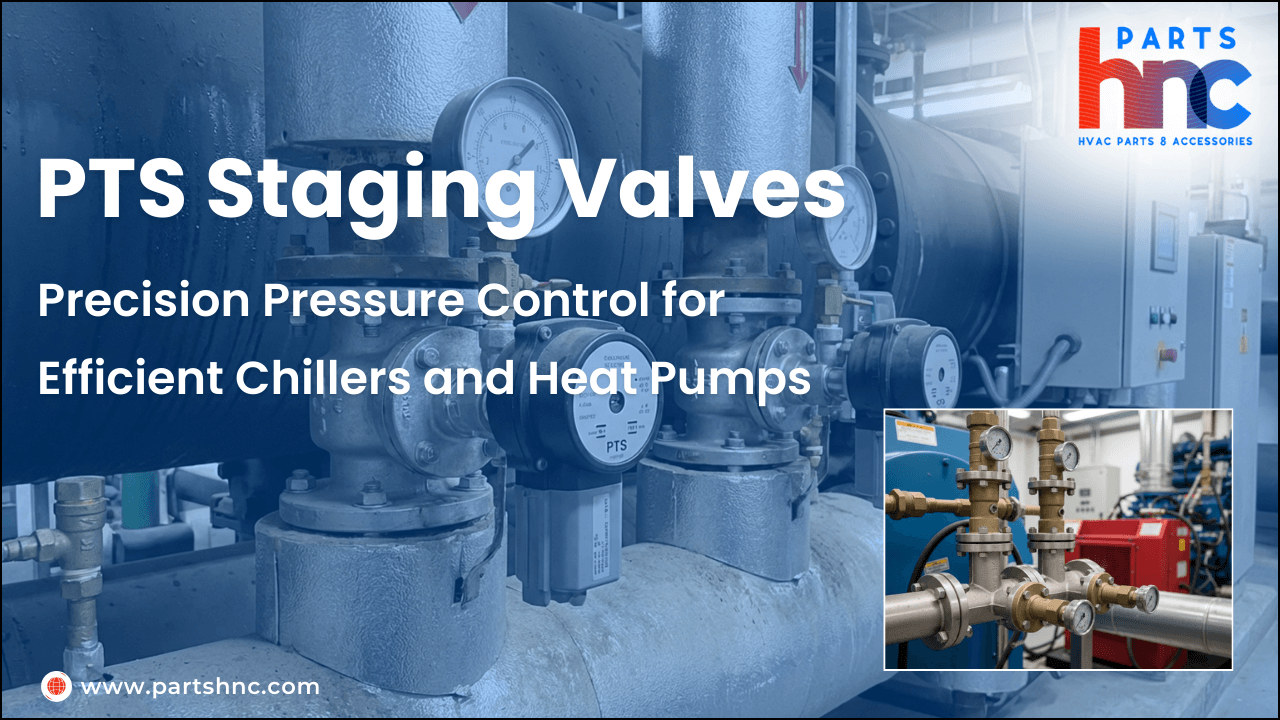
PTS Staging Valves: Precision Pressure Control for Efficient Chillers and Heat Pumps
PTS staging valves are advanced solutions designed for precise pressure control in chillers, heat pumps, and HVAC systems. By accurately modulating refrigerant and fluid flow, they optimize system performance, improve energy efficiency, and ensure stable operating conditions. These valves help reduce wear on compressors and pumps, minimize energy wastage, and extend the lifespan of critical HVAC equipment.
Beyond efficiency, PTS staging valves enhance system reliability and comfort. Their precise operation maintains consistent cooling, heating, and ventilation while preventing pressure fluctuations during varying load conditions. For engineers and facility managers, they offer a practical, long-term solution that combines superior performance, energy savings, and dependable protection for all HVAC systems.
How PTS Staging Valves Enhance HVAC Operation and Compressor Longevity
PTS staging valves are designed to deliver precise flow and pressure control, ensuring HVAC systems operate at peak efficiency while safeguarding critical components like compressors.
-
Balanced System Load: By distributing refrigerant and fluid flow evenly, PTS staging valves prevent localized pressure spikes, protecting compressors from sudden stress and extending their lifespan.
-
Adaptive Seasonal Performance: These valves automatically adjust to seasonal load changes, ensuring compressors and HVAC systems maintain optimal efficiency year-round.
-
Minimized Thermal Shock: Smooth modulation reduces rapid temperature swings within the system, lowering the risk of thermal stress on compressors and piping.
-
Enhanced Part-Load Efficiency: Even at partial loads, PTS staging valves maintain system stability, allowing compressors to run more efficiently without overexertion.
-
Noise Reduction: Controlled flow modulation reduces vibration and operational noise in compressors, contributing to a quieter HVAC environment.
-
Improved System Diagnostics: Many PTS valves are compatible with smart monitoring systems, providing real-time data to detect inefficiencies before they impact compressor performance.
-
Longevity Across Components: Beyond compressors, stabilized pressure and flow protect pumps, valves, and heat exchangers, enhancing the overall durability of HVAC systems.
By integrating PTS staging valves, HVAC systems achieve reliable operation, energy savings, and extended equipment life, making them an essential component for modern, high-performance installations.
Core Features of PTS Staging Valves for Reliable Chiller and Heat Pump Operation
PTS staging valves are engineered to enhance efficiency and ensure precise control in chiller and heat pump systems. These valves deliver dependable performance while optimizing energy consumption.
|
Feature |
Chillers |
Heat Pumps |
|
Adaptive Flow Control |
Automatically adjusts flow based on cooling load fluctuations, reducing energy spikes. |
Modulates heating/cooling dynamically for smoother seasonal transitions. |
|
Minimized Water Hammer Risk |
Gradually opens/closes to prevent sudden pressure surges in chilled water loops. |
Protects refrigerant and piping from abrupt pressure changes during mode shifts. |
|
Optimized Part-Load Performance |
Maintains efficiency even at partial cooling loads, improving system COP. |
Enhances energy savings during low-demand heating cycles. |
|
Integrated Diagnostics |
Provides real-time feedback on flow and valve position for preventive maintenance. |
Monitors operational trends to detect inefficiencies before they escalate. |
|
Compact Footprint |
Space-saving design enables easy retrofitting in mechanical rooms with limited space. |
Suitable for use in residential and commercial installations with limited space. |
|
Freeze Protection |
Automatically limits water flow to prevent freezing in low-temperature cooling applications. |
Protects heat pump loops in cold climates, avoiding costly downtime. |
|
Corrosion-Resistant Coating |
Specialized coatings enhance valve lifespan in chemically treated chilled water loops. |
Resistant to mineral buildup and environmental stress in heating circuits. |
|
Noise Dampening Design |
Reduces turbulence-induced vibration in large-scale chillers for quieter operation. |
Minimizes operational noise in residential and commercial heat pump systems. |
Applications of PTS Staging Valves in Chillers, Heat Pumps, and HVAC Systems for Enhanced Efficiency
PTS staging valves play a critical role in modern HVAC systems, ensuring precise control and energy optimization. Their advanced design makes them indispensable for both commercial and industrial cooling and heating applications.
|
System Type |
Application Area |
Practical Use Case |
|
Chiller Systems |
Commercial Office Buildings |
Adjusts chilled water flow in large loops based on real-time cooling demand. |
|
Industrial Facilities |
Controls multiple chiller stages to optimize efficiency during varying production loads. |
|
|
Hospitals & Data Centers |
Maintains precise temperature and humidity control for sensitive equipment. |
|
|
Heat Pump Systems |
Residential Homes |
Smoothly switches between heating and cooling for seasonal comfort. |
|
Commercial Buildings |
Regulates temperature across multiple zones efficiently. |
|
|
Hotels & Resorts |
Supports guest room temperature stability while reducing energy use. |
|
|
Variable Flow HVAC Systems |
Offices & Schools |
Modulates water or refrigerant flow in VAV or chilled beam systems to match occupancy. |
|
Multi-Zone Commercial Spaces |
Balances airflow and heating/cooling distribution between zones with varying demand. |
|
|
Auditoriums & Conference Centers |
Maintains comfort during fluctuating occupancy without overloading the system. |
Key Benefits of PTS Staging Valves for Modern HVAC Systems
PTS staging valves provide more than just flow control; they deliver measurable advantages that enhance system reliability, operational intelligence, and long-term performance:
-
Improved Energy Management: By precisely matching system output to real-time demand, these valves help reduce unnecessary energy use, lowering utility costs across all types of HVAC installations.
-
Enhanced Equipment Longevity: Smooth and consistent pressure control prevents mechanical stress, extending the life of compressors, pumps, valves, and heat exchangers.
-
Consistent Comfort Levels: Even during rapid load changes, PTS valves maintain stable temperature and humidity, ensuring occupant comfort in commercial, residential, or industrial environments.
-
Reduced Operational Noise: Controlled modulation of flow reduces turbulence and vibration, creating quieter HVAC operation without the need for additional dampening measures.
-
Predictive Maintenance Capability: Integration with smart building systems allows real-time monitoring, alerts, and diagnostics, preventing costly downtime and optimizing maintenance schedules.
-
Adaptability to Dynamic Loads: PTS valves respond quickly to changing occupancy, seasonal shifts, or process demands, keeping chillers, heat pumps, and HVAC systems efficient under varying conditions.
-
Environmental Impact Reduction: Lower energy consumption and optimized system performance contribute to reduced carbon emissions and support sustainability goals.
-
Financial Savings Over Time: The combination of energy efficiency, reduced wear, and predictive maintenance translates into significant operational and lifecycle cost savings.
By focusing on these holistic benefits, PTS staging valves help facility managers achieve long-term efficiency, reliability, and comfort, making them a strategic investment for any modern HVAC system.
Check out decarbonization and electrification in HVAC, driving efficiency and eco-friendly solutions.
How to Select the Right PTS Staging Valve for Your Chiller or Heat Pump System
Selecting the right PTS staging valve ensures stable pressure control, high efficiency, and long equipment life. Proper selection depends on system size, operating conditions, and integration requirements.
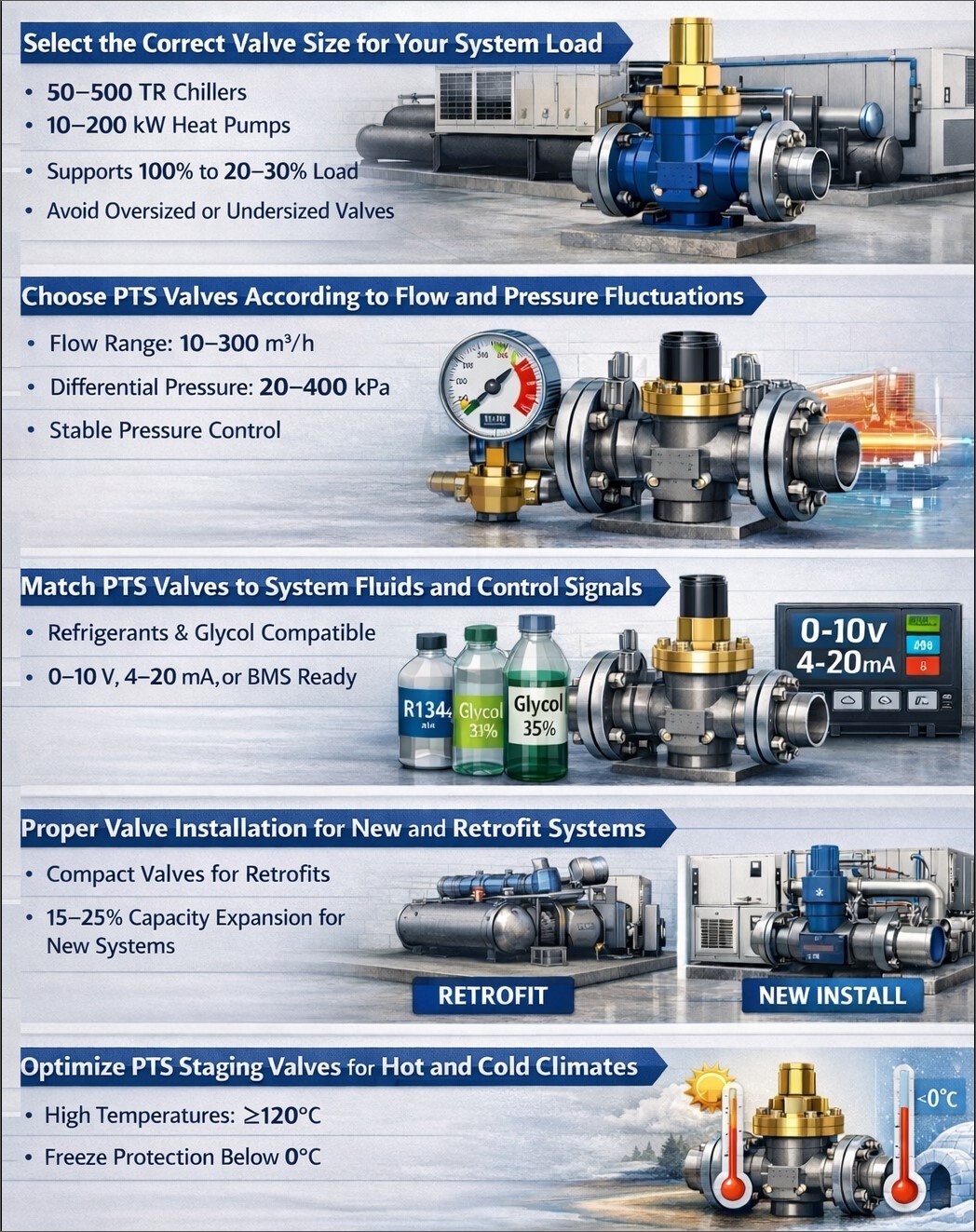
Units Explained
-
TR (Tons of Refrigeration): Measures cooling capacity; 1 TR ≈ 3.517 kW.
-
kW (Kilowatt): Measures heating or cooling power.
-
m³/h (Cubic Meters per Hour): Flow rate of fluid in the system.
-
kPa (Kilopascal): Measures pressure; 1 kPa = 0.145 psi.
-
% Part Load: Portion of the system’s total capacity being used.
-
BMS (Building Management System): Central control system for HVAC and other building equipment.
Considering these parameters simplifies valve selection and ensures efficient, long-term HVAC performance.
Installation and Integration Tips for PTS Staging Valves in HVAC Systems
Optimizing HVAC performance begins with the correct installation and integration of PTS staging valves. A strategic approach ensures maximum efficiency, system longevity, and precise pressure control while avoiding costly downtime. Key tips include:
-
Pre-Installation Assessment: Evaluate system hydraulics, pressure drops, and flow requirements before installation to ensure the selected PTS valve meets system specifications.
-
Orientation and Positioning: Install valves in locations that minimize turbulence and allow natural drainage to prevent airlocks and water hammer, ensuring smooth operation.
-
Seamless Control System Integration: Utilize valves’ built-in diagnostic signals with advanced building automation systems for predictive maintenance and adaptive seasonal load management.
-
Stepwise Commissioning: Test valves gradually under partial loads before full-scale operation to detect irregularities in flow modulation or pressure control.
-
Leak Prevention and Connection Integrity: Use torque-specified fittings, proper gaskets, and anti-corrosion treatments to prevent leaks and extend service life.
-
Environmental and Climate Considerations: Configure valves based on local climate conditions and seasonal temperature variations to prevent freezing, overcooling, or unnecessary energy consumption, ensuring efficient year-round operation.
-
Avoid Over-Cycling: Ensure valves are programmed to modulate gradually rather than open/close rapidly, which can create pressure spikes and stress HVAC components.
These installation practices ensure PTS staging valves deliver precise pressure control, energy efficiency, and reliable HVAC performance.
Explore the future: new refrigerants in HVAC systems for a Sustainable approach that reduces emissions and enhances energy efficiency.
Driving the Future of Smart and Efficient HVAC with PTS Staging Valves
PTS staging valves are redefining HVAC efficiency by combining precision pressure control with intelligent system adaptability. Their integration ensures reduced energy consumption, enhanced equipment longevity, and consistent comfort across residential, commercial, and industrial environments. As HVAC systems evolve, PTS valves remain a critical component for future-ready, sustainable operations.
Key Takeaways:
-
Flexible Zoning Capability: Enables precise temperature and flow management across multiple zones, improving occupant comfort in dynamic spaces.
-
Rapid Response to Load Fluctuations: Quickly adapts to sudden changes in cooling or heating demand, reducing energy spikes.
-
Simplified Retrofit Solutions: Compact design and versatile installation options make it ideal for upgrading existing HVAC systems without major modifications.
-
Enhanced Water and Refrigerant Conservation: Optimizes fluid usage, reducing waste and contributing to sustainable building operations.
-
Predictive System Insights: Provides actionable analytics for engineers to anticipate inefficiencies and prevent downtime.
-
Future-Ready Scalability: Designed to integrate seamlessly with evolving HVAC technologies, supporting next-generation smart buildings.
PTS staging valves deliver a modern solution for precise, energy-efficient HVAC operation. By integrating advanced diagnostics and adaptive control, they enhance system reliability, comfort, and equipment lifespan. These valves position facilities for smarter, greener, and more cost-effective HVAC management in the future.
Looking to maximize the efficiency of your chillers and heat pumps? PartsHnC offers high-quality HVAC replacement parts, including valves, compressors, thermostats, blowers, filters, sensors, and controllers from leading brands like Carrier, Trane, and Daikin to keep your HVAC systems running smoothly, reduce energy costs, and prevent unexpected downtime with reliable components from PartsHnC.
References:
https://www.fluorocarbons.org/news/chiller-and-heat-pump-innovations-with-f-gases-deliver-improved-performance/
https://www.ahrinet.org/certification/ahri-certification-programs/water-cooled-water-chilling-and-heat-pump-water-heating-packages-using-vapor-compression-cycle-wccl
FAQs
How does the initial cost of PTS staging valves compare to traditional staging valves?
PTS valves may have a higher upfront cost due to advanced design and rapid actuation. However, they reduce maintenance and operational risks, lowering long-term expenses.
Why should building owners consider PTS valves for energy efficiency?
Stabilized pressure and controlled startup/shutdown improve system efficiency. This translates into lower electricity consumption and operational savings.
Why are PTS valves preferred in large commercial chillers over standard valves?
They handle higher flow rates and react faster to pressure changes. This ensures stable operation even under heavy or fluctuating loads.