Loyalty Program

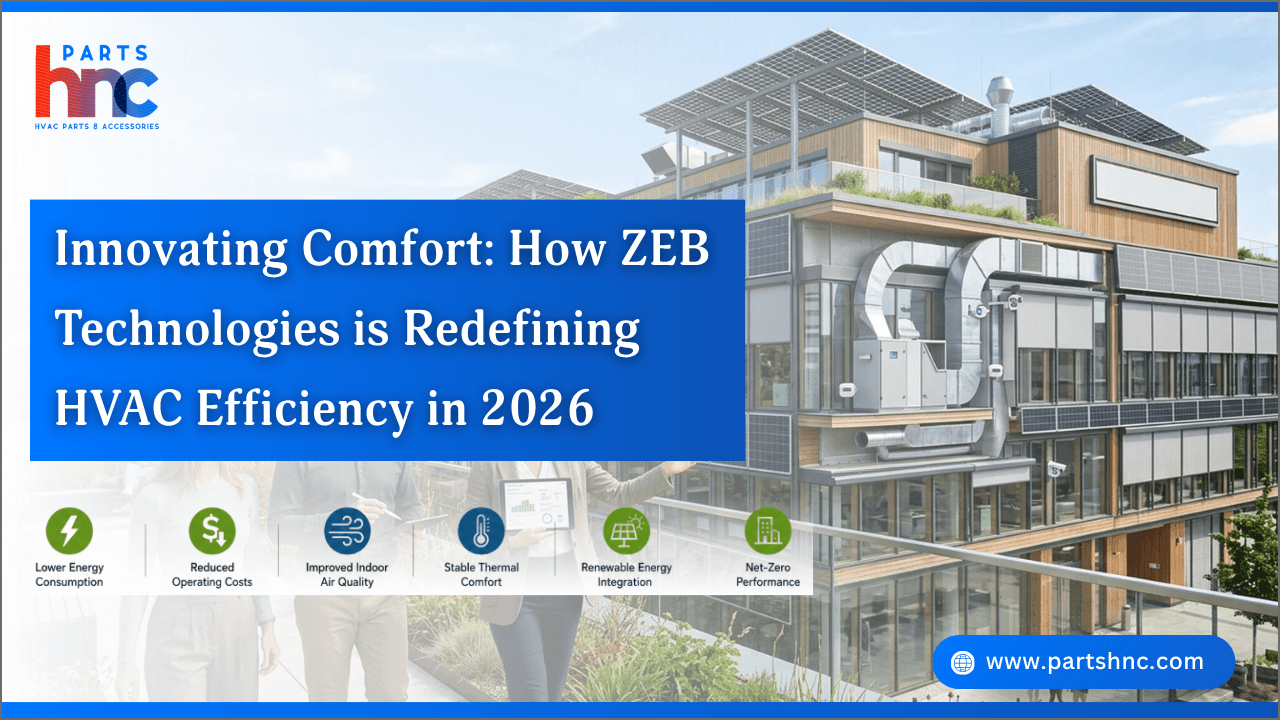
Innovating Comfort: How ZEB Technologies is Redefining HVAC Efficiency in 2026
In 2026, indoor comfort is no longer just about heating or cooling spaces but about intelligence, sustainability, energy optimization, and human-centered design. ZEB Technologies is at the center of this shift, reshaping how modern HVAC systems are designed, deployed, and optimized across buildings.
ZEB Technologies drives this transformation as energy costs rise and climate regulations tighten. HVAC systems, which typically account for approximately 35%–65% of total building energy consumption, are being reinvented through smart engineering, IoT-based controls, and AI-driven optimization. These technologies significantly improve efficiency, reduce waste, and enhance overall building performance.
Understanding ZEB Technologies in Modern HVAC Systems
A Zero Energy Building (ZEB) is a building designed to balance its total annual energy consumption with renewable energy generation, such as solar power. The primary goal is to reduce energy demand first and then supply the remaining requirement through clean energy systems.
In ZEB-driven environments, HVAC efficiency is improved through:
-
Smart thermostatic controls that adjust based on occupancy patterns
-
High-efficiency cooling systems that reduce electricity consumption
-
AI-based predictive maintenance to minimize system losses
-
Energy recovery ventilation systems that reuse exhaust heat
-
Low-global-warming refrigerants that reduce environmental impact
ZEB is a performance standard, not a product. It integrates efficient HVAC systems, automation, and renewable energy to achieve a net-zero energy balance.
How ZEB Technologies is Innovating Modern HVAC System Design
ZEB-based HVAC design reduces energy demand through intelligent control and system optimization. Systems adjust performance based on real-time conditions. Core technologies include:
1. AI-Powered Climate Optimization
One of the most impactful innovations from ZEB Technologies is its use of artificial intelligence to manage HVAC performance dynamically.
Traditional HVAC systems rely on static programming. In contrast, AI-driven systems:
-
Learn occupant behavior patterns
-
Adjust temperature zones automatically
-
Predict peak energy demand periods
-
Optimize compressor and fan speed in real time
This reduces energy consumption significantly while maintaining consistent comfort levels.
For commercial buildings, AI optimization can reduce HVAC energy usage by approximately 10–30%, depending on the building's size and usage patterns.
2. IoT-Enabled Smart HVAC Systems
ZEB Technologies integrates IoT sensors across HVAC systems to monitor:
-
Temperature fluctuations
-
Humidity levels
-
Air quality indices (CO₂, VOC levels)
-
Occupancy density
-
Equipment performance metrics
These sensors feed data into a centralized control system, allowing facility managers to monitor and adjust conditions remotely.
3. Energy-Efficient Compressor Technology
One of the most energy-intensive components in HVAC systems is the compressor. ZEB Technologies has introduced variable-speed compressor systems designed to:
-
Adjust output based on real-time cooling demand
-
Minimize power surges during startup
-
Improve lifecycle efficiency
-
Reduce mechanical wear and tear
This innovation alone significantly contributes to lower electricity consumption and extended equipment lifespan.
4. Eco-Friendly Refrigerants and Sustainability Focus
Environmental concerns around refrigerants have led to global regulations phasing out high-GWP (Global Warming Potential) gases. ZEB Technologies has adopted next-generation refrigerants that:
-
Have a lower environmental impact
-
Improve thermal efficiency
-
Comply with global climate regulations
By integrating sustainable refrigerants, the company aligns with global ESG (Environmental, Social, and Governance) goals, making its systems attractive for green-certified buildings.
5. Predictive Maintenance Using Machine Learning
Unexpected HVAC system failures can lead to costly downtime in commercial environments. ZEB Technologies addresses this with predictive maintenance models. By analyzing sensor data and historical performance, the system can:
-
Detect early signs of component failure
-
Predict maintenance requirements
-
Schedule servicing before breakdowns occur
-
Reduce emergency repair costs
This approach improves system reliability while reducing operational disruptions.
Key Factors and Benefits of ZEB Technologies HVAC Systems
ZEB (Zero Energy Building) HVAC systems improve energy efficiency, reduce electricity consumption, and enhance indoor climate control using advanced technologies. The key benefits include:
|
Factors |
Benefits |
Real World Examples |
|
Lower Energy Consumption |
HVAC systems adjust operation based on real-time occupancy and demand. |
NREL Research Support Facility reduces energy use using smart HVAC controls and solar integration to achieve net-zero performance. |
|
Reduced Operating Costs |
Efficient HVAC components lower electricity consumption and utility costs. |
Wayne Aspinall Federal Building uses geothermal HVAC and smart controls to reduce energy costs. |
|
Improved Indoor Air Quality |
Smart ventilation systems regulate CO₂, humidity, and fresh air supply. |
Phipps Center uses advanced ventilation and sensors to maintain indoor air quality in a net-zero environment. |
|
Stable Thermal Comfort |
Zoned HVAC systems maintain consistent temperature across spaces. |
Hotel Marcel uses all-electric HVAC systems with smart zoning for consistent comfort. |
|
Renewable Energy Integration |
HVAC systems operate with renewable energy sources such as solar power. |
Tutt Library integrates solar energy with efficient HVAC systems to balance total energy use. |
System-Level Insight: In ZEB buildings, HVAC efficiency alone is not enough—true energy savings come from the integration of HVAC, building envelope, occupancy behavior, and renewable energy systems working together as a single optimized system.
Explore how porous plastic sheets boost HVAC cooling efficiency with double-digit energy savings.
How ZEB Technologies Reduces Energy Consumption in Commercial Buildings
ZEB (Zero Energy Building) concepts reduce energy consumption in commercial buildings by integrating smart controls, efficient HVAC systems, and renewable energy sources to minimize energy waste while maintaining performance. The key methods include:
-
Outdoor Climate Data Integration: Weather data such as temperature, humidity, and solar load is used to dynamically adjust HVAC operations, improving efficiency under varying outdoor conditions.
-
Smart Sensor Systems: Occupancy and air quality sensors regulate ventilation and cooling demand. Most commercial buildings maintain CO₂ levels below 1000 ppm while adjusting airflow based on occupancy density.
-
Building Management System (BMS): Optimizes building energy use intensity (EUI), typically 70–150 kWh/m²/year in high-efficiency buildings, while reducing peak load through smarter HVAC scheduling.
-
HVAC Optimization Systems: Variable-speed compressors and zoning controls enhance partial-load efficiency. Modern systems achieve COP values of 3.5–6.0 for improved cooling and heating performance.
-
Energy Recovery Systems: Reuse exhaust air heat for incoming fresh air conditioning, significantly reducing heating and cooling energy demand.
-
Demand-Based Control: Automatically adjusts HVAC operation based on occupancy patterns, preventing energy waste in unused areas.
-
Renewable Energy Integration: Solar and on-site energy systems supply part of the building’s electricity needs, reducing grid dependency and supporting net-zero goals.
Engineering Insight: The effectiveness of HVAC systems in ZEB buildings is often measured using:
-
EUI (Energy Use Intensity)
-
COP (Coefficient of Performance)
-
Load diversity factors
Optimizing these metrics is critical for achieving net-zero performance.
Summary: The Future of Comfort Engineering with ZEB Technologies
ZEB Technologies is transforming HVAC systems from static cooling setups into adaptive energy ecosystems that respond to building behavior and environmental conditions in real time. These systems balance comfort, energy efficiency, and predictive intelligence, enabling self-learning buildings that optimize performance without reducing occupant comfort or experience.
Key Takeaways:
-
HVAC performance is increasingly driven by real-time behavioral data, not fixed schedules
-
Energy efficiency is achieved through continuous system learning rather than manual optimization
-
Comfort is now defined by multi-variable control (air quality, humidity, occupancy patterns)
-
Buildings are evolving into “self-adjusting thermal ecosystems” instead of static structures
-
Energy savings come more from intelligence layering than hardware upgrades alone
-
Future HVAC design focuses on responsiveness to micro-environment changes rather than broad climate zones
Planning to upgrade your HVAC equipment? Explore premium HVAC parts and supplies at PartsHnC. Shop a wide range of HVAC replacement components, including compressors, condenser coils, evaporator coils, fan motors, blower assemblies, control boards, and sensors from leading brands like Carrier, Trane, Daikin, and Lennox, with fast and convenient delivery straight to your doorstep.
References:
https://www.cooldavis.org/2024/11/15/a-zero-energy-building-zeb-home-and-how-it-pays-for-itself
https://ascelibrary.org/doi/10.1061/%28ASCE%29AE.1943-5568.0000304
FAQs
How does ZEB HVAC technology handle sudden climate fluctuations in real time?
ZEB systems use rapid-response control loops that adjust compressor speed and airflow within seconds when weather changes. This prevents thermal lag and keeps indoor conditions stable even during extreme temperature shifts.
Can ZEB HVAC systems learn building usage behavior over time?
Yes, they use machine learning to identify recurring occupancy patterns such as office hours and peak zones. This allows the system to adapt automatically and reduce manual adjustments.
How do ZEB HVAC systems manage energy distribution across multiple buildings?
They connect through centralized platforms that allocate cooling or heating based on demand priority. This enables balanced energy use across multiple buildings instead of operating each one separately.
What makes ZEB HVAC systems more responsive than traditional automation systems?
They rely on continuous sensor feedback instead of periodic updates for decision-making. This significantly reduces the delay between detecting changes and system response.
How do ZEB systems prevent energy loss during partial occupancy hours?
They activate micro-zone conditioning, where only occupied areas receive cooling or heating. This avoids wasting energy on unused spaces during low occupancy periods
|
Disclaimer: This content is published for informational use only and is not intended to represent exact engineering specifications or project requirements. HVAC systems, energy efficiency standards, and Zero Energy Building concepts can vary widely across regions and applications |