Loyalty Program


How to Replace a Goodman Heat Exchanger Safely and Correctly
A Goodman furnace is reliable and efficient, but over time, its heat exchanger can wear out. This component moves heat from the combustion chamber into your home's airflow while preventing harmful gases, such as carbon monoxide, from entering. A damaged heat exchanger poses serious safety risks, making it crucial to know when and how to replace it to maintain safe, efficient heating.
Replacing a Goodman heat exchanger may appear daunting, but with the proper tools, understanding, and safety measures, it can be done successfully. While some homeowners attempt DIY replacements, hiring a licensed HVAC technician is often recommended for gas-fired systems. This guide covers key steps, safety measures, and common pitfalls to ensure your furnace runs safely and efficiently.
Understanding the Role of a Heat Exchanger in Goodman Furnaces
The Goodman furnace heat exchanger is the core part of the furnace, providing warmth to your home while protecting your safety. Often overlooked, it plays a vital role in both comfort and protection.
-
Core of Heat Transfer: The heat exchanger absorbs heat from burning fuel and transfers it to the air circulated throughout your home, ensuring efficient heating.
-
Barrier Against Harmful Gases: It separates combustion gases, such as carbon monoxide, from the indoor air, helping to prevent health risks.
-
Regulates Energy Use: By efficiently transferring heat, the heat exchanger helps your furnace use less fuel, improving overall energy efficiency.
-
Indicator of Furnace Health: Changes in furnace performance, like uneven heating or strange odors, often point to heat exchanger issues, making it a key diagnostic component.
-
Durability and Safety Balance: Goodman furnaces are built for longevity, but a compromised heat exchanger can jeopardize both safety and system lifespan, emphasizing the need for timely inspections.
-
Foundation for Maintenance: Routine cleaning and checks of the heat exchanger prevent buildup, corrosion, and cracks, keeping your furnace reliable season after season.
Proper care and timely replacement of the heat exchanger ensure safe, efficient, and long-lasting furnace performance.
Looking to keep your HVAC system running efficiently year-round? PartsHnC offers essential HVAC replacement parts like compressors, thermostats, blowers, filters, and more. Whether you need parts for residential or commercial systems, maintain peak performance and prevent costly downtime with high-quality components from PartsHnC.
Warning Signs That Indicate a Goodman Heat Exchanger Replacement Is Needed
A heat exchanger may fail quietly before obvious problems appear. Spotting subtle, overlooked signs early can prevent serious hazards.
-
Moisture or Condensation: Accumulation of water inside the furnace may signal cracks in the heat exchanger.
-
Rust Inside Ducts: Unexplained rust in supply ducts can result from gas or moisture escaping through small cracks.
-
Backdrafting Symptoms: Exhaust gases spilling back into the furnace or vents may indicate a compromised exchanger.
-
Corrosion Around Weld Seams: Hidden corrosion along welds often precedes dangerous cracks.
-
Excessive Furnace Cycling: Frequent on-and-off cycles may reflect heat exchanger issues affecting temperature control.
-
Smoke or Fume Trails: Visible smoke or vapor near the burner can signal gas leakage from micro-cracks.
Detecting these subtle warning signs early ensures your Goodman furnace remains safe, efficient, and reliable, preventing hidden hazards from escalating.
Safety Precautions and Tools Required Before Replacing the Heat Exchanger
Replacing a Goodman heat exchanger involves handling gas, electrical components, and hot surfaces, making safety the top priority. Proper preparation can prevent accidents and protect both you and your home.
-
Shut Off Power, Gas, and Pilot Systems: Always turn off electricity, gas, and the pilot light before starting any furnace work.
-
Confirm Gas Line Integrity: Check for gas leaks using a detector or soapy water before and during the replacement process.
-
Enhanced Ventilation: Even in open areas, use fans to circulate air and minimize exposure to lingering combustion gases.
-
Fire-Resistant Work Area: Clear any flammable items from the area and have a fire extinguisher easily accessible.
-
Advanced PPE: In addition to gloves and safety glasses, consider a respirator rated for fine metal and dust particles.
Specialized Tools for a Smooth Replacement:
Specialized tools make a Goodman furnace heat exchanger replacement safer, more efficient, and precise.
-
Torque wrenches to ensure bolts are tightened to manufacturer specs
-
Magnetic trays to keep screws, nuts, and small components organized
-
Flexible inspection mirror and flashlight to check hidden areas inside the furnace
-
Heat-resistant gloves for handling metal parts that may retain heat
-
Replacement gaskets, sealants, and compatible heat exchanger model specific to your Goodman furnace
Proper safety measures and tools ensure a smooth replacement of a Goodman cracked heat exchanger.
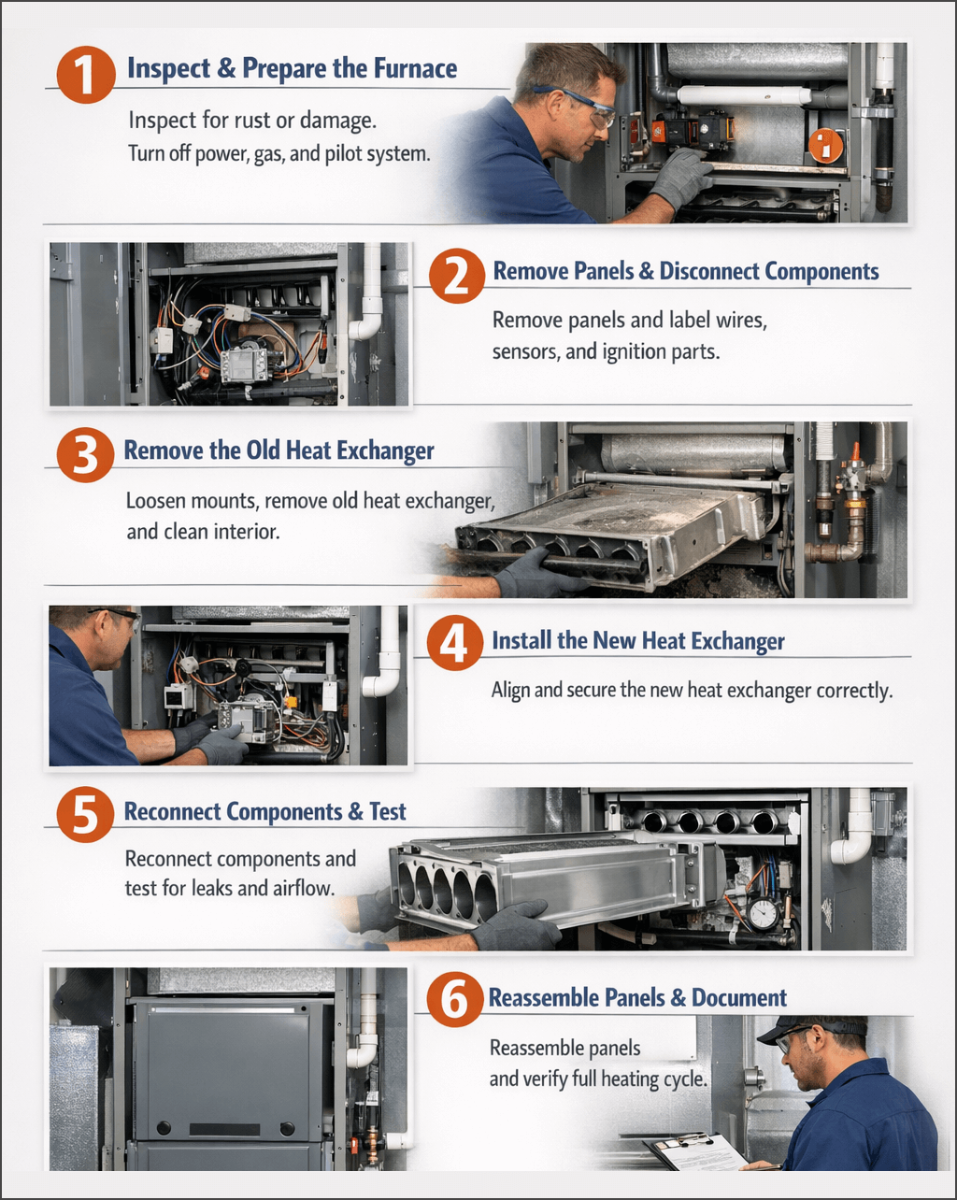
Step-by-Step Process to Replace a Goodman Heat Exchanger
The Goodman furnace heat exchanger replacement process requires precision and proper safety practices to ensure reliable furnace operation. Following a clear step-by-step process helps the furnace operate efficiently and safely.
Common Mistakes to Avoid During Goodman Heat Exchanger Installation
Installing a Goodman heat exchanger requires careful attention and proper technique. Avoiding common mistakes ensures the furnace runs safely, efficiently, and reliably.
-
Failing to Shut Off Power and Gas: Always turn off power and gas before starting work to prevent accidents and injuries.
-
Reusing Old Fasteners or Brackets: Rusted or worn hardware may fail, so use new, approved parts.
-
Neglecting Condensate and Drain Line Checks: Clogged or misaligned drains can cause water damage or furnace shutdowns.
-
Forgetting to Inspect Combustion Pathways: Residue in flues or vents can reduce efficiency and pose safety risks.
-
Using Excessive Sealant: Too much sealant can obstruct airflow or interfere with components.
-
Ignoring Electrical Component Wear: Worn wires or sensors can lead to system errors; test or replace as needed.
-
Skipping Burn-In and Calibration: Not running multiple cycles may hide performance issues.
-
Ignoring Energy Efficiency Impacts: Check ducts, filters, and blower components to ensure optimal performance.
Proper installation protects Goodman heat exchanger warranty coverage and ensures safe, efficient furnace operation.
Check out the step-by-step ICP furnace troubleshooting guide for homeowners to identify issues and keep your heating system running smoothly.
Post-Replacement Testing, Inspection, and Performance Checks
After replacing a Goodman heat exchanger, thorough post-installation checks ensure safety, efficiency, and long-term reliability.
Testing
-
Test Safety Switches: Verify high-limit and rollout switches trip correctly during controlled testing.
-
Measure Carbon Monoxide Levels: Use a CO analyzer to ensure safe venting and no leaks.
-
Check Gas Pressure: Confirm proper manifold and inlet pressure for safe combustion.
-
Test Ignition Sequence: Ensure the furnace ignites smoothly every cycle.
Tip: Always perform tests with the furnace in both low and high-fire modes to detect potential issues under all conditions.
Inspection
-
Confirm Proper Seating: Ensure the exchanger is fully aligned and supported to prevent stress or uneven heating.
-
Inspect Secondary Components: Check inducer motors, pressure switches, and draft systems for smooth operation.
-
Check Condensate Drainage: Ensure traps and pipes flow freely to avoid backups.
Tip: Visually inspect all joints, connections, and seals for leaks or misalignment before moving to performance checks.
Performance Checks
-
Evaluate Cycling and Response: Run multiple furnace cycles to detect ignition delays or short cycling.
-
Verify Heat Distribution: Measure multiple vents to confirm even warmth.
-
Measure Airflow: Ensure the blower delivers proper airflow at each register.
-
Monitor Energy Consumption: Compare current usage with expected levels to confirm efficiency.
Tip: Record your measurements and observations during performance checks to track furnace health over time.
Explore how much does it costs to replace a heat exchanger to budget for repairs and ensure safe, efficient furnace operation.
Conclusion: Ensuring Safe and Efficient Furnace Operation
Safe and efficient furnace operation depends on consistent oversight, preventive care, and timely component servicing. By prioritizing system health, monitoring performance indicators, and addressing minor issues early, you can maximize efficiency, extend equipment life, and maintain a safe indoor environment.
Key Takeaways:
-
Inspect ductwork, vents, and air intakes monthly to prevent airflow restrictions and maintain consistent heating.
-
Replace or clean high-efficiency filters on schedule to improve air quality and reduce strain on the furnace.
-
Test carbon monoxide detectors and safety shutoffs regularly to ensure early detection of hazardous conditions.
-
Lubricate blower motors, belts, and fan bearings periodically to reduce friction and prevent mechanical failure.
-
Check pilot lights, burners, and ignition systems for even flame patterns and efficient fuel usage.
-
Monitor energy consumption and heating output seasonally to identify potential inefficiencies before they escalate.
-
Keep a log of maintenance tasks, unusual noises, and system performance to spot trends and plan proactive interventions.
Regular inspections, preventive maintenance, and attention to safety features keep furnaces operating reliably and efficiently. This approach reduces emergency repairs, conserves energy, and creates a comfortable, safe environment for any home or facility.
FAQs
How to check if a Goodman secondary heat exchanger is bad?
Look for poor heating performance, unusual odors, or moisture buildup, and have a professional inspection confirm the issue.
How to clean a Goodman furnace heat exchanger?
Turn off the furnace, remove accessible panels, and gently clean the heat exchanger with a soft brush or vacuum to remove dust and debris.
How to change a heat exchanger in a Goodman furnace?
Shut off power and gas, remove the old heat exchanger, and carefully install the new one following the manufacturer’s instructions.
Does Goodman use a stainless steel heat exchanger?
Yes, many Goodman furnaces feature stainless steel heat exchangers for improved durability and corrosion resistance.
How difficult is it to replace the heat exchanger in Goodman furnace GMT?
Replacing a Goodman GMT heat exchanger is complex, requiring mechanical skill, proper tools, and safety precautions.