Loyalty Program

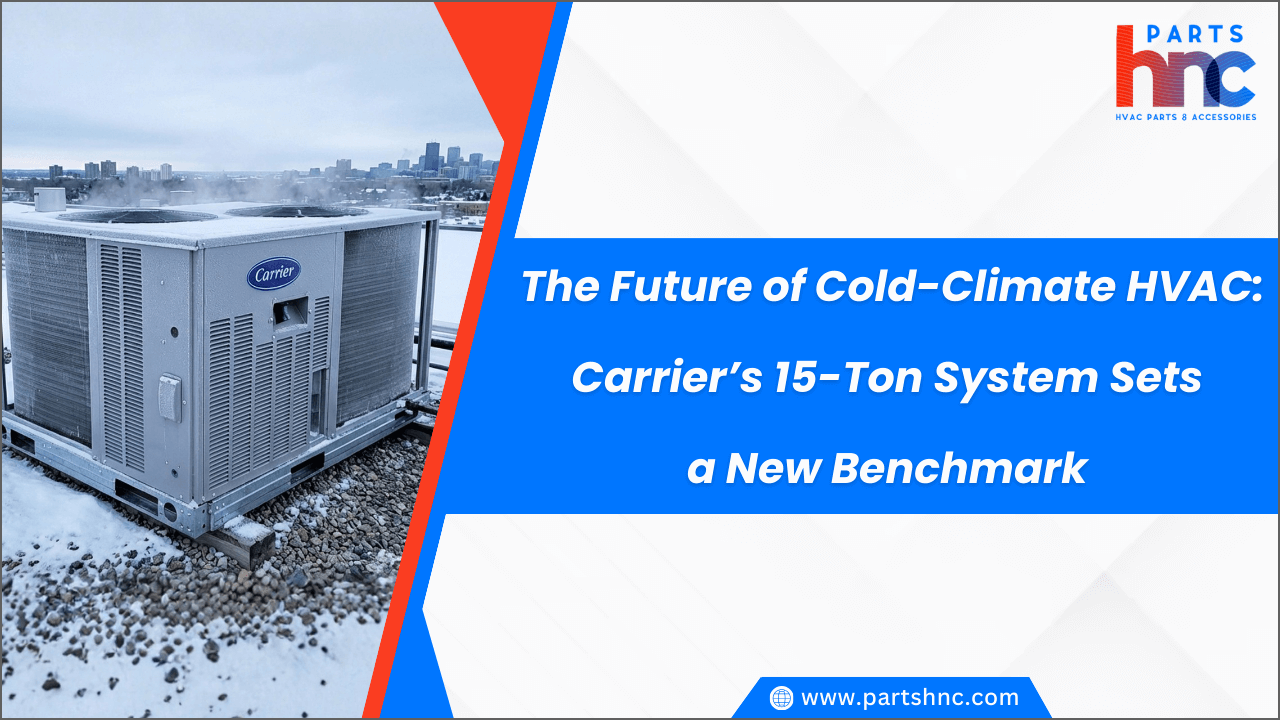
The Future of Cold-Climate HVAC: Carrier’s 15-Ton System Sets a New Benchmark
Carrier has once again raised the bar in heating, ventilation, and air conditioning (HVAC) technology with its latest 15-ton system designed specifically for cold climates. Engineered to deliver unmatched efficiency and reliability, this system promises to redefine comfort standards in regions where winter temperatures exceed the limits of traditional HVAC units.
Built with advanced thermal management and smart controls, Carrier’s new system ensures consistent performance even in extreme conditions. By combining innovative engineering with energy-saving features, it sets a new benchmark for sustainable, high-capacity HVAC solutions in challenging environments.
Carrier’s 15-Ton HVAC System Redefining Cold-Climate Performance
Carrier’s 15-ton HVAC system represents a major advancement in delivering dependable heating and cooling for extreme cold climates. It is designed to maintain efficiency, stability, and comfort where conventional HVAC systems often fail.
Here’s How Carrier’s HVAC Is Redefining Cold-Climate Climate Control:
-
Cold-Climate Optimized Design: Engineered to perform reliably in sub-zero temperatures, ensuring consistent operation during harsh winter conditions.
-
High-Capacity Performance for Large Spaces: The 15-ton output provides powerful and uniform climate control for large commercial and industrial facilities.
-
Advanced Heat Pump and Compressor Technology: Optimized components maintain heating efficiency and system stability even at very low ambient temperatures.
-
Intelligent Controls and Defrost Management: Smart system controls optimize performance while reducing energy loss caused by unnecessary defrost cycles.
-
Durable Construction for Long-Term Reliability: Built with robust materials and components that withstand extreme weather and temperature fluctuations.
-
Improved Energy Efficiency and Reduced Operating Costs: Minimizes reliance on supplemental heating, helping lower energy consumption and long-term operating expenses.
Explore Carrier CDUs and advanced thermal technologies for efficient, precise, and cost-effective cooling in high-density data centers.
Smart HVAC Technology Driving Energy Efficiency and Sustainability in Harsh Winter Conditions
Smart HVAC systems are redefining winter performance for large commercial and industrial spaces. Advanced engineering and innovative technology deliver precise climate control, even in extreme cold.
How Next-Gen HVAC Delivers Peak Cold Performance:
-
Adaptive Load-Sensing Technology: Continuously analyzes building occupancy, heat loss, and weather conditions to dynamically adjust heating output, ensuring comfort without wasting energy.
-
Micro-Channel Heat Exchanger Design: Uses high-surface-area channels to transfer heat efficiently at very low temperatures, enabling high-capacity performance without oversized components.
-
Predictive Defrost Algorithms: Anticipates frost formation and reduces unnecessary defrost cycles, preventing energy loss before it occurs.
-
Integrated Thermal Zoning: Precisely heats different areas based on occupancy and thermal demand, maintaining comfort and efficiency across large spaces.
-
Self-Optimizing Refrigerant Flow & Variable-Speed Fans: Continuously fine-tunes refrigerant circulation and airflow to sustain heating efficiency while minimizing noise and energy use.
-
Cold-Weather Resilience Testing: Every system undergoes extreme winter simulations to ensure reliability and performance far beyond standard conditions.
Best Installation Practices for Commercial and Industrial Applications
Carrier’s 15-ton HVAC system is engineered for large commercial and industrial facilities. Its advanced design ensures optimal performance, reliability, and energy efficiency in demanding environments.
|
Application / Scenario |
Key Benefit |
Feature Highlight |
|
Warehouses & Distribution Centers |
Consistent temperatures across large storage areas |
Protects inventory and ensures employee comfort |
|
Manufacturing Facilities |
Uniform heating and cooling |
Supports process-critical operations and equipment efficiency |
|
Office Complexes & Corporate Campuses |
Quiet, efficient climate control across multiple zones |
Maintains comfort while minimizing energy use |
|
Cold-Climate Resilience |
Reliable operation in sub-zero temperatures and harsh winter conditions |
Reduces downtime and ensures consistent performance |
|
Flexible Installation Options |
Adaptable to rooftop, floor-mounted, or custom layouts |
Fits various building structures easily |
|
Low-Maintenance, Long-Term Reliability |
Reduced maintenance and extended system lifespan |
Durable components with smart monitoring systems |
|
Energy-Efficient Operation |
Lower energy consumption while maintaining performance |
Advanced heat pump, compressor, and intelligent controls |
Challenges Solved: How Carrier Tackles Common Cold-Climate HVAC Issues
Extreme cold introduces subtle HVAC problems that often go unnoticed. Carrier’s 15-ton system addresses these with advanced engineering and smart controls.
Challenge: Air Stratification in Tall Spaces
Solution: Variable-speed fans and adaptive airflow management effectively mix warm and cold air, eliminating temperature layering in high-ceiling warehouses or atriums.
Challenge: Rapid Load Fluctuations During Door Openings
Solution: Instantaneous load-sensing technology detects sudden heat loss from frequent door cycles and dynamically ramps heating to maintain comfort without energy waste.
Challenge: Condensation in Low-Activity Zones
Solution: Integrated micro-zone humidity monitoring automatically adjusts local heating output, preventing moisture buildup and protecting sensitive equipment or inventory.
Challenge: System Overcompensation in Transitional Weather
Solution: Predictive thermal algorithms analyze outdoor temperature swings and gradually modulate output, avoiding overshooting heating demands in mid-winter thaws.
Challenge: Noise Disruption in Quiet Workspaces
Solution: Smart fan speed and refrigerant flow optimization minimize operational noise while sustaining high-capacity heating in office or lab environments.
Challenge: Unequal Energy Distribution Across Rooftop Units
Solution: Self-optimizing refrigerant flow balances load across multiple units on large roofs, ensuring uniform performance and preventing hot or cold spots.
Carrier’s system tackles these subtle but impactful cold-climate issues, delivering not just warmth but precise, stable, and efficient comfort in environments where conventional systems struggle.
How Carrier Outperforms Traditional HVAC in Extreme Cold
Traditional HVAC systems struggle in extreme cold, losing efficiency, using more energy, and delivering uneven heating. Carrier’s 15-ton system overcomes these issues with advanced heat pump technology, predictive defrost, and adaptive controls, providing consistent comfort, lower energy use, and reliable performance even in sub-zero temperatures.
Read how cold-climate heat pump rooftop units maximize ROI by cutting energy costs and boosting efficiency in commercial HVAC systems
Conclusion: Elevating the Future of High-Performance Cold-Weather HVAC
Carrier’s 15-ton cold-climate HVAC system is redefining how commercial and industrial buildings manage extreme winter conditions. Beyond standard energy efficiency and reliability, it introduces innovative capabilities that enable facility operators to rethink comfort, operational workflow, and resource management. The system allows precise climate control, minimizes hidden energy losses, and dynamically adapts to environmental and occupancy changes in ways traditional HVAC cannot.
Key Takeaways
-
Dynamic Micro-Zoning: Fine-tunes temperatures for specific workspaces or storage zones, preventing over- or under-heating in often-neglected areas.
-
Proactive Frost Prevention: Predictive defrost and heat retention algorithms stop subtle frost buildup before it wastes energy.
-
Quiet High-Capacity Operation: Variable-speed fans and adaptive airflow deliver large-scale heating without disturbing sensitive offices, labs, or production areas.
-
Smart Winter Load Balancing: Sensors anticipate rapid temperature shifts caused by door openings or rooftop exposure, automatically adjusting the output.
-
Extended Component Lifespan: Intelligent monitoring reduces wear from freeze-thaw cycles, extending equipment life and lowering maintenance costs.
-
Hidden Energy Optimization: Self-optimizing refrigerant and airflow prevent wasted energy in low-activity zones, often overlooked in traditional setups.
Carrier’s 15-ton system doesn’t just heat buildings, it reinvents cold-climate HVAC. By combining intelligence, efficiency, and durability, it empowers operators to maximize comfort, reduce energy waste, and maintain reliable performance in extreme conditions, setting the stage for the future of high-performance HVAC.
Looking to upgrade your heat pump parts in 2026? Order from PartsHnC for a wide selection of HVAC replacement parts and supplies to keep your system running at peak efficiency. From compressors, thermostats, condenser fan motors, control boards, contactors, capacitors, relays, expansion valves, blower motors, air filters, to side-discharge units, we stock essential components from top brands like Trane, Carrier, Rheem, and Goodman. Shop now and enjoy fast shipping straight to your door!
References:
https://www.energy.gov/sites/default/files/2024-11/bto-peer-2024-32252-residential-cchp-technology-challenge-mendon.pdf
ww2.jacksonms.gov/browse/L8Kh4G/7OK136/cold-climate_heat-pump__technology.pdf
https://yaleclimateconnections.org/2023/03/do-heat-pumps-work-in-cold-places-heres-what-you-need-to-know/
FAQs
How much does a Carrier 15-ton HVAC system cost?
The equipment alone typically costs between $9,000 and $22,000. Total installed cost can range from $25,000 to $60,000, depending on site conditions.
How can I get rebates for a cold-climate HVAC system?
Many regions offer energy-efficiency incentives or tax credits. Eligibility depends on system efficiency and local programs.
Why does a 15-ton system need special electrical power?
Most require three-phase commercial power for high-capacity operation. Older buildings may need upgrades to support it.
How can existing ductwork be used with a 15-ton system?
Sometimes ducts can be reused if properly sized. Often, modifications are required to handle the higher airflow.