Loyalty Program

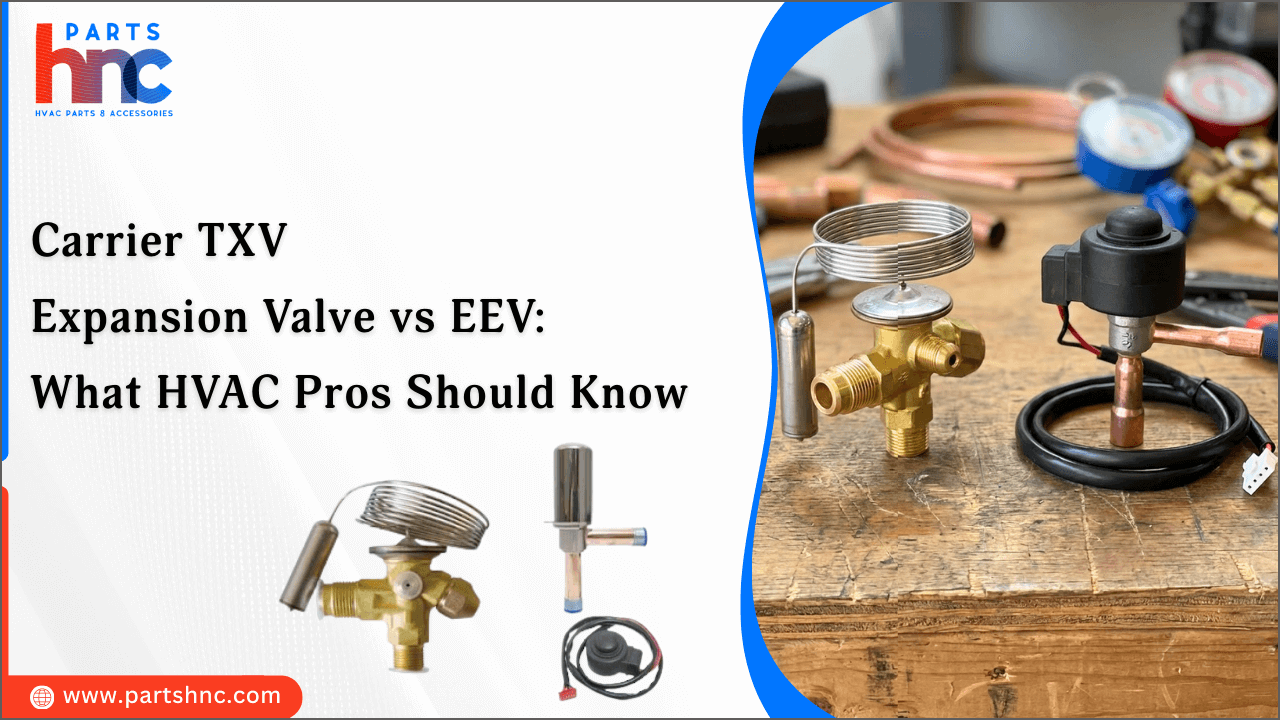
Carrier TXV Expansion Valve vs EEV: What HVAC Pros Should Know
In today’s high-systems HVAC landscape, expansion valve technology is critical for system performance, energy efficiency, and long-term reliability. For residential systems, using a Carrier TXV expansion valve ensures precise refrigerant flow and consistent comfort, but HVAC professionals also need to understand how electronic expansion valves (EEVs) operate for more advanced applications.
While both devices regulate refrigerant flow and maintain evaporator performance, their operation, efficiency levels, service requirements, and compatibility with modern controls vary significantly. This in-depth guide explores everything HVAC pros need to know about Carrier TXV vs EEV, helping you make informed decisions for residential and commercial applications.
What Is a Carrier TXV Expansion Valve and How Does It Operate?
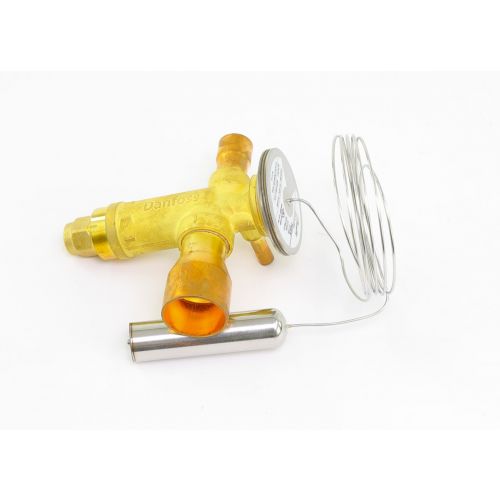
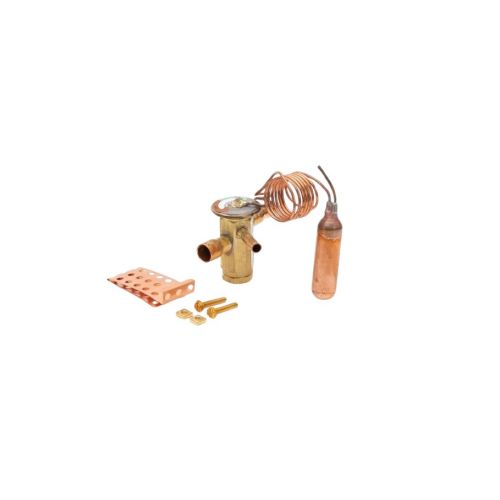
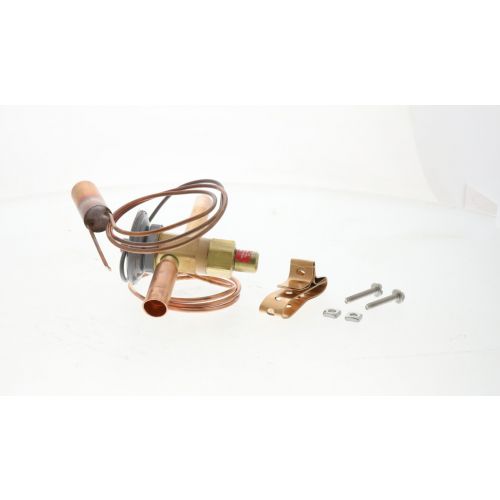
A Carrier TXV is a load-responsive metering device designed to stabilize evaporator performance under changing conditions. In many Carrier systems, it’s factory-matched to the coil and tonnage for precise control. Understanding how it behaves beyond basic superheat readings helps HVAC pros diagnose issues more accurately.
Key Components of a Carrier TXV Expansion Valve:
-
Power Head Assembly: Factory-charged and calibrated for precise superheat control.
-
Sensing Bulb: Detects suction line temperature to regulate refrigerant flow.
-
Capillary Tube: Transfers bulb pressure to the diaphragm for modulation.
-
Diaphragm: Opens or closes the valve based on pressure differences.
-
Spring and Adjustment Mechanism: Sets baseline superheat and allows fine-tuning.
-
Valve Seat and Needle: Controls the exact amount of refrigerant entering the evaporator.
-
Internal Strainer: Protects the valve from debris and contaminants.
-
Equalization Port (Internal or External): Balances pressure for accurate flow in high-pressure-drop coils.
Common TXV Failure Modes:
-
Bulb losing charge
-
Sticking or restricted valve
-
Debris contamination
-
Improper superheat adjustment
-
Moisture-related freezing
Types of Carrier TXVs and Their Applications:
-
Carrier Thermal Expansion Valve: Standard TXV for stable refrigerant flow in residential and light commercial systems.
-
Carrier AC Expansion Valve: Common in AC-only systems for reliable cooling performance.
-
Carrier Internally Equalized TXV: For evaporators with minimal pressure drop; precise superheat control.
-
Carrier Externally Equalized TXV: Handles significant pressure drop for accurate superheat regulation.
-
Carrier Balanced Port TXV: Maintains stable refrigerant flow under varying loads.
-
Carrier Bi Flow TXV: Supports heat pumps, allowing flow in both heating and cooling directions.
Looking to upgrade your HVAC systems? Shop HVAC parts and supplies for residential and commercial systems from PartsHnC. We offer expansion valves, filter driers, and control components from trusted brands such as Carrier, Trane, and Rheem, with fast delivery directly to your door.
What Is a Carrier Electronic Expansion Valve (EEV) and How Does It Work
A Carrier EEV is a precision metering device that dynamically adapts refrigerant flow based on both real-time evaporator conditions and system-wide performance algorithms. Unlike traditional TXVs, it integrates directly with Carrier controllers to anticipate load changes, minimize cycling losses, and optimize coil utilization.
Core Purpose of an EEV In Modern HVAC Systems:
-
Predictive Refrigerant Modulation: Adjusts flow before major load swings occur to stabilize superheat.
-
Integrated System Efficiency: Works in tandem with variable-speed compressors and fans for peak performance.
-
Load-Sensitive Capacity Control: Balances multiple evaporator circuits in VRF or multi-zone systems.
Key Components of a Carrier EEV:
-
Micro-Step Stepper Motor Actuator: Moves the valve needle in ultra-fine increments for highly precise flow control.
-
High-Precision Valve Needle and Body: Designed for minimal leakage and accurate metering even at very low loads.
-
Embedded Control Board: Runs Carrier-specific algorithms to translate sensor data into flow adjustments.
-
Multi-Sensor Array (Pressure, Temperature, Superheat): Provides redundant inputs for fail-safe operation.
-
Feedback Position Sensor: Confirms needle location in real time for exact refrigerant delivery.
-
Thermal Compensation Mechanism: Offsets environmental temperature fluctuations for consistent performance.
For HVAC professionals looking to replace a TXV safely, watch this step‑by‑step guide on how to replace a Thermostatic Expansion Valve (TXV).
Carrier TXV vs EEV: Key Differences in Efficiency, Control, and Diagnostics
While both TXVs and EEVs meter refrigerant into the evaporator, their effect on system stability and efficiency differs significantly. TXVs use mechanical feedback, whereas EEVs electronically adapt to load changes, optimize coil performance, and provide real-time diagnostics.
Key Operational Differences Between Carrier TXV and EEV:
|
Feature |
Carrier TXV |
Carrier EEV |
|
Flow Control Precision |
Mechanical control can slightly overfeed or underfeed |
Stepper motor allows ultra-precise, load-specific flow |
|
Evaporator Coil Utilization |
May leave parts of the coil underutilized |
Dynamically balances refrigerant across multi-circuit coils |
|
Adaptability to Low Ambient |
Limited performance in low ambient or partial-load |
Predictive modulation ensures stable low-ambient operation |
|
System Integration |
Mostly standalone with minimal coordination |
Fully communicates with controllers and variable-speed compressors |
|
Transient Load Response |
Slower reaction may cause superheat spikes |
Predictive adjustments prevent compressor hunting and overshoot |
|
Service Diagnostics |
Relies on manual superheat checks |
Provides real-time sensor data and fault reporting |
|
Refrigerant Optimization |
Static design may slightly reduce efficiency |
Continuously adapts flow to maximize energy use and system demand |
Find out how PTS Staging Valves provide precise pressure control to boost performance, improve efficiency, and ensure reliable operation.
Carrier TXVs and EEVs Installation and Service Considerations HVAC Pros Should Evaluate
Proper installation and maintenance of Carrier TXVs and EEVs are essential for reliable operation, energy efficiency, and long system life. HVAC professionals must pay attention to valve sizing, line design, sensor placement, and controller integration. To install Carrier TXV and EEV follow the steps outlined below:
Step 1: Select the Correct Valve: Choose a Carrier TXV or EEV compatible with the system’s refrigerant type and tonnage. For EEVs, verify controller compatibility to ensure proper modulation and control.
Safety Tip: Always double-check Carrier part numbers; using the wrong valve can cause improper superheat or modulation.
Step 2: Prepare the System: Recover refrigerant and clean all lines to remove debris or moisture. Confirm proper line insulation and readiness before valve installation.
Safety Tip: Use a nitrogen purge while brazing to protect the valve from oxidation and debris.
Step 3: Mount the Valve: For TXVs, install at the evaporator inlet and attach the sensing bulb securely with insulation. For EEVs, secure the coil in the liquid line with correct alignment and fit the coil boot properly.
Safety Tip: Avoid bending or stressing the valve; improper mounting can affect flow and performance.
Step 4: Install Strainers (EEV only) and Protect During Brazing: EEVs require strainers in the proper flow direction to protect the valve. For both TXVs and EEVs, shield the valve during brazing to prevent heat damage.
Safety Tip: Always use a heat shield or wet rag to protect sensitive valve components during soldering or brazing.
Step 5: Evacuate and Recharge the System: Vacuum the system thoroughly before charging with refrigerant. Follow Carrier specifications to ensure accurate system pressure and charge levels.
Safety Tip: Check for leaks during evacuation; even minor leaks can reduce efficiency and cause valve malfunction.
Step 6: Verify Operation and Perform Maintenance: For TXVs, check superheat manually to confirm proper operation. For EEVs, power on the controller, verify modulation, and confirm sensor readings; perform maintenance only if necessary.
Summary: Carrier TXV Expansion Valve vs EEV — Which One Should HVAC Pros Choose?
Choosing between Carrier TXV and EEV is about system responsiveness and control precision, not just efficiency. TXVs perform best in stable-load systems, while EEVs excel in variable-capacity setups with advanced diagnostics. HVAC pros should also understand how to install a Carrier TXV valve properly to ensure reliable operation.
Key Takeaways:
-
EEVs adjust precisely under partial loads, reducing short cycling, while TXVs perform best under predictable loads.
-
EEVs integrate with smart controllers, enabling tracking of stepper motor positions, superheat trends, and fault history.
-
Minor misalignment or sensor misplacement in EEVs can affect efficiency, whereas TXVs tolerate small installation variances.
-
TXVs need routine manual checks, while EEVs can alert technicians to early issues, minimizing downtime.
-
EEVs can improve seasonal efficiency by up to 20% in variable-load or high-ambient scenarios where TXVs may underperform.
-
EEVs support integration with BMS and predictive maintenance; TXVs are limited to manual monitoring.
FAQs
How to know if a Carrier TXV valve is bad?
Signs include fluctuating superheat, uneven cooling, or ice formation on the evaporator coil. Check for a stuck needle, leaking bulb, or debris blocking flow.
How to properly adjust a Carrier TXV valve?
Adjust the superheat screw according to Carrier specifications while the system is running. Always monitor suction line temperature and pressure to ensure stable operation.
How to know if Carrier EEV is bad?
EEV issues often show as erratic superheat, unusual compressor cycling, or controller fault codes. Inspect for stepper motor errors or sensor malfunctions within the system.
What happens when a Carrier expansion valve goes bad?
A failing TXV or EEV can cause insufficient cooling, frost on coils, high energy use, or compressor strain. Prompt diagnosis and repair prevent further system damage.
| Disclaimer: This article is intended for informational purposes only and is not a substitute for manufacturer instructions. Always follow Carrier’s official guidelines and safety procedures when installing or servicing TXV and EEV valves. |