Loyalty Program

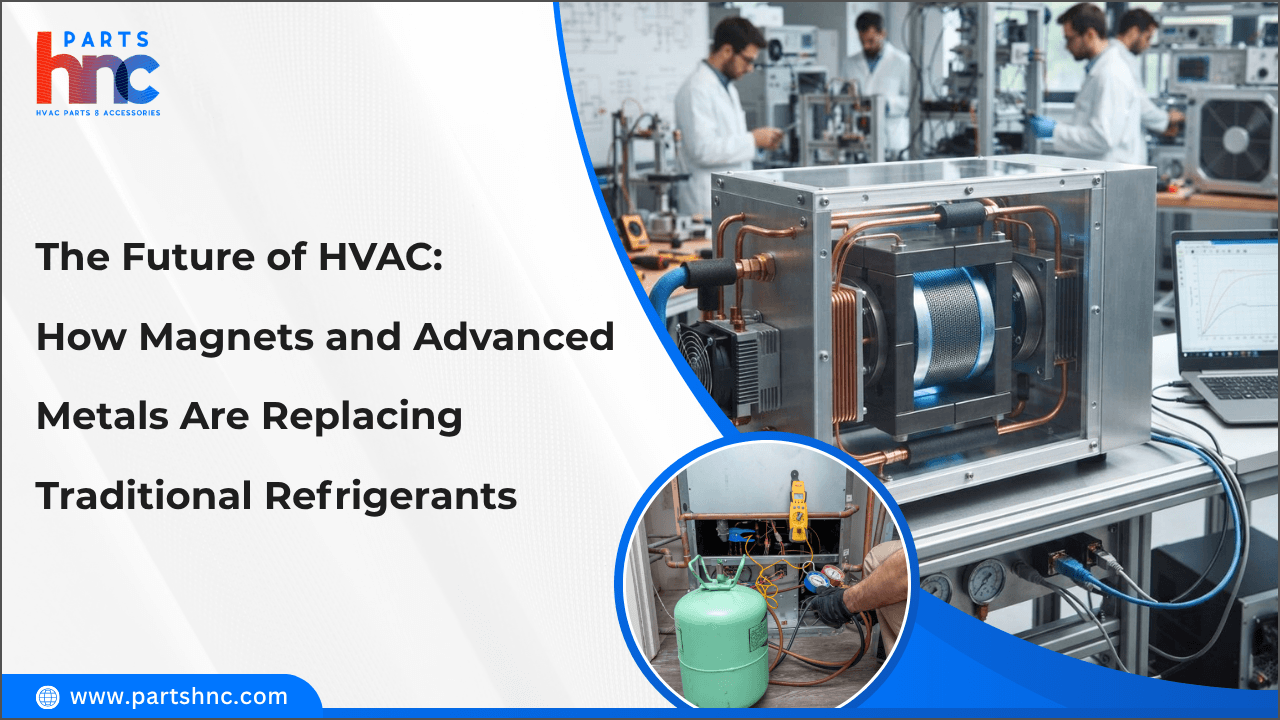
The Future of HVAC: How Magnets and Advanced Metals Are Replacing Traditional Refrigerants
Magnets and advanced metals are transforming the future of HVAC by introducing innovative cooling technologies that eliminate the need for traditional refrigerants. From magnetic cooling systems to solid-state climate control solutions, these next-generation advancements promise greater energy efficiency, lower environmental impact, and improved indoor comfort for homes and businesses.
As the demand for sustainable HVAC systems continues to grow, refrigerant-free technologies are gaining industry attention. Advanced metal alloys and magnetocaloric materials could redefine heating and cooling by delivering cleaner, smarter, and more eco-friendly performance for the next generation of HVAC solutions.
How Magnets and Advanced Metals Are Emerging as Alternatives to Traditional Refrigerants
Traditional HVAC systems use refrigerants to transfer heat through compressors, evaporator coils, and condensers. Despite improved efficiency, they still face environmental and maintenance challenges. Magnets and advanced metals offer a refrigerant-free alternative by using specialized materials to absorb, transfer, and release heat more efficiently.
Several factors are accelerating this shift:
-
Increasing demand for sustainable cooling technologies
-
Stricter environmental regulations on refrigerants
-
Growing adoption of energy-efficient buildings
-
Rising residential and commercial energy costs
-
Advances in material science and thermal engineering
-
Better compatibility with smart HVAC technologies
Refrigerant-free cooling systems reduce environmental impact by eliminating leaks, lowering emissions, minimizing maintenance, supporting green building initiatives, and enhancing long-term sustainability.
How Magnets and Advanced Metals Are Transforming Refrigerant-Free HVAC Technology
Magnetic cooling technology is among the most promising developments shaping future HVAC systems.
Unlike conventional air conditioners that compress refrigerants to transfer heat, magnetic cooling utilizes the magnetocaloric effect, a phenomenon in which specialized materials heat and cool when exposed to magnetic fields.
How Magnetic Cooling Works
The cooling cycle generally includes four stages:
-
Magnetocaloric materials are exposed to magnetic fields.
-
The material temporarily increases in temperature.
-
Heat is transferred away through heat exchange mechanisms.
-
Removing the magnetic field causes the material to cool rapidly and absorb heat from its surroundings.
This continuous process generates cooling effects without the use of conventional refrigerants.
Advanced Metals Powering Next-Generation HVAC Systems
Researchers are developing advanced materials capable of delivering exceptional thermal performance, including:
-
Rare-earth metal alloys
-
Shape-memory alloys
-
Magnetocaloric compounds
-
High-thermal-conductivity metals
-
Advanced semiconductor materials
These materials make refrigerant-free cooling technologies increasingly practical for future applications.
Emerging Refrigerant-Free Technologies
1. Magnetic Refrigeration: Magnetic refrigeration improves energy efficiency, reduces greenhouse gas emissions, lowers maintenance requirements, enables quieter operation, and extends component life.
2. Elastocaloric Cooling: Elastocaloric materials generate cooling through mechanical stress, making them suitable for residential HVAC systems, compact cooling solutions, commercial refrigeration, and smart thermal management.
3. Thermoelectric Cooling: Thermoelectric systems use electrical currents through semiconductor materials to provide precise temperature control, minimal moving parts, exceptional reliability, and long-lasting durability.
The combination of advanced materials and intelligent controls could significantly improve overall HVAC performance.
Explore the future of cooling: inverter technology in advanced HVAC air conditioners for modern cooling systems.
Key Benefits of Magnets and Advanced Metals in Next-Generation HVAC Systems
Advanced metals and magnets enable solid-state magnetic cooling and filtration, replacing conventional refrigerants and compressors for higher efficiency and sustainability.
1. Superior Energy Efficiency: Traditional HVAC compressors consume significant energy, while magnetic cooling uses magnetocaloric materials and magnetic fields to improve efficiency.
-
Reduced Energy Consumption: Lowers electricity usage by up to 30% compared to conventional vapor-compression systems.
-
Work Recovery: Recovers energy through rotating magnetic fields, increasing overall cooling cycle efficiency.
2. Environmental Sustainability: Magnetic HVAC systems eliminate the need for conventional refrigerants, reducing environmental impact and supporting sustainable cooling technologies.
-
Zero Direct GWP: Water serves as the heat transfer fluid, eliminating high-GWP refrigerants and refrigerant leaks.
-
Regulatory Compliance: Refrigerant-free operation simplifies compliance with environmental regulations and reduces handling requirements.
3. Lower Maintenance and Longer Lifespan: With fewer mechanical components, magnetic cooling systems experience less wear, lower maintenance needs, and longer service life.
-
Fewer Moving Parts: Eliminates vibration-heavy compressors, reducing mechanical failures.
-
Lower Operating Pressures: Low-pressure operation minimizes component wear and improves reliability.
-
Whisper-Quiet Operation: The absence of conventional compressors enables quieter HVAC performance.
4. Advanced Magnetic Filtration: Advanced magnetic filtration protects HVAC, hydronic, and boiler systems by removing harmful metallic debris.
-
Sludge Elimination: Magnetic filters capture magnetite and iron oxide particles, preventing sludge buildup.
-
Extended Equipment Life: Cleaner systems protect pumps, heat exchangers, and other critical components from corrosion and premature wear.
Learn more about eco-cooling made simple: how low-GWP units save energy and reduce environmental impact.
Real-World Applications of Magnets and Advanced Metals in Future HVAC Solutions
Although refrigerant-free HVAC technologies are still developing, their potential applications extend across multiple industries.
|
Application |
HVAC Role |
Key Technologies / Use Cases |
|
Residential HVAC Applications |
Delivers energy-efficient, smart, and refrigerant-free home climate control. |
Refrigerant-free air conditioning, high-efficiency heat pumps, smart temperature management, compact cooling designs. |
|
Commercial Building Applications |
Enhances energy efficiency and sustainable climate control in large facilities. |
Office buildings, retail facilities, hotels, schools, and hospitals. |
|
Data Center Cooling |
Maintains optimal temperatures for high-density computing and critical IT infrastructure. |
Improved thermal management, reduced energy consumption, increased system reliability, and sustainable data center operations. |
|
Industrial Applications |
Provides precise and reliable temperature control for specialized industrial processes. |
Pharmaceutical manufacturing, food processing, semiconductor production, and laboratory environments. |
System-Level Insight:
Future HVAC systems will likely combine multiple technologies rather than rely on a single solution. Hybrid systems integrating magnetic cooling, advanced materials, smart controls, and renewable energy sources may become a practical pathway toward sustainable climate control.
Summary: The Future of Magnets and Advanced Metals in Sustainable HVAC Innovation
The future of HVAC is shifting toward sustainable, energy-efficient solutions, with magnets and advanced metals enabling refrigerant-free cooling technologies. These innovations can enhance efficiency, minimize environmental impact, and facilitate more effective climate control systems as advanced thermal technologies continue to evolve.
Key Takeaways
-
Magnets and advanced metals are driving innovation in refrigerant-free HVAC technologies.
-
Magnetic cooling systems use advanced materials to transfer heat without traditional refrigerants.
-
Solid-state cooling solutions could improve energy efficiency and reduce environmental impact.
-
Advanced thermal materials may help create quieter, more reliable HVAC systems.
-
Future HVAC applications could expand across residential, commercial, and industrial sectors.
-
Continued research and development will determine how quickly these technologies become mainstream.
Looking for quality HVAC parts for your equipment upgrade? Explore premium HVAC replacement parts at PartsHnC, including air conditioner parts, heat pump parts, furnace parts, and more from trusted brands like Carrier, Trane, Daikin, and Lennox, with fast delivery to your doorstep.
References:
https://pmc.ncbi.nlm.nih.gov/articles/PMC12418802/
https://www.sciencedirect.com/science/article/abs/pii/S0306261912003200
https://www.energy.ca.gov/sites/default/files/2024-06/CEC-500-2024-057_0.pdf
https://arpa-e.energy.gov/programs-and-initiatives/search-all-projects/air-conditioning-magnetic-refrigeration
FAQs
Can magnets and advanced metals completely replace traditional refrigerants?
Magnets and advanced metals could replace traditional refrigerants in future HVAC systems by enabling refrigerant-free cooling. However, further advancements are needed for wider commercial adoption.
How do magnets and advanced metals improve HVAC energy efficiency?
These technologies improve heat transfer efficiency while reducing energy consumption in HVAC systems. They support cleaner, smarter, and more sustainable cooling solutions.
Are refrigerant-free HVAC systems commercially available today?
Some refrigerant-free cooling technologies are available for specialized applications. However, residential and commercial adoption is still in the development stage.
What industries will benefit most from magnetic cooling technology?
Industries such as HVAC, data centers, healthcare, and manufacturing can benefit from magnetic cooling technology. These systems offer efficient temperature control with lower environmental impact.
Are magnet-based HVAC systems environmentally friendly?
Magnet-based HVAC systems can reduce refrigerant use and lower greenhouse gas emissions. Their energy-efficient operation makes them a promising sustainable cooling solution.
|
Disclaimer: This article is for informational purposes only. Magnetic cooling and refrigerant-free HVAC technologies are emerging solutions, and availability, performance, and adoption may vary as the industry continues to evolve. |