Loyalty Program

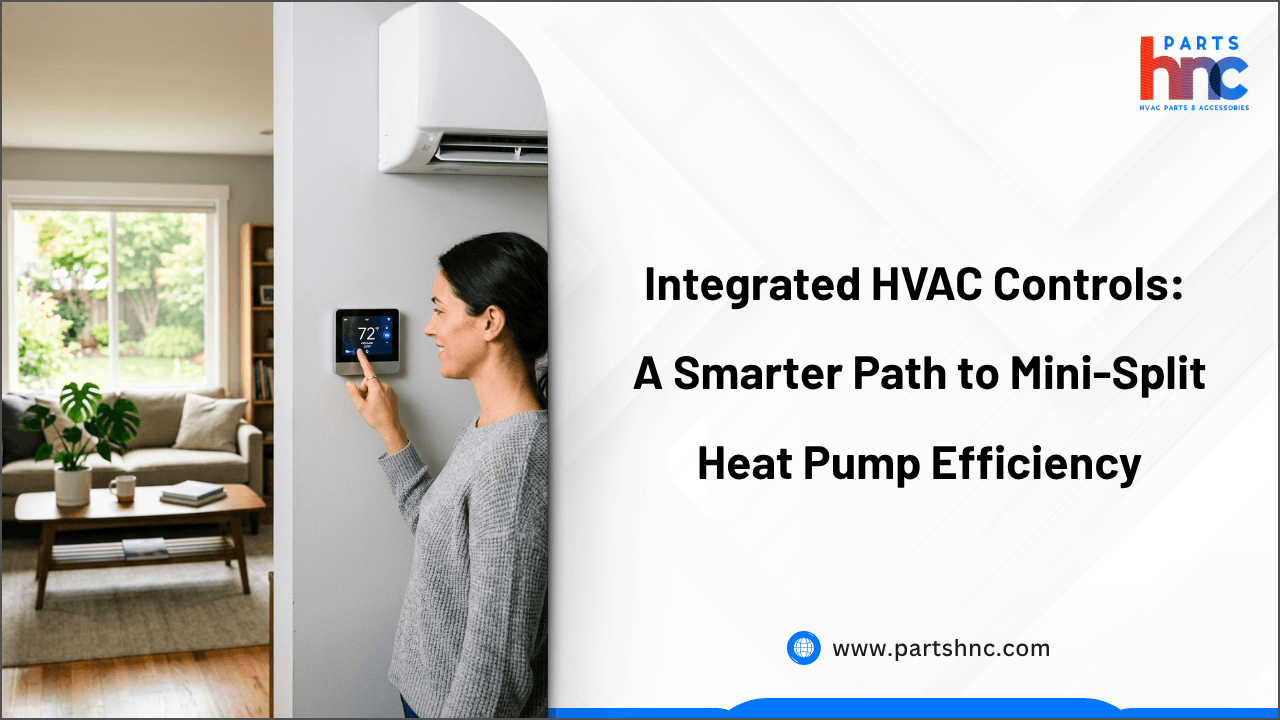
Integrated HVAC Controls: A Smarter Path to Mini-Split Heat Pump Efficiency
Mini-split heat pumps provide efficient heating and cooling by transferring heat between indoor and outdoor spaces. Their ductless design allows targeted conditioning for individual rooms or zones, making them practical for homes with varying comfort needs.
Integrated HVAC controls make mini-split heat pumps more responsive by coordinating temperature settings, sensors, schedules, and connected equipment. A U.S. Department of Energy project found that an integrated control strategy using a supplemental mini-split as the primary system achieved 34% average heating and cooling energy savings in participating Florida homes while maintaining comfort.
What Are Integrated HVAC Controls for Mini-Split Heat Pumps?
Integrated HVAC controls are the features that help a mini-split heat pump respond to your home's comfort needs without requiring constant manual adjustments. They bring temperature settings, schedules, sensors, and smart functions together for easier everyday control.
How Integrated HVAC Controls Work
Think of integrated controls as the system's way of knowing when to adjust itself. They help the mini-split respond when a room gets warmer or cooler, follow your preferred schedule, and maintain a comfortable temperature.
-
Temperature Adjustments: Keeps rooms closer to your preferred comfort level.
-
Automatic Operation: Changes system operation as indoor conditions change.
-
Scheduling: Runs heating or cooling according to your daily routine.
-
Remote Control: Lets you adjust settings through compatible smart controls.
Key Components of an Integrated HVAC Control System
-
Smart Thermostat or Controller: Gives you an easier way to manage temperature settings.
-
Sensors: Help the system recognize changes in room conditions.
-
Remote App: Allows convenient control from a smartphone or other connected device.
-
Indoor Unit Controls: Manage everyday heating, cooling, and airflow functions.
Explore air-to-water inverter heat pump technology: what homeowners need to know.
How Integrated Controls Manage a Mini-Split in a Real Home
Imagine a home with an existing central HVAC system and a newer mini-split heat pump. Instead of making the homeowner decide which system to run, integrated controls can help the two systems work together.
This is exactly the type of setup examined in the U.S. Department of Energy Building America field study, “An integrated control method for supplemental minisplit heat pumps in existing homes,” conducted by the FSEC Energy Research Center in four Florida homes.
The Difference Integrated Controls Can Make
|
Without Integrated Controls |
With Integrated Controls |
|
Homeowners manage systems separately |
Systems operate according to a coordinated strategy |
|
Central HVAC may run more often |
Mini-split can handle more of the cooling load |
|
Fixed settings may not reflect changing conditions |
Controls consider temperature and time of day |
|
Mini-split operation may be underused |
Mini-split receives greater priority when appropriate |
The Results Were Notable: In the field study, the integrated control strategy delivered up to 16% additional cooling-energy savings compared with manual operation of the mini-split and central system together.
Smart Features That Make Mini-Split Heat Pumps More Efficient
Advanced controls can improve how mini-split heat pumps respond to changing indoor conditions, equipment demand, and daily usage patterns. Here are key features:
Adaptive Temperature Recovery: Smart controls recognize recurring temperature changes and adjust recovery timing. This helps the system reach comfort levels without unnecessary high-output operation.
-
Example: Daikin systems paired with compatible smart thermostats can use adaptive recovery strategies to gradually adjust operation, helping avoid abrupt changes in heating or cooling demand.
Indoor-Outdoor Condition Tracking: Advanced controls use temperature information from multiple locations to refine heating or cooling decisions as outdoor conditions change.
-
Example: MRCOOL systems feature a “Follow Me” function that uses the remote as a temperature sensor, allowing the system to respond to conditions where the occupant is located rather than only near the indoor unit.
Fan-Speed Coordination: Intelligent controls coordinate fan operation with compressor demand, supporting more consistent airflow while avoiding excessive fan energy use.
-
Example: Daikin's Oterra Series and their DKN Plus Wi-Fi Interface unlock custom control logic that perfectly syncs the indoor fan speed with the variable-speed compressor to eliminate drafts and save electricity.
Defrost Management: In heating mode, advanced control logic can manage defrost cycles according to operating conditions, helping maintain heat transfer performance during cold weather.
-
Example: Daikin heat pump systems use outdoor sensors to monitor coil temperature and refrigerant conditions, activating defrost mode when frost buildup affects system performance rather than relying only on fixed timing.
Control Optimization Insight: Advanced systems can analyze recurring operating patterns and environmental changes to fine-tune performance during regular operation, helping the heat pump respond more efficiently to actual household demand.
Find out how to maximize ROI with cold climate heat pump rooftop units in commercial HVAC systems.
What Homeowners Should Consider Before Upgrading Mini-Split HVAC Controls
Upgrading HVAC controls can make a mini-split heat pump easier to manage, but homeowners should evaluate compatibility, features, installation, and long-term usability before making a change.
-
Check Mini-Split and Control Compatibility: Confirm that the thermostat, controller, or Wi-Fi module works with your specific mini-split model and communication system.
-
Consider Single-Zone or Multi-Zone Requirements: Choose controls that match your setup, with independent control being especially useful for multi-zone systems.
-
Evaluate Smart Features and Connectivity: Prioritize useful features such as scheduling, remote access, temperature sensing, energy monitoring, and smart-home integration.
-
Review Installation Requirements: Check whether the control requires wiring, an adapter, professional installation, or additional equipment before purchasing.
-
Consider Long-Term Support: Look for reliable app support, software updates, troubleshooting resources, and replacement options for continued usability.
If You Are Upgrading The Whole Mini-Split System
If you are replacing your mini-split with a qualifying high-efficiency heat pump, federal Home Energy Rebates can provide significant savings.
-
State HOMES & HEAR Rebates: An eligible ENERGY STAR-certified heat pump for space heating and cooling can qualify for up to $8,000 in rebates. The exact amount depends on household income and the state program.
-
Multi-Zone Requirements: Check your state or utility program for equipment requirements before choosing between a single-zone and multi-zone mini-split system.
Summary: Making Mini-Split Heat Pumps Smarter With Integrated Controls
Integrated controls make mini-split heat pumps more responsive by coordinating operation with real household conditions. Adaptive recovery, condition sensing, and automation can improve daily performance, while proper sizing, professional installation, and regular maintenance help ensure these smart controls deliver lasting comfort and efficiency.
Key Takeaways
-
Advanced controls can adjust system behavior instead of relying entirely on fixed temperature settings.
-
Remote temperature readings can help the system respond to conditions where occupants actually spend time.
-
Smarter defrost logic can help limit unnecessary interruptions during cold-weather heating.
-
Coordinated fan and compressor operation can provide steadier indoor comfort.
-
Runtime information can help homeowners recognize when maintenance may be needed.
-
Matching the control platform with the mini-split’s communication system is essential for accessing intended features.
Ready to save more on your next heat pump project? Shop HVAC parts and supplies at PartsHnC and make every purchase count with TradePro. Sign up today to get points instantly, earn 1 point for every $1 you spend. Unlock exclusive smart savings and offers on compressors, fan motors, coils, line sets, thermostats, control boards, sensors, and more from leading brands. Join TradePro now, start earning rewards, and save on every order!
References:
https://www.heatpumped.org/p/mini-mini-splits
https://www.energy.gov/cmei/buildings/integrated-hvac-control-methods-supplemental-high-efficiency-mini-split-heat-pumps
https://cleanheat.ny.gov/ductless-heat-pump-for-a-one-story-home
FAQs
Can Integrated HVAC Controls Improve Mini-Split Heat Pump Efficiency?
Yes. They can optimize temperature settings, scheduling, zoning, and system operation to reduce unnecessary energy use.
Do Smart Controls Work With All Mini-Split Heat Pumps?
No. Compatibility varies by manufacturer and model. Always check the control's compatibility before installation.
Are Integrated Controls Useful For Multi-Zone Mini-Split Systems?
Yes. They allow homeowners to manage temperatures independently across different rooms or zones.
Can I Control A Mini-Split Heat Pump From My Smartphone?
Yes. Compatible Wi-Fi-enabled systems can allow temperature adjustments, scheduling, and remote monitoring through a smartphone app.
Do Smart HVAC Controls Reduce Energy Consumption?
They can reduce unnecessary operation through scheduling, temperature sensing, zoning, and automated adjustments.
|
Disclaimer: This article is intended for general informational purposes. System performance, compatibility, energy savings, and rebate eligibility vary by equipment, installation, location, and program requirements. |