Loyalty Program

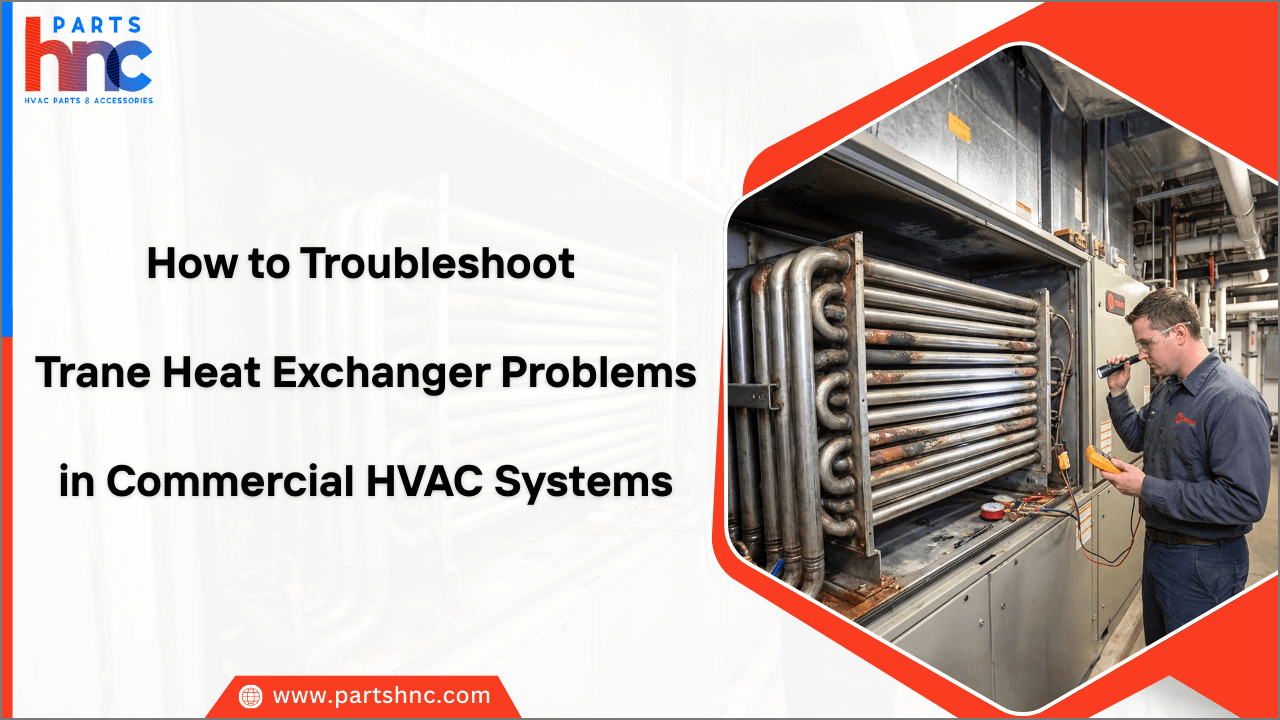
How to Troubleshoot Trane Heat Exchanger Problems in Commercial HVAC Systems
Trane heat exchangers play a critical role in maintaining the efficient and safe operation of commercial HVAC systems. When problems arise, they can lead to reduced performance, higher energy costs, and potential safety risks if not addressed promptly. Regular inspection and maintenance are essential to prevent unexpected breakdowns and ensure optimal system performance throughout the year.
Understanding how to troubleshoot Trane heat exchanger issues helps facility managers and technicians identify early warning signs, determine root causes, and apply effective solutions to keep systems running reliably. Safely transfer heat with Trane heat exchangers from combustion gases to indoor air in HVAC systems while keeping exhaust gases separate. With proper troubleshooting techniques, you can minimize downtime, extend equipment lifespan, and save on costly repairs.
What Is a Trane Heat Exchanger and Why Does It Matter
Trane heat exchangers are engineered to withstand the demands of commercial HVAC systems. They ensure consistent warmth, reliable performance, and safe operation even under heavy usage and extreme conditions.
How a Trane Heat Exchanger Operates:
In a gas-powered Trane furnace or rooftop unit, the heat exchanger functions as a controlled energy transfer zone:
-
Isolates Combustion Byproducts from Indoor Airflow: This ensures that harmful gases like carbon monoxide never infiltrate the conditioned spaces.
-
Absorbs Heat From the Burner Flame: Specialized metals and designs maximize thermal capture.
-
Transfers Thermal Energy to Circulating Air: The blower then moves warm air throughout the facility efficiently.
-
Directs Exhaust Gases Safely Outside: Venting systems are engineered to prevent backflow and maintain proper pressure.
The heat exchanger ensures heat transfer and system safety; even small cracks can affect performance and air quality.
Why Is a Heat Exchanger Essential in Commercial Environments?
In commercial environments, the heat exchanger is a key reliability component, and maintaining it ensures efficiency, safety, and consistent performance.
-
Consistent Heat Delivery Under Heavy Load: Ensures spaces remain comfortable regardless of outside conditions or high occupancy.
-
Operational Efficiency and Cost Control: A well-maintained exchanger reduces energy waste and lowers operating expenses.
-
Safety and Regulatory Compliance: Prevents carbon monoxide leaks, a key requirement in commercial safety codes.
-
Extended Lifecycle of the Unit: Minimizes premature wear on the blower, burners, and ductwork caused by inefficient heat transfer.
-
Reduced Emergency Service Calls: Early detection of exchanger issues can prevent costly downtime in mission-critical environments like hospitals, data centers, or office complexes.
Continuous operation in commercial Trane systems means small exchanger inefficiencies can cause big energy losses and safety risks.
Looking to fix heat exchanger problems in your commercial HVAC systems? Shop HVAC replacement parts and supplies from PartsHnC. We offer heat exchangers, flame sensors, igniters, and control boards from trusted brands such as Trane, Raypak, and Carrier, with fast delivery directly to your door.
Common Trane Heat Exchanger Problems You May Encounter
Commercial HVAC systems rely on reliable heat exchangers, but even high-quality units can experience issues over time. Identifying Trane heat exchanger problems early is essential to maintain efficiency, ensure safety, and prevent costly downtime.
Problem: Micro-fractures from thermal cycling
Solution: Use infrared inspections or pressure tests during routine maintenance to detect tiny fractures before they grow; replace affected sections promptly.
Problem: Internal scaling from hard water condensation
Solution: Install proper drainage and water treatment systems; schedule periodic descaling to maintain consistent heat transfer.
Problem: Uneven heating due to baffle misalignment
Solution: Inspect internal baffles for wear or displacement; realign or replace baffles to restore uniform airflow and heat distribution.
Problem: Material fatigue from high-cycling commercial loads
Solution: Monitor system run cycles and implement load-balancing strategies; replace fatigued components with higher-grade alloys if recommended by Trane.
Problem: Crystallized combustion residues are blocking passages
Solution: Conduct chemical or mechanical cleaning; adjust burner settings to minimize residue formation.
Problem: Hidden air leaks at weld seams
Solution: Perform pressure testing and visual inspections; reseal or weld compromised seams to maintain safe airflow separation.
Regular maintenance prevents costly damage. The Trane heat exchanger warranty helps cover repairs or replacements.
Step-by-Step Trane Heat Exchanger Troubleshooting and Fixes
A heat exchanger is essential for safe and efficient heating. Understanding the signs of Trane heat exchanger failure and following a systematic troubleshooting process ensures the system runs reliably and prevents costly damage.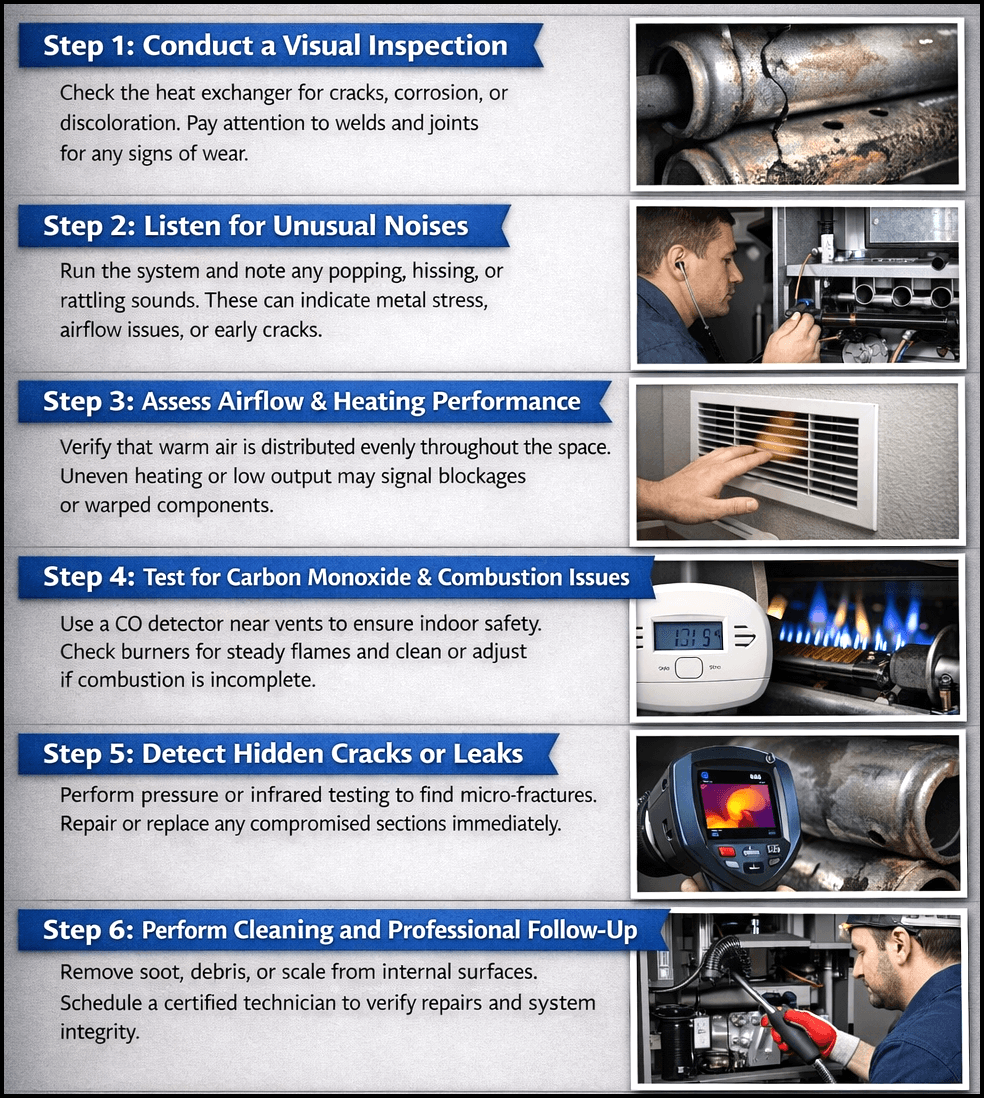
Safety Reminder: Working on a Trane heat exchanger carries significant risks, including burns, carbon monoxide exposure, or electrical hazards. Always turn off power and gas, wear proper personal protective equipment (PPE), and seek professional assistance for any tasks beyond basic visual checks.
Explore furnace flame rollout switch troubleshooting. Cracks or blockages in the heat exchanger can trigger the switch.
When to Repair vs Replace a Trane Heat Exchanger
Deciding between repair and Trane heat exchanger replacement is crucial for safety, efficiency, and cost-effectiveness. Knowing the warning signs and evaluating the system’s age helps homeowners make the right choice.
|
Criteria |
Repair |
Replace |
|
Type of Damage |
Minor surface micro-fractures, small localized corrosion, or heat-induced stress lines. |
Structural metal fatigue, widespread corrosion, or bending/warping that affects airflow. |
|
Hidden Safety Risks |
Low immediate risk; can be monitored with infrared or micro-crack sensors. |
High risk of carbon monoxide leaks or sudden failure; poses an immediate hazard. |
|
Thermal Efficiency |
Slight drop in heat transfer; can be restored with targeted cleaning and coatings. |
Severe energy loss due to blocked passages, scaling, or material fatigue; full replacement needed. |
|
Operational History |
Heat exchanger has mostly steady cycles and limited runtime stress. |
Heavy commercial usage with long runtime or frequent on/off cycling accelerates wear. |
|
Cost-Benefit Analysis |
Lower short-term cost; avoids downtime and buys time for long-term planning. |
Higher upfront cost but prevents repeated service visits, emergency shutdowns, and safety hazards. |
|
Inspection Method |
Detected via detailed visual, thermal imaging, or partial pressure testing. |
Detected when advanced scans, multiple repairs, or visual inspection show irreparable damage. |
Preventive Maintenance Tips for Trane Heat Exchangers:
-
Use infrared or ultrasonic testing to detect micro-cracks or uneven heat distribution.
-
Perform chemical or controlled mechanical cleaning to remove fine combustion residues.
-
Run thermal cycling tests to monitor metal expansion and prevent warping.
-
Observe burner flame contact to avoid localized hot spots on the exchanger.
-
Install vibration sensors to detect subtle resonance that can weaken metal over time.
-
Analyze operational data to schedule predictive maintenance before visible damage occurs.
When to Call an HVAC Professional: If your Trane heat exchanger shows unusual temperatures, airflow issues, soot buildup, or strange odors, contact a licensed HVAC technician. Professionals can detect hidden cracks, corrosion, or blockages using specialized tools and ensure safe, efficient operation. Timely intervention prevents costly repairs, energy waste, and extends the system’s lifespan.
Find out how much it costs to replace a heat exchanger, as prices vary by furnace type, size, and labor requirements.
Summary: How To Keep Trane Heating Systems Efficient and Compliant
Proper care through Trane heat exchanger troubleshooting is essential for safety, efficiency, and long-term system reliability. Regular inspections, preventive maintenance, and prompt repairs help minimize energy waste and reduce the risk of hazards like carbon monoxide leaks. By combining modern monitoring techniques with proactive maintenance, commercial operators can ensure uninterrupted performance and stay compliant with safety regulations.
Key Takeaways:
-
Micro-fractures and subtle heat stress often appear before visible cracks, making advanced inspections crucial.
-
Thermal cycling patterns can reveal early warping or metal fatigue not detected in standard checks.
-
Fine combustion residue and crystallization inside the exchanger can quietly reduce efficiency over time.
-
Burner flame alignment and contact points directly impact localized wear and long-term durability.
-
Subtle vibration or resonance from blowers and ducts can weaken the exchanger if left unmonitored.
-
Predictive maintenance based on operational data is more effective than calendar-based service schedules.
FAQs
How long does a Trane heat exchanger last?
A Trane heat exchanger typically lasts 15 to 20 years with proper maintenance. Heavy commercial use or poor maintenance can shorten its lifespan.
How much does it cost to replace a Trane heat exchanger?
Trane heat exchanger replacement cost usually ranges from $1,200 to $3,500, depending on the model and labor. Larger units or commercial systems can drive the cost significantly higher.
How to inspect a Trane heat exchanger?
Start with a visual inspection for cracks, corrosion, or soot buildup. Advanced methods include infrared scanning or pressure testing to detect hidden issues.
How to clean a secondary heat exchanger on a Trane furnace?
Turn off power and gas before cleaning to ensure safety. Use a soft brush, vacuum, or manufacturer-approved cleaning solution to remove soot and debris from internal surfaces.