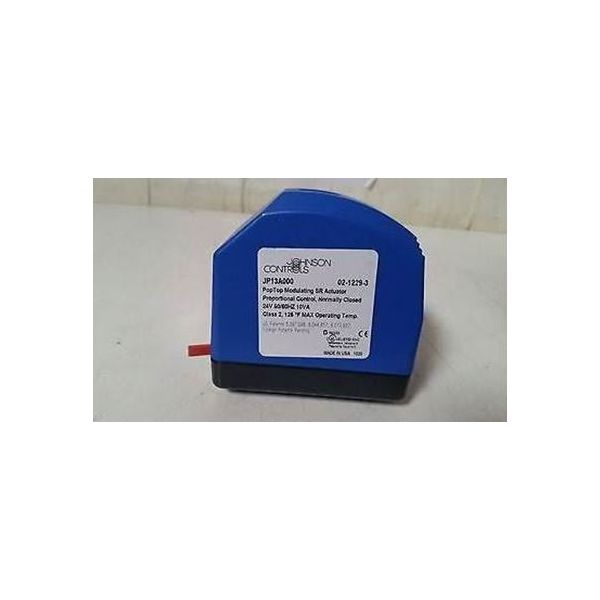
The Johnson Controls JP13A000 Electric Zone Valve Actuator is a small-sized device, with the dimensions of 8.7 x 4.8 x 2.7 inches, especially in the zones that have to be isolated in case of emergency. This equipment is robust and can be installed directly onto zone valves, which are normally two or three ported. Unlike simple on-off actuators, it offers the ability to control the output signal in proportion to a 4-20mA or 0-10VDC signal. The stronger the signal, the more torque is generated by the motor of the vehicle. This enables the right orientation of the valve stem for the regulation of the water flow within the zones of the HVAC system.
The JP13A000 designates a 24-volt, single-pole, normally closed (NC) proportional control valve actuator, featuring a versatile 4-20 milliamp (mA) or 0-10 volt DC output. Primarily employed in industrial settings, it effectively manages motors, valves, and pumps. This JP13A000 Johnson Controls actuator plays a pivotal role in controlling motor speed, valve positions, or environmental temperatures through its 4-20mA or 0-10VDC output. Operating on 24 volts of AC power, its normally closed attribute implies that it remains closed in the absence of power and gradually opens in proportion to increasing voltage. Widely applied in HVAC systems for regulating airflow, water flow, and temperature across diverse zones, it also finds utility in industrial processes, overseeing the operation of pumps, conveyors, and other equipment.
Key features:
Compatible with most industrial controllers.
Easy to install and maintain.
Durable and reliable construction.
Some models offer additional features like adjustable travel limits and manual override.
Signs of a Faulty Johnson Controls Actuator
Here are the common signs of a faulty actutator:
Valve Not Operating Correctly:
Valve stuck open or closed: The actuator might not be able to move the valve to the desired position.
Valve opening or closing too slowly: The actuator could be experiencing mechanical resistance or electrical issues.
Valve opening or closing erratically: This could indicate loose connections, faulty sensors, or internal component failure.
Unusual Noises:
Buzzing, grinding, or clicking sounds: These noises often suggest mechanical wear or internal component failure.
Intermittent humming or whirring: This could point to electrical issues or loose connections.
Electrical Issues:
Actuator not responding to control signals: Check for power supply, wiring issues, or blown fuses.
Burning smell or visible sparking: These are signs of serious electrical problems and require immediate attention.
Fault Indicators:
LED lights flashing or error codes displayed: Consult the actuator's manual to interpret specific fault codes.
System Performance Issues:
Uneven heating or cooling in different zones: This could indicate a faulty actuator that's not properly regulating airflow.
Increased energy consumption: A malfunctioning actuator might lead to inefficient system operation and higher energy costs.
Physical Damage:
Visible cracks, dents, or corrosion: These signs suggest external damage or prolonged wear and tear.
Water leaks or moisture around the actuator: This could lead to internal corrosion and electrical problems.
Choose the best HVAC equipment parts and supplies from PartsHnC!