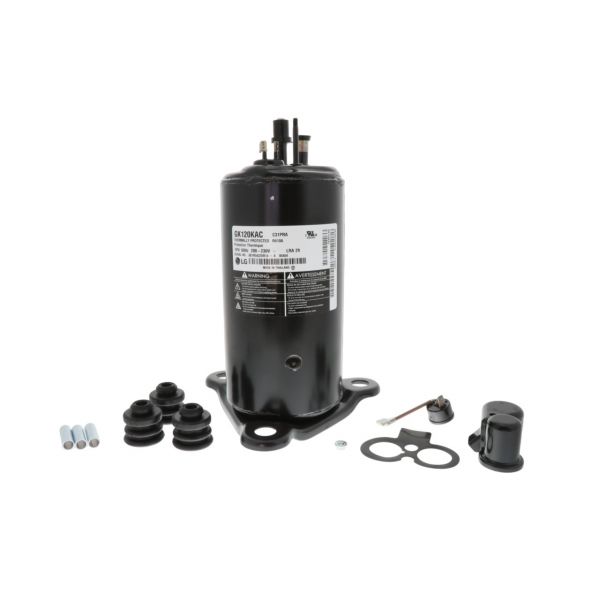
Miscellaneous Product GK120KAC LG Compressor 208-230V 12,100Btu.
Specifications
- Capacity: 12100KW
- Horsepower: 1.5Hp
- Weight: 28.01lbs
- Dimensions: 19Inch x 15Inch x 12Inch
- Refrigerant: R410A
- Voltage: 208-230V
Loyalty ProgramThe GK120KAC Miscellaneous compressor is designed for use in various air conditioning and refrigeration applications. It's a vital component that plays a crucial role in the cooling process.GK120KAC compressor increases the pressure and temperature of the refrigerant, allowing it to absorb heat from the conditioned space or cooled product. The compressed refrigerant flows through the system, absorbing heat from the evaporator coil and releasing it into the condenser coil. compressor ensures proper pressure balance within the refrigeration system for efficient cooling performance.
Key Features:
Dimensions of GK120KAC Miscellaneous compressor:
A malfunctioning GK120KAC Miscellaneous compressor can impact your air conditioning or refrigeration system's performance and lead to discomfort or product spoilage. Keep an eye out for these telltale signs:
Reduced Cooling Performance:
Operational Issues:
System Failure:
Same Day Shipping
Best Quality And Best Price
Wide Range of Inventory
Best Customer Service
Q: What is the cooling capacity of the 208-230V 12,100Btu Lg compressor Miscellaneous Product GK120KAC?
A: It has a cooling capacity of 12,100 Btu, suitable for small to medium-sized air conditioning and refrigeration units.
Q: Can I replace the GK120KAC Miscellaneous compressor compressor myself?
A: No, it is highly recommended to consult a qualified HVAC or refrigeration technician for any repairs or replacements involving compressors. Improper handling of refrigerant and electrical components can be dangerous.
Q: How can I maintain the GK120KAC compressor for optimal performance?
A: Schedule regular maintenance with a qualified technician for cleaning, inspections, and adjustments to ensure proper refrigerant levels, lubrication, and overall system health.
Step1: Disconnect power to the HVAC unit and recover refrigerant using approved equipment.
Step2: Remove access panels and label/disconnect electrical and refrigerant lines.
Step3: Unbolt and carefully lift out the faulty compressor from the mounting base.
Step4: Install the new compressor with vibration grommets and tighten mounting bolts.
Step5: Reconnect piping using proper brazing techniques and restore wiring as labeled.
Step6: Evacuate the system, recharge refrigerant to specifications, restore power, and test operation.