Facebook Pixel

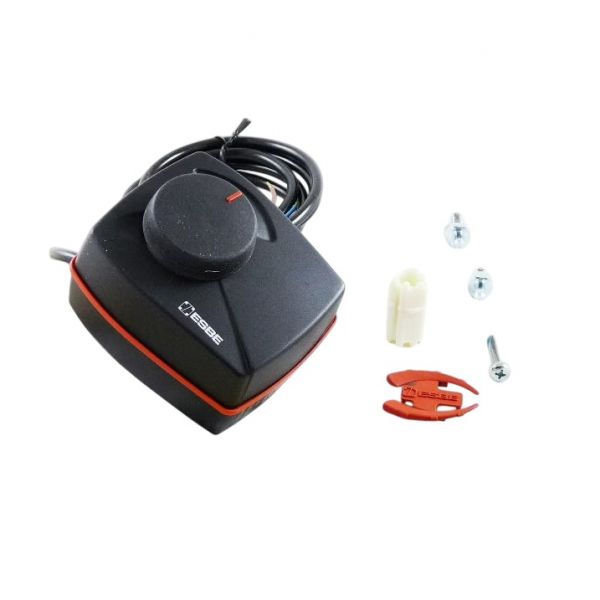
Danfoss 193B1600 Actuators for Rotary Valves, ARA Series, 3-point, Supply voltage 24 VAC

Special Price $425.10 Regular Price $471.86
In stock
SKU
193B1600
The Danfoss 193B1600 3-Point Signal Motor Rotary Valve Actuator is an electronic control component used to control fluid flow through the valves in heating or cooling HVAC systems. It is powered by a 24 VAC signal with a 3-point control input which allows it to be used in valve positioning to balance the system. It is commonly used in residential and commercial hydronic systems and is included in the valve control assembly to assist in controlling water or glycol flow. It enables HVAC systems to sustain constant temperature aid in effective energy consumption, and provide consistent performance across normal heating.
Manufacturer:
https://www.partshnc.com/media/catalog/product/1/9/193b1600_1.jpg

Specifications

  • Type: Valva
  • Actuator type: ARA Series
  • Control signal type: 3-point
  • Operating torque [Nm]: 6 N-m
  • Voltage: 24 VAC
Write Your Own Review
You're reviewing:Danfoss 193B1600 Actuators for Rotary Valves, ARA Series, 3-point, Supply voltage 24 VAC
Your Rating
Customer Questions
What maintenance is required for the Danfoss 193B1600 Actuators?

Regularly inspect the actuator for proper movement and secure mounting on the valve. Check electrical connections for corrosion or looseness to ensure reliable operation. Keep the unit clean and free from dust or moisture. Always disconnect power before servicing to prevent electrical hazards.

What are common issues with the Danfoss 193B1600 Actuators?

  • Failure to respond to control signals
  • Inconsistent or inaccurate valve positioning
  • Electrical connection faults or signal loss
  • Motor stalling or unresponsive movement
  • Overheating during operation
  • Internal gear or drive mechanism wear

Installation Steps

Step 1: Turn off power to the HVAC or valve system before installation.

Step 2: Remove any existing actuator from the rotary valve, noting wiring connections.

Step 3: Mount the new actuator onto the rotary valve shaft securely.

Step 4: Connect the control wiring according to the manufacturer’s diagram.

Step 5: Verify proper alignment and ensure the actuator moves freely without obstruction.

Step 6: Restore power and test the actuator for correct operation and valve positioning.