
Facebook Pixel

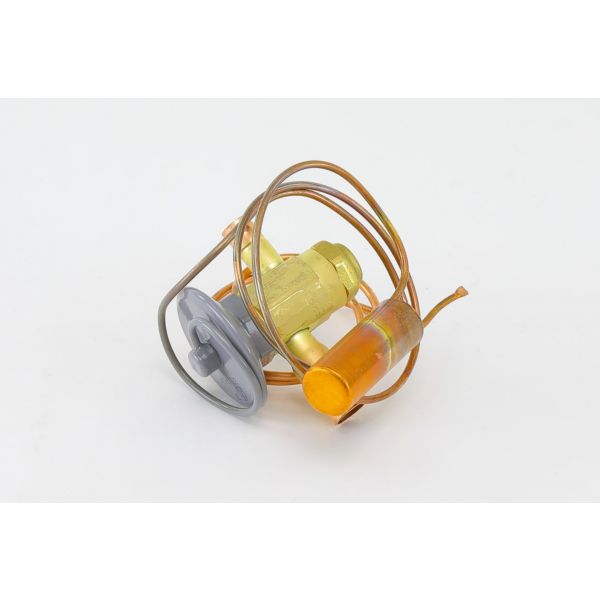
ClimateMaster 68266314 Thermal Expansion Valve (TXV)

Special Price $155.00 Regular Price $178.26
In stock
SKU
68266314
The ClimateMaster 68266314 Thermal expansion valve is an essential part of HVAC systems. This valve overrides the refrigerant flow in the evaporator core to a very dedicated level. It works with the same principle as that of the pressure sensor that detects the temperature and pressure of the refrigerant as it exits the evaporator, to control the amount that is admitted into the superheated chamber. This makes it possible to cool or heat with efficiency by optimizing the evaporator’s ability. Benefits are increased system efficiency, accurate temperature control, better dehumidification, and therefore increased comfort levels and reduced energy usage.
Manufacturer:

https://www.partshnc.com/media/catalog/product/6/8/68266314.jpg

Specifications

  • Type: Thermal Expansion Valve

    PRODUCT OVERVIEW:
    As an essential control component in the refrigeration circuit, the thermal expansion valve regulates liquid refrigerant entering the evaporator coil to maintain stable system conditions. The ClimateMaster 68266314 Thermal Expansion Valve (TXV) sits between the liquid line and the evaporator inlet within heat pumps and HVAC equipment, creating the pressure drop required for phase change and thermal energy transfer during the cooling cycle.

    REFRIGERANT FLOW MODULATION:
    A thermal expansion valve operates by sensing downstream superheat conditions and adjusting an internal orifice to modulate liquid refrigerant flow. The sensing bulb, attached to the suction line, responds to thermal variations by altering internal pressure against a control diaphragm to shift the valve pin position. This mechanical response drops high-pressure liquid refrigerant down to a low-pressure, saturated mixture, ensuring efficient heat absorption across the evaporator surface.

    EVAPORATOR SUPERHEAT CONTROL:
    Within the complete refrigeration circuit, the expansion valve acts as the boundary separating the high-pressure liquid side from the low-pressure vapor side. As the compressor circulates refrigerant through the unit, the valve meters fluid entry in direct response to thermal load changes. This continuous adjustment prevents liquid refrigerant from flooding the compressor while maintaining adequate fluid levels across the evaporator coil.

    REPLACEMENT GUIDELINES:
    Replacement may be appropriate when the existing ClimateMaster 68266314 can no longer provide the required refrigerant control within the refrigeration circuit. Replacement should restore the valve assembly's ability to regulate refrigerant admission according to changing evaporator conditions and maintain the intended metering relationship within the system. The replacement should be performed according to the applicable equipment service procedure.

    Common Failure Symptoms:

    • Frost or ice formation along the evaporator coil or suction line.
    • Elevated suction line superheat readings alongside low suction pressure.
    • Compressor floodback resulting from a valve stuck in an open position.
    • Fluctuating low-side system pressure during steady-state operation.
    • Reduced cooling thermal output from the equipment.

    EQUIPMENT COMPATIBILITY:
    The ClimateMaster 68266314 Thermal Expansion Valve (TXV) is an OEM component used with ClimateMaster heat pumps and climate control units utilizing compatible metering configurations. It integrates with the equipment refrigeration circuit, working with the liquid line and evaporator assembly as part of the cooling sequence. Verify the equipment manufacturer, heat pump application, and part number before selecting the replacement assembly.

    Technical Specifications:
    Product identification:
    Manufacturer: ClimateMaster
    Part Number: 68266314
    Component Type: Thermal Expansion Valve (TXV)

    Write Your Own Review
    You're reviewing:ClimateMaster 68266314 Thermal Expansion Valve (TXV)
    Your Rating
    Customer Questions
    What maintenance is required for the ClimateMaster 68266314 Thermal Expansion Valve?

    Regularly inspect the TXV for leaks, corrosion, or debris in the inlet and outlet ports. Ensure the sensing bulb is securely attached and properly insulated. Proper maintenance helps regulate refrigerant flow efficiently and prevents system performance issues. Always turn off power before servicing.

    What are common issues with the ClimateMaster 68266314 Thermal Expansion Valve?

    • Valve sticking or failing to modulate refrigerant flow.
    • Leaks at connections or valve body.
    • Incorrect superheat readings.
    • Sensing bulb misalignment or damage.

    Why are TXVs used instead of fixed metering devices?

    TXVs can adjust refrigerant admission according to changing system conditions, whereas fixed metering devices provide a predetermined flow restriction.

    What information is useful when documenting a TXV installation?

    The equipment model, existing component identification, refrigerant application, and installation configuration can be recorded for future service reference.

    Can a TXV be serviced without replacing the entire refrigeration system?

    A TXV is an individual refrigeration-circuit component, so its service can generally be addressed separately from the complete HVAC system when service procedures call for valve-level work.

    Does the ClimateMaster 68266314 require periodic maintenance?

    No specific routine maintenance interval is provided for the 68266314 in the available product information. Applicable inspection and service requirements should be determined from the equipment manufacturer's documentation.

    Installation Steps

    Step1: Turn off the HVAC system and disconnect power for safety.

    Step2: Recover any refrigerant from the system following proper procedures.

    Step3: Remove the old TXV and note the orientation and connections.

    Step4: Install the new TXV, reconnecting refrigerant lines securely.

    Step5: Ensure the valve is properly aligned and all fittings are tight.

    Step6: Evacuate, recharge, and test the system to confirm proper operation.