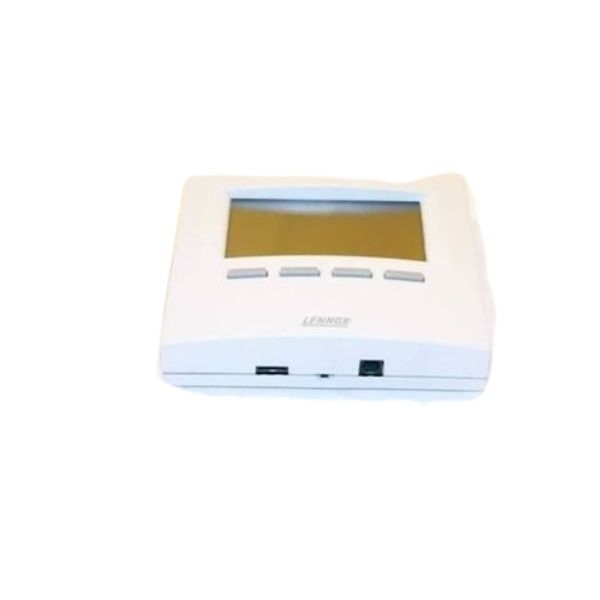
Product Overview:
Centralized HVAC management allows multiple heating and cooling units to be monitored and controlled through one interface. The Lennox 59L21 Network Control Panel is an OEM building automation network manager designed for the L Connection® network. It provides centralized scheduling, equipment status monitoring, and control functions for compatible Lennox HVAC systems and connected building equipment.
HVAC Network Management:
The network control panel communicates with connected Lennox HVAC equipment through the L Connection network. It supports centralized monitoring of equipment status, operating conditions, temperature settings, and system alarms, helping manage multiple units from one control point.
Building Automation and Scheduling:
The panel provides programmable scheduling for connected HVAC equipment and designated building functions. Its scheduling capabilities support separate daily operating periods and holiday schedules, while the interface allows users to review network status and adjust available control settings.
Replacement Guidelines:
Replace the Lennox 59L21 when network communication with connected HVAC equipment becomes unreliable, equipment status information fails to update, or scheduling functions stop operating as intended. Replacement may also be necessary if the display, keypad, housing, or electrical connections become damaged. Have a qualified HVAC technician handle wiring inspection and replacement.
Common Failure Symptoms:
- Connected HVAC units do not appear correctly on the network panel.
- Equipment status or operating information fails to update.
- Scheduling functions do not operate as selected.
- Network communication becomes intermittent.
- Display or keypad functions become unresponsive.
Equipment Compatibility:
The Lennox 59L21 is an OEM L Connection Network Control Panel intended for designated Lennox HVAC and building automation systems. It supports applicable Lennox rooftop units, split systems, and designated building controllers. Verify the existing panel model and network requirements before ordering.
Technical Specifications:
Brand: Lennox
Part Number: 59L21
Model Number: C0CTRL10AE1L
Product Type: Network Control Panel
 Loyalty Program