
Facebook Pixel

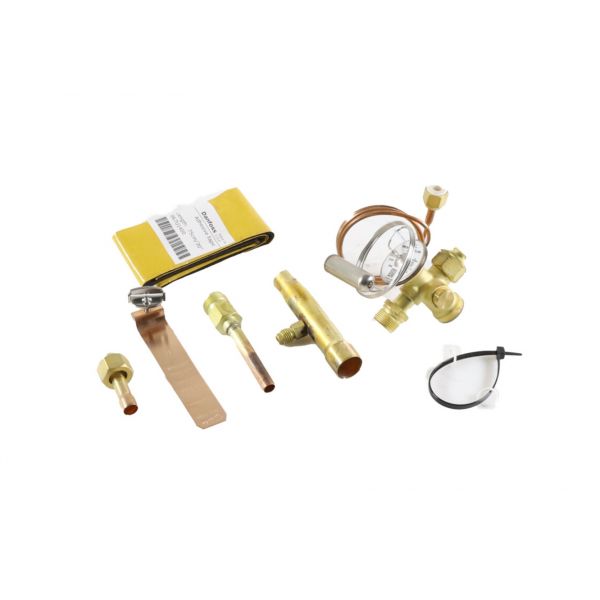
Trane 4AYTXVH3G4248A 3-4Ton Thermal Expansion Valve (TXV) R410A

Special Price $245.29 Regular Price $272.28
In stock
SKU
4AYTXVH3G4248A
The Trane 4AYTXVH3G4248A Thermal Expansion Valve is compatible with air conditioning and heat pump systems, which use R410A refrigerant and have a cooling capacity of 3-4 tons. As an expansion valve, it is involved with the feeling of the temperature and pressure of the refrigerant then regulating the flow of the refrigerant to achieve a correct superheat. This check ensures the refrigerant goes fully to the coil to enhance the cooling performance and ensure that the compressor does not receive damaging liquid refrigerant. This particular TXV is applied in residential and light commercial HVAC equipment including split systems and packaged units.
Manufacturer:

https://www.partshnc.com/media/catalog/product/4/a/4aytxvh3g4248a.jpg

Specifications

  • Type: Thermal Expansion Valve
  • Refrigerant: R410A
  • Capacity: 3-4Ton

PRODUCT OVERVIEW:
As a core OEM metering device in the refrigeration system, the thermal expansion valve regulates the flow of liquid refrigerant into the evaporator coil to maintain stable system conditions. The Trane 4AYTXVH3G4248A 3-4Ton Thermal Expansion Valve (TXV) R410A connects within the refrigeration circuit between the liquid line and the evaporator inlet, providing the precise pressure drop needed for refrigerant phase change and thermal transfer within compatible residential and commercial split systems.

THERMOSTATIC CONTROL RESPONSE:
Changing temperature and pressure conditions within the evaporator circuit influence the valve's internal control assembly. The resulting pressure response moves the valve mechanism and changes the available refrigerant passage. This thermostatic action allows the metering assembly to respond to variations in operating conditions rather than maintaining one fixed valve position throughout the cooling cycle.

REFRIGERANT PRESSURE TRANSITION:
At the valve inlet, liquid refrigerant remains on the higher-pressure side of the refrigeration circuit before passing through the metering restriction. The pressure differential across this restriction establishes the transition toward the lower-pressure evaporator side. This controlled pressure change prepares the refrigerant for its subsequent movement through the evaporator during the refrigeration cycle.

REPLACEMENT GUIDELINES:
Replacement may be appropriate when the existing Trane 4AYTXVH3G4248A develops refrigerant leakage, restricted refrigerant passage, inconsistent metering, or an improper response to changing evaporator conditions. Replacement may also be required when physical damage affects the valve assembly or when the component can no longer provide the required refrigerant control. Replacing the affected TXV should restore the intended refrigerant metering relationship within the applicable HVAC circuit.

Common Failure Symptoms:

  • Frost or ice accumulation along the evaporator coil or suction line.
  • Abnormal superheat levels combined with low suction line pressure.
  • Compressor floodback caused by a valve stuck in an open position.
  • Unstable or fluctuating low-side system pressures during operation.
  • Reduced cooling thermal output from the equipment.

EQUIPMENT COMPATIBILITY:
The Trane 4AYTXVH3G4248A 3-4Ton Thermal Expansion Valve (TXV) R410A is an OEM component used with Trane air conditioning and heat pump systems configured for 3 to 4 ton capacities using R410A refrigerant. It integrates with the equipment refrigeration circuit, working with the liquid line, sensing bulb assembly, and evaporator as part of the cooling sequence. Verify the equipment manufacturer, tonnage rating, refrigerant type, and part number before selecting the replacement assembly.

Technical Specifications:
Product identification:
Manufacturer: Trane
Part Number: 4AYTXVH3G4248A
Component Type: Thermal Expansion Valve (TXV)
Operating conditions:
Refrigerant Type: R410A
Flow & capacity specifications:
System Capacity: 3 to 4 Tons

Write Your Own Review
You're reviewing:Trane 4AYTXVH3G4248A 3-4Ton Thermal Expansion Valve (TXV) R410A
Your Rating
Customer Questions
What maintenance is required for the Trane 4AYTXVH3G4248A Thermal Expansion Valve?

Regularly inspect the valve for leaks, corrosion, or blockages. Ensure proper refrigerant flow and tighten any loose connections. Always handle carefully and disconnect system power before servicing to maintain safety and consistent cooling performance.

What are common issues with the Trane 4AYTXVH3G4248A Thermal Expansion Valve?

  • Improper refrigerant flow.
  • Leaking or corroded connections.
  • Erratic cooling performance.
  • Valve sticking or blockage.

What is the primary function of the Trane 4AYTXVH3G4248A thermal expansion valve?

It meters liquid R410A refrigerant into the evaporator coil based on cooling demand to maintain proper superheat and heat transfer.

What equipment tonnage rating is this expansion valve designed to support?

This valve is engineered specifically for 3-ton to 4-ton cooling capacity HVAC systems.

Why is R410A refrigerant calibration important for a TXV?

R410A operates at higher pressures than older refrigerants, so a valve specifically calibrated for R410A ensures accurate orifice modulation and superheat control without pressure instability.

How does a TXV protect an HVAC compressor from failure?

By maintaining adequate superheat at the evaporator outlet, It ensures refrigerant fully vaporizes before leaving the evaporator, preventing liquid slugging into the compressor.

What steps should be taken when replacing the Trane 4AYTXVH3G4248A expansion valve?

Confirm the 3-4 ton rating, R410A refrigerant type, and part number 4AYTXVH3G4248A match your equipment requirements.

Installation Steps

Step1: Turn off power to the HVAC system and close the refrigerant valves.

Step2: Recover refrigerant from the system following proper safety procedures.

Step3: Remove the existing TXV carefully, avoiding damage to surrounding lines.

Step4: Install the new TXV in the same orientation, connecting inlet and outlet lines securely.

Step5: Evacuate the system and recharge with the proper refrigerant.

Step6: Restore power and test the system for proper cooling and flow.