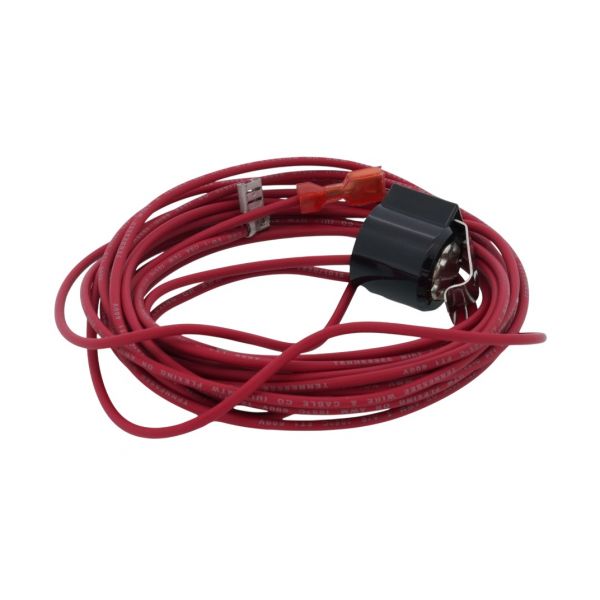
Product Overview:
During the defrost cycle, temperature-responsive control helps support the HVAC equipment’s designated defrost operation. The Amana-Goodman 0130M00099 Defrost Thermostat is an OEM temperature-control component used within the equipment’s defrost system. It monitors temperature conditions associated with defrost operation and provides the thermostat function within the system’s temperature-control arrangement.
Temperature-Responsive Control Function:
A defrost thermostat responds to temperature changes in the area being monitored. This temperature-responsive function is its primary role within the HVAC defrost control system. It provides temperature-related control as part of the arrangement responsible for the equipment’s defrost operation.
HVAC Defrost Operation:
The defrost thermostat contributes to the equipment’s defrost operating sequence through its temperature-responsive control function. It forms part of the system’s control arrangement and supports the equipment’s response to temperature conditions during the defrost cycle.
Replacement Guidelines:
Replace the Amana-Goodman 0130M00099 Defrost Thermostat when it no longer responds to temperature conditions as intended or fails to provide its designated control response. Irregular defrost operation, inconsistent temperature-related performance, or visible physical damage may indicate the need for replacement. A qualified technician should assess the equipment’s defrost thermostat requirements before selecting a replacement.
Common Failure Symptoms:
- Irregular or inconsistent defrost cycle operation.
- Temperature-responsive control that does not function as expected.
- Defrost operation that fails to occur as expected.
- Unusual frost or ice accumulation on the evaporator coil.
- Visible physical damage to the thermostat.
Equipment Compatibility:
The Amana-Goodman 0130M00099 Defrost Thermostat is an OEM component associated with the following equipment models: APD1424060M41AA, APD1430080M41AA, APH1324H41CA, APH1324M41, APH1324M41CA, APH1330H41CA, APH1330M41, APH1330M41CA, APH1336H41CA, and APH1348H41DA. Verify the equipment model and existing part number against manufacturer documentation before selecting a replacement.
Technical Specifications:
Brand: Amana-Goodman
Part Number: 0130M00099
Product Type: Defrost Thermostat
 Loyalty Program